Archives

100 Books in 2011: The Ghost Writer

July’s book club book was The Ghost Writer by John Harwood. I was quite looking forward to this as the blurb was quite enticing.

A boy, Gerard, grows up in Australia listening to his mother’s tales of Sussex and her idyllic childhood. One day he finds a story by his great-grandmother and a photograph hidden in his mother’s drawer. She becomes angry and the stories stop. Later he is contacted by Penfriends International and put in touch with Alice Jessell, who lives in Sussex. They write over many years and become very close, a relationship driven by the fact that Gerard doesn’t have friends because his mother is so over-protective.

Eventually, Gerard wants to meet Alice, but she doesn’t as she is disabled and doesn’t want to see him until she has had surgery on her spine. He goes to England anyway, thinking he can find her. He doesn’t but instead finds another story by his great-grandmother published in an anthology. After some years his mother dies. He’s in his early thirties, still living at home, still passionately corresponding with Alice. Along the way he finds more stories by his grandmother. At some point, a woman claiming to be a friend of his aunt writes to say she thinks something terrible happened to his aunt and asking him to go to his mother’s childhood home to investigate. The stories of his grandmother start to bear a resemblance to the events of his mother’s life.
That’s not much of a synopsis and that’s because the plot doesn’t make sense. There are stories within stories, allusions to ghosts and madness, and references to The Turn of the Screw. And none of it really works. The first of the ‘Victorian ghost stories’, Seraphina, is probably the best writing in the book. It has a Poe-esque feel to it and is a little creepy. The rest of the Victorian ghost stories aren’t so good. They lose the tone and end up feeling as though they were constructed to give clues to the mystery. Not that it’s much of a mystery; the misdirection is completely unbelievable. The ending picks up a little and comes close to being exciting but in the end the story is not resolved satisfactorily. The plot holes are massive.
There are loads of great reviews on the interwebs, but I didn’t like it. Neither did most of the book club.
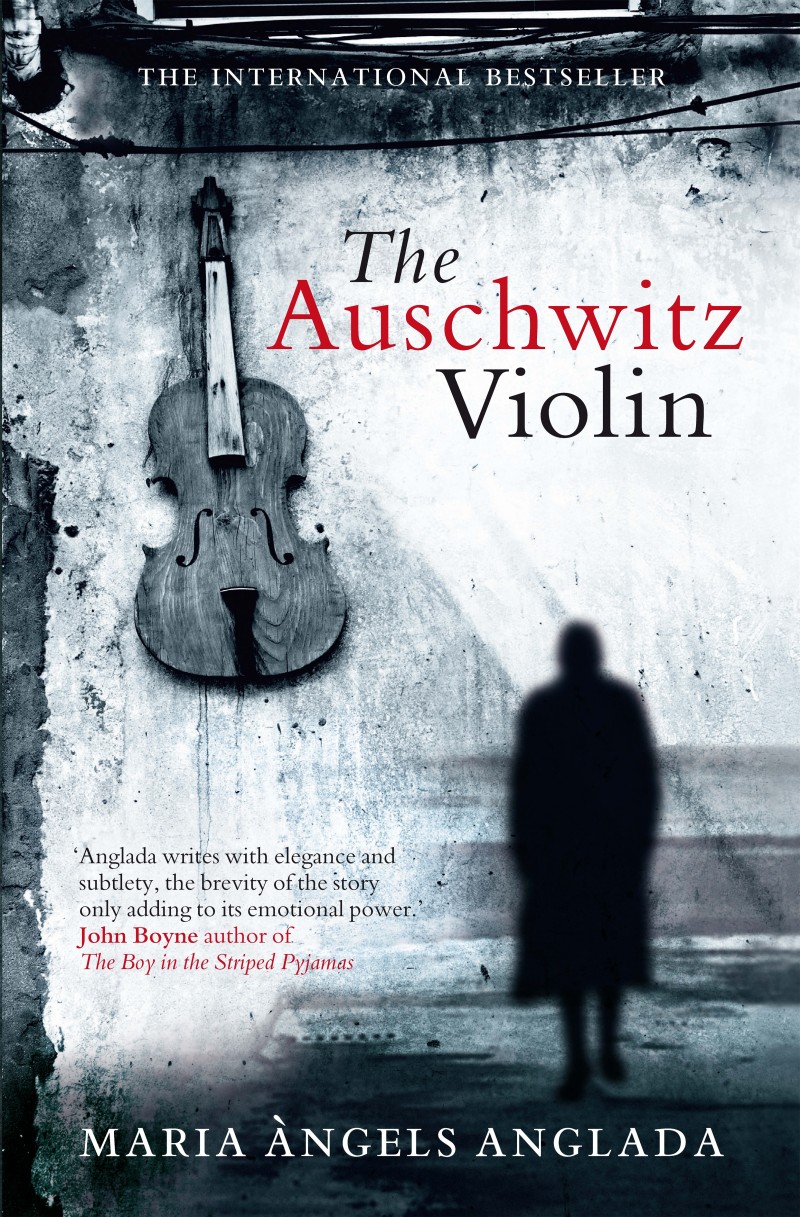
100 Books in 2011 Challenge: The Auschwitz Violin

This one raises an interesting question: is it ok to not like a book on this subject? The Auschwitz Violin by Maria Àngels Anglada, trans. Martha Tennent, is the story of a violin maker interned in Auschwitz who is ordered to make a violin for the camp Commander. He does this amid the starvation and terror of life in the concentration camps.

This is a novella, or at around 25,000 words, a long short story. Looking at it as a short story makes the structure make a bit more sense. What I missed in this book was depth. Life in the concentration camps was horrific and I’ve read a few thing dealing with that subject. Yet it doesn’t come across here. I get the sense that the horror is being skated over. Maybe that’s a matter of taste – I do, after all, like visceral writing. Or maybe it’s an issue of courage. Perhaps the author didn’t want to commit to describing the conditions in Auschwitz in gory detail. I can see how that can seem gratuitous. Unfortunately, for me, that made it hard to connect to the fortitude of the protagonist. It didn’t seem like that much of an heroic struggle because the impact of the environment wasn’t fully brought out.

The writing itself is good and the story has great potential. I just found myself questioning the choices of the author about the structure of the story and what she chose to show. All the way through, I was thinking that I might have done it differently.

So, this book didn’t really do it for me. I felt distanced from the story by the technique. I’d read this story if it was re-written by someone else. And yet I feel a bit uncomfortable saying that I didn’t like the book because of the subject matter. If you like literary fiction, and don’t like horror, then this may be for you. It was a bit too sanitised for my taste.

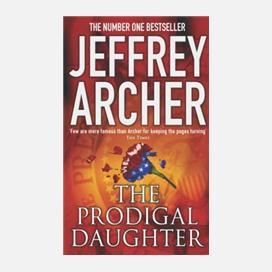
100 Books in 2011 Challenge: The Prodigal Daughter

Jeffrey Archer is an easy target. He’s a best-selling author that a lot of people think is a dreadful writer. So, given that I read in order to improve my writing skills, it seems to make sense that I should read some of those novels and authors that are widely considered to be bad. I can see why they are bad and learn from that. In some cases, they actually aren’t bad, they’re just popular and successful.

In the case of The Prodigal Daughter by Jeffrey Archer, it was bad. It was bad enough to make me angry. It spans about sixty years and is the story of a woman who inherits a massive hotel chain and then becomes president of the USA (whoops, spoilers).

Archer starts with her birth, then shows selected highlights from her childhood, educational career, she runs away to marry the son of her father’s sworn enemy and builds up her own really successful chain of high-end designer clothes stores, her father dies and she inherits his hotel chain, she runs that for a while until she gets bored and then goes into politics.

For the first two thirds of the book my problem was the style of telling the story. Given that there is so much time to cover there has to be a lot of narrative, interspersed with scenes of pivotal events. The narrative is often clumsy and expository. There’s an awful lot of telling and it’s not handled well. The scenes don’t really show the protagonist’s character (which is what they are meant to do) rather Archer tells us and doesn’t match his action with what he’s trying to get across. The dialogue is clunky. The protagonist is not very likable, mainly because she’s perfect and everything just falls into her lap. She has a couple of ‘set-backs’ but they’re not real reversals or challenges, just opportunities for Archer to show that she’s even more perfect than he’d already told us.

I had mixed reactions to the last part of the book. To start with, I felt more positive about it. This is the part of the book where she’s entered politics and is trying to get a seat in Congress, then campaigns for the Senate and then to be the Democratic party nomination for President. It also covers her transformation from dove to hawk which is irritating and feels like polemic. However, it is a detailed and interesting look at the American electoral process and is more action-orientated than much of the rest of the book. There are moments of tension, even though you know the protagonist is going to win everything eventually because she always does. Then as she campaigns for the Democratic Party nomination, she gets well and truly screwed over by her opponent. It’s probably the best bit of the book. She becomes the Vice-President, with a promise that he will step down after one term and support her. Once he has the presidency he sidelines her in favour of his former running mate, now Secretary of State. Then there is a nuclear missile crisis. The President is visiting his mistress and is uncontactable and the Secretary of State crumbles under the pressure. Our protagonist saves the day and is a big hero. Then the President announces he is stepping down and publicly gives his support to the Secretary of State.

That’s not quite the end and I wouldn’t normally describe the plot in such detail, but it brings me to the point that offended me most about this book. At this point, I thought, wow, she’s really going to have to fight for this, that’ll be good. But wait, there’s only a few pages left. What’s going to happen? What happens is a deus ex machina. The President dies of a heart attack and our protagonist automatically becomes President. The End. What, Archer, you couldn’t be bothered to write any more? You’d made your word count so you decided just to leave it there? Rubbish.

This, I think, is a perfect example of a writing breaking their promise to a reader. Not only was the book badly written and quite boring for most of it, but at the end, Archer cheats. He cheats the reader and he cheats his main character. Avoid like the plague. And I still don’t understand how he’s managed to sell so many books.

100 Books in 2011 Challenge: The Captive Queen

I was so looking forward to The Captive Queen by Alison Weir. Although I haven’t read any of her novels before, I have read several of her historical biographies. I think Alison Weir writes non-fiction really well and I especially enjoyed her biography of Eleanor of Aquitaine. That book was one I found particularly influential and I loved the character of Eleanor that she created from the patchy historical sources. So, a novel about that woman and informed by extensive research? Should be great, right?

Something went wrong. Partly it was in my expectations. Weir says in a note at the end of the book that what she was trying to do was portray the marriage of Eleanor and Henry II, one that was supposed to be an intense, passionate relationship and was very eventful. That’s not really the book I wanted to read. I wanted to read about Eleanor in full. Her marriage is important in her story but she spent a lot of time apart from Henry and there were many other significant relationships in her life. I wanted to see her as a stateswoman and those parts were glossed over. Frustrating, but not what it was intended to be about, so it’s not fair to criticise the lack of it.

The question thus becomes, did Weir do what she says she set out to do? I think that the writing is quite flawed. The balance of interior monologue to dialogue and action is tipped too far in favour of monologue. The interior voice isn’t that compelling and there were a number of times when I wondered if I was reading a Mills & Boon. Characterization is light and the relationships are not convincing. Dialogue is lacking and not that well done.

I have always held that a good non-fiction writer can write good fiction but this book proves it is not always true. It is a shame, because Weir is a great writer. I’d recommend you read all her non-fiction, but steer clear of the novels.

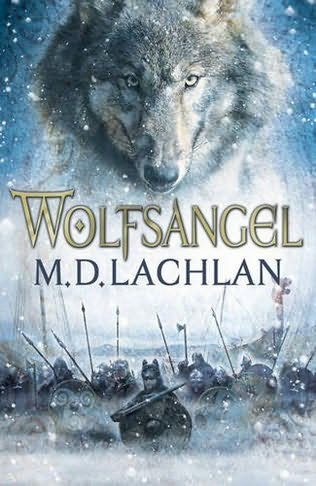
100 Books in 2011 Challenge: Wolfsangel

I’ve been on blog hiatus for a little while as I was on holiday in Vienna. Which was lovely. You may also have noticed from the sidebar that I’m running a little behind on the 100 Books in 2011 challenge. This is because I have been re-reading A Song of Ice and Fire before A Dance with Dragons is released on 12th July. Have I mentioned that I’m excited?

Anyway, while in the beautiful city of Vienna, I read Wolfsangel by M. D. Lachlan. I had been looking forward to this for some time, having read a number of rave reviews, and generally enjoying stories about Vikings.

The story follows the lives of twin boys separated at birth, one of which grows up as the son of a lord and the other is raised by wolves. They find each other as young men and their destinies are entwined with that of a young healer whom they both love. At the same time a witch is trying to protect herself from being killed by a god by bringing forth another god, using the bodies of the twins to achieve her goal.

My synopsis doesn’t really do it justice, but to be clearer about the plot would be to give away what happens. The plot is elegantly convoluted and the twists and switches are wonderful. People are not who they think they are but the reader only comes to this relevation along with the character so it is deliciously surprising.

The point of view is interesting. It’s omniscient third-person, which I’m not usually keen on, but this is done so well it really highlights why I don’t normally like it. Lachlan starts with a limited third-person pov, then pulls back to a gods-eye view and then circles down into another limited third-person pov. Everytime the perspective changes this happens. There’s no head hopping. While the perspective changes can happen quite quickly and we may visit more than one head in a scene, there is always at least a paragraph with an authorial tone that separates them. This is how it should be done and how it so often isn’t. It is controlled yet appears effortless.

Something else I enjoyed about the book was its lyrical style. At one level this is a re-telling of a myth and the language suits that. It takes a few pages to settle into the rhythm and, once you’re there, it’s hypnotic. I think this is especially notable in a book that is quite earthy and gory. It takes some skill to show the torments Lachlan visits upon his characters in such poetic language.

The characterisation, dialogue and setting are all good. The pacing is well handled. This is an incredibly well-written novel and a great story. I loved it. And considering that I read it in the midst of re-reading A Song of Ice and Fire (which is amazing) and it still stood out to me, that makes it all the better. Do read this.

100 Books in 2011 Challenge: Mistral’s Kiss

The first third of Mistral’s Kiss by Laurell K. Hamilton is basically one long sex scene with the protagonist, Merry Gentry having sex with some of her guard. After a while it becomes apparent that the reason for this is that she needs to get pregnant in order to become the heir to her Aunt’s faerie kingdom. It’s not good sex though. Mainly she just lays there while various men go wild with desire on her. It’s all very passive and not particularly engaging.

So for the first 150 pages I was mostly wondering what this book was supposed to be. There wasn’t a lot of plot in the first section. To be fair, this is number five in a series where, yet again, I haven’t read the previous books, so potentially I wasn’t quite getting what was going on.

The middle 100 pages of the book are a bit different. Merry and her guards bring life back to the faerie garden where they are having sex but the garden begins to swallow them up. They escape into another faerie realm and encounter the King of the Sluagh. With whom Merry has previously agreed to have sex so that he has a chance to father her child. At this point, the book starts to make sense as myth. This is the pagan wheel of life, the goddess and god coming to come together in a fertility rite. So there is more unexciting sex. Then the wild hunt is raised and Merry and her guards have to run for their lives.

They open a door into the mundane world. The last 100 pages are more like an urban fantasy detective novel. Merry and her guards fight the wild hunt and transform it into hounds. This is a book that doesn’t seem to know what it is. Is it erotica? Or urban fantasy? Or mythic allegory? It could be all three if they were blended together. I don’t think it would be easy, but it could be good. Instead this is three separate sections one after another and it doesn’t work.

The role of women in the book is problematic. Obviously I can’t say whether it is just this book or the whole series. The female protagonist is constantly surrounded by men, who don’t have fully developed personalities, and the only other female characters are her enemies. There’s her aunt who is a sexual sadist and mainly seems to want to kill Merry. Then there are two sluagh hags who are presented as possessive, jealous and manipulative. It’s a combination of a wish-fulfilment protagonist and misogyny.

The writing problems in this book aren’t about language, they’re about structure. The pacing is awful, characterization is sketchy, and it doesn’t know what it is. I’ll be giving the rest of them a miss.

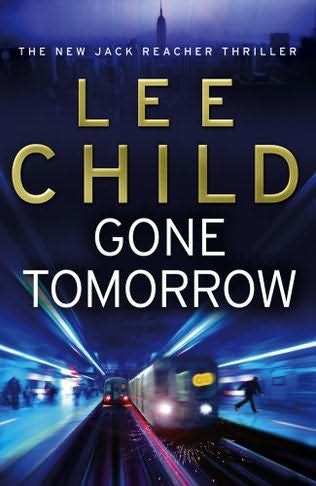
100 Books in 2011 Review: Gone Tomorrow

Last week I miscalculated with how much I would read on the train. I knew I only had 40 pages of Globalization and its Discontents to go and I was half way through Beginnings, Middles and Ends, and I thought that would be enough for the commute. Only it wasn’t. I finished them both on the way into work and had nothing to read on the way home. Fortunately, we have a book-dump at work where people can leave books and take ones other people have left. I was happy to find Gone Tomorrow by Lee Child. I’ve read a couple of these and they are fluffy, light and fun.

Jack Reacher is a ex-military policeman who lives under the radar travelling around the US. He tends to run into trouble. In this case he’s in New York, on the subway, and he believes he sees a suicide bomber. Reacher intervenes and the woman kills herself. The rest of the book is devoted to finding out what she was doing and why she killed herself.

The style is very much about detail. Actions are described to the level of: Reacher ordered coffee. It arrived. It was black and in a white mug. He added three sugars from rectangular white sachets with blue writing on them. This is not actual text from the novel. Short, choppy sentences tend to add urgency and increase the pace. Detail adds credibility and draws the reader into your world. With this book I realised it can go too far. There came a point when the short sentences were just grinding. The detail sometimes seemed obsessive and more about stretching the plot out to fill the word count. Although that wasn’t entirely necessary as this was a big book. I did learn some interesting facts about men’s tailoring though.

This was not my favourite of the Jack Reacher novels that I’ve read and I think that’s because there was too much detail around things that weren’t that relevant to the plot. The story in amongst the detail was entertaining and well-handled. I did want to know what happened and why the woman on the train had killed herself. Child does plot really well.

Character is another matter. I’m not a fan of Jack Reacher; I think he’s a bit of a dick. At the end of the novel, another character accuses Reacher of letting his emotions get the better of him and it’s good that we were told otherwise I wouldn’t have known. The characters around him are a mixed bag. Some are drawn reasonably well, and I like that there’s plenty of female characters playing non-stereotypical roles. Others are a bit cardboard cut-out. But that’s ok. After all, it’s all about the plot.

This is not his best, even among the few I’ve read, but if you’re looking for something easy and light, or to examine plot, then you could do worse.

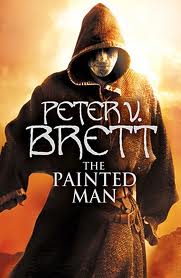
100 Books in 2011 Review: The Painted Man

I was excited to read The Painted Man by Peter V. Brett. There’s been a lot of buzz around it and I like the cover a lot.

There are three point-of-view characters; Arlen, Leesha and Rojer. We meet them when they are children and follow their stories through to their mid to late twenties. In the book demons come out at night and they can’t be fought, partly because they are so numerous, so humanity hides behind warded walls. But still, many people are lost to the demons, including the families of Arlen and Rojer. The damage done to Leesha is done by other people. After the formative events of their childhood are described, they each leave their home village in search of a way to fight what happened to them. Each finds they have special skills: Arlen learns to fight demons by tattooing wards on his body; Rojer can charm them with his fiddle and Leesha is a talented healer. Towards the end of the book, their paths converge and they fight a pitched battle against the demons.

This is a book with a theme. It’s about how people respond to fear and what it does to them. Which is a good theme, but it’s very obvious and sometimes it feels like the story takes a backseat. That’s a shame, because there’s a good story in here. Although I suspect it might be in the second book of the series. What this really felt like was backstory. Here are three characters who are going to form an amazing demon-fighting team who I think I would like to see ridding the world of demons, but I have to wait for a whole book while we set up their motivation.

Also, the worldbuilding is quite poor. At the level of detail, it’s ok. Villages and individual buildings feel quite solid. The problem is at the macro level. The various city-states of this world are one dimensional in terms of economy and culture. The latter is particularly problematic as the references to real-world culture are too clumsy. Here’s a city in the desert, so we’ll basically make them arabs but without any depth of understanding of arabic or Islamic culture. The other four cities are generic medieaval European templates. It all felt a bit paint-by-numbers. Not that this isn’t a fine tradition in fantasy, but getting the worldbuilding right is one of the elements that separates great fantasy from the rest.

Anything that get’s published has something about it; something that caught the imagination of an editor. So, what was it about this book? From the small biographical details available, I don’t believe that the answer is ‘connections in the industry’. It’s a debut novel, so we can rule out previous sales history. I think it comes down to story. I like the concept. It’s an interesting twist on the ‘farmboy becomes hero’ trope. I wanted to read what seems to have been held over to book 2. Perhaps reading the rest of the trilogy and viewing it in the whole will make more sense.

One thing to take away from this book is about making choices about what to show. For all of the characters the books covers fifteen years and so Brett has to choose which events he shows and which he summarises. He has to pick out a number of scenes and events that represent the formative experiences of the characters. I’m not sure I would have made the same decisions in all cases.

If you fancied reading this, then you might be better off skipping straight to the second book.

100 Books in 2011 Review: A Noble Captive

I try to read as widely as possible and sometimes that means reading things I don’t think I’m going to like. Things I don’t think I’m going to like include romance novels, especially Mills & Boon. However, there is something to be learnt from reading these books, namely ‘how to create emotional intensity through internal monologue’.

A Noble Captive by Michelle Sykes is a historical romance set on the edges of the Roman Empire in 75 BC. The captive in question is a Roman tribune, a contemporary of Julius Caesar, who is captured by pirates in the Mediterranean and taken to the island temple of Kybele. The story is inspired by the capture of the young Caesar by pirates although the ending is significantly less bloody.

The heroine is the assistant priestess, struggling to keep the temple going financially and spiritually while the sibyl is unwell. She is trying to walk a tightrope between political factions she doesn’t really understand.

Actually, there’s a good deal more plot in this than in the other Mills & Boon I’ve read. Although that doesn’t mean there’s a lot of plot. There’s a sprinkling of solid historical detail but this is undermined by a lack of rigour in other areas. For example, tribune was a very high office but in this book it comes across as not much more than a centurion.

So, yeah, there’s not much to say about this. It was fairly fluffy and not as annoying as previous Mills & Boon have been (does that mean I’m getting indoctrinated??), but there’s little to recommend it.  

100 Books in 2011 Review: Gridlinked

Gridlinked by Neal Asher is essentially James Bond in a space opera setting. Ian Cormac has been an agent for Earth Central Services for thirty years and has been linked to the AIs that govern the Polity for all of that time. His latest mission involves coming off the grid and learning to problem solve like a human as the AI network is potentially compromised by an alien intelligence from beyond the galaxy. In order to deal with this he is pulled off his current mission (which is not going so well) but not before he’s killed the sister of a psychotic terrorist. Who then proceeds to chase Cormac across the galaxy generally getting in the way until the final confrontation.

 The book is filled with a cast of engaging characters, both human and AI. Cormac’s adjustment to life without access to the AI grid, without all the information he could ever want, is convincingly portrayed. The moments when he has to ask other people about themselves and realises how much he has forgotten about making a connection are poignant and well-handled.

The dialogue is crisp. The pacing is good; it’s a 125,000 word novel and it packs much more in than you’d think. The twin strands of the plot are balanced nicely and even right at the end the possibility that everything will go horribly wrong is strong.

There are points when Cormac is talked about by other characters and we learn that he is somewhat legendary. Yet he comes across as a relatable character. He’s not legendary in his own mind and he doesn’t have the disrespectful arrogance of James Bond.

I really enjoyed this. I’ve bought another one and I’m looking forward to reading it. If you haven’t read Neal Asher before, I’d recommend him.