Archives

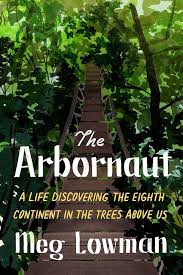
The Arbonaut

The Arbonaut is a memoir by Meg Lowman, a pioneer in ecology who developed techniques for reaching and studying forest canopies.

Meg covers her life as a scientist and the challenges of being a woman in science, including assault, dismissal, being underpaid and underrecognized. She also talks about the mentors she had along the way, mostly male, and how she tries to mentor young women coming up. It was interesting to read about her early explorations in answering questions about leaves when there was very little research documented in the journals. And also interesting to reflect on a time when papers could only be read in physical journals which came in the post. I’m not that young, but I’m very attached to having information instantly available.

There are chapters focusing on a few of the major projects she’s been involved in, such as Ethiopia’s Church forests, conservation in India’s Western Ghats, and counting species in Malaysian canopies. It’s sobering to read about deforestation and the loss of ancient woods. Planting new trees doesn’t make up for the loss of old ones, or, at least, it won’t for hundreds of years. Meg’s work has pivoted in her later career to focus on saving trees, setting up the Tree Foundation and launching Mission Green.

In between the chapters are short vignettes dedicated to types of tree, which I enjoyed a lot. It’s good to know more about trees.

This book was from my book subscription box, so probably not something I’d have picked up otherwise, but it’s worth a read. It’s insightful and you’ll definitely learn something!

The Pigeon Tunnel

In 2021 I completed the Faber & Faber Writing a Novel course, which came with a long reading list. I’m nowhere near having read everything on that list but it has opened up to me books I wouldn’t have read otherwise. One of those was The Pigeon Tunnel: Stories from My Life by John le Carré. I’d never read any of John le Carré’s books. On reflection I’ve seen more screen adaptations than I realised and rated those quite highly. Tinker, Tailor, Soldier, Spy is the obvious one, but also The Constant Gardner, The Night Manager and The Tailor of Panama.

The Pigeon Tunnel is part memoir, part insight into the writing process and part personal reflection. It includes stories from le Carré’s time in the British secret service during the cold war, which reflect on the events themselves, the people involved, and also how le Carré was growing personally and professionally as a result. After le Carré turned his attention fully to writing, he continued to write novels set in that milieu and so kept up the contacts and travels that provided him with the knowledge to vividly and believably portray the world of his stories. He reflects on the real life people and events and the process by which they then informed his writing.

The tone of the book is entertaining and warm. Some of the events that are described are weighty and serious: le Carré never takes them lightly but his writing conveys a comforting and safe viewpoint from which to regard them. It was as a result of enjoying his writing style in this book that I decided I would read the novels. I started last year with the first George Smiley novel Call for the Dead (which was made into the film The Deadly Affair). I found it much more of an adventure story and much less literary than I assumed it would be, and I’ll be working my way through the rest.

If you’ve never read any John le Carré, I’d thoroughly recommend him. The Pigeon Tunnel is a good place to start, even if you’re not particularly interested in the writing process or personal memoirs. It’s delightful.