Archives

God is not Great

I don’t think I would have read God is not Great by Christopher Hitchens if it hadn’t been in the 99p kindle sale at Christmas. Maybe that was someone’s idea of irony.
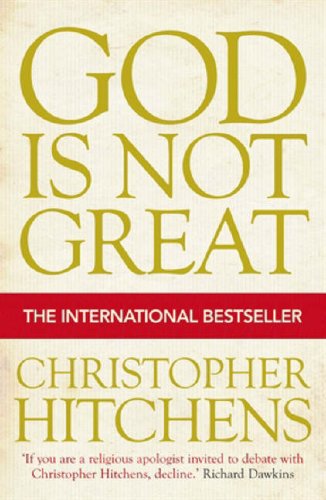
The premise is that not only is there no god, or any other creative consciousness, but also that organized religion is mad, bad and dangerous to know. Using personal anecdotes, documented history and analysis of texts, Hitchens takes us through more than a dozen reasons why religion is bad for your health and probably makes you a less moral person.

I thoroughly enjoyed it, but I can’t say I had my point of view changed. I came to the book already primed to agree with Hitchens’ points. Partly because his arguments are based on a Marxist critique of religion and partly because I’ve read the Bible and came to many of the same conclusions myself. The one thing I did learn is that the Buddhists aren’t all they’re cracked up to be. Not as peaceable as you might think.

If you believe there is a God, especially one of the Abrahamic persuasion, you are unlikely to have your faith shaken. Hitchens goes in for grandstanding much more than persuasion, and I would think his tone would inspire defensiveness and rebuttal. I’m sure it would get my back up. Unfortunately, the same is true if you’re undecided. This is not a book that will commend a god-free enlightenment to you (for that, I’d recommend Towards the Light by A.C. Grayling). If you are an atheist (and I am, for all my flirting with animism/paganism), then this is a rallying cry for the cause and really good fun. Recommended or not recommended depending on your starting position.
The Four Agreements

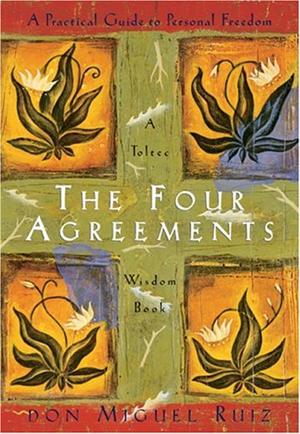
The Four Agreements by Don Miguel Ruiz is another re-read for me. I first read it several years ago and decided to read it again when I stumbled across a motivational poster with the Agreements on it.

Those agreements are:

1. Be impeccable with your word.
Don’t use your words against yourself or others. Don’t gossip. Speak with integrity. Use your words in the direction of truth and love.

2. Don’t take anything personally.
Nothing others do is because of you, it’s a result of their perception of reality. When you are immune to the opinions and actions of others, you won’t be the victim of needless suffering.

3. Don’t make assumptions.
Ask for clarification and speak up for your needs. Communicate clearly to avoid misunderstanding.

4. Always do your best.
Your best will vary day to day depending on your health, mood, levels of stress and other factors. Doing your best, whatever that may be, will free you from self-judgement, self-abuse and regret.

This is a gorgeous, uplifting little book. It is a bit goddy for my taste, but as it’s a short book that’s not too much of a problem. Making the four agreements has had a noticeable effect on my experience of life – especially the second one. I would highly recommend this book.

Finders Keepers: A Tale of Archaeological Plunder and Obsession

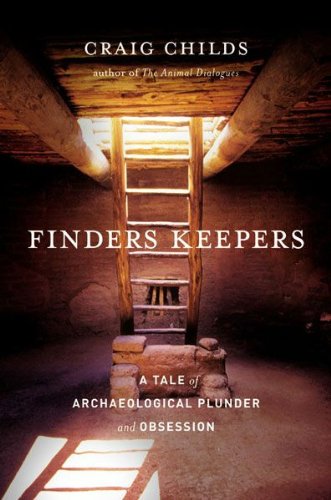
New for 2012! Book reviews for non-fiction titles! I read quite a bit of non-fiction and, as my reviews have slid away from being purely about what I’ve learned about writing through reading into more traditional book review territory, I thought it was time I started recording those as well. First book of the year is Finders Keepers: A Tale of Archaeological Plunder and Obsession by Craig Childs.

The book is an exploration of the ethics of archaeology and I was attracted to reading it because I have a love for the artifacts of the past. Archaeologist was one of my many answers to the question ‘what do you want to be when you grow up?’. The book isn’t quite what I thought it was. I expected a more scholarly approach to the complex and ambiguous question of what we should do with old stuff.

Who should have it? Does it belong in museums where it can be studied? Lots of the stuff in museums has been obtained unethically, especially in the top institutions. Should it go back to the culture it came from? Are artifacts art or information? Should they be displayed for aesthetic enjoyment or catalogued for posterity? Should they be owned by private collectors or held by governments and public insitutions?

There are no easy answers to these questions and Childs presents a range of views in an objective and non-judgemental way. He tells his own stories of his experience of making archaeological finds and what he has done with them, as well as the stories of people involved at various levels of the antiquities trade.

In the end, Childs’ view is that artifacts should be left where they are found, in context. But this view is based on feeling and he struggles to articulate why that is the right thing to do, so the reader is left to make up their own mind if they can.

I enjoyed this, even though it wasn’t quite what I thought it would be, and if you’re interested in old stuff, museums or archaeology it’s worth a read.