Archives

Ancient Traces: Mysteries in Ancient and Early History

ancient tracesThis is another one of those books that wasn’t what I thought it was. I’ve had it on my shelf for a while. I thought it was an archaeology book about early humans. It sort of is, but mostly Ancient Traces by Michael Baigent is a conspiracy theory book.

The central premise is that evidence exists that suggests that humans evolved much earlier than is generally believed and didn’t evolve from apes. The academic establishment has systematically suppressed any evidence that doesn’t support the current dominant paradigm.

Baigent presents a number of related ideas: humans evolved much earlier than thought; we co-existed with dinosaurs; dinosaurs still exist in remote areas of the world; humans evolved from a sea creature rather than from apes.

I’m not sure how much I believe but I hadn’t heard many of these stories/theories before and it is all very entertaining. Baigent style does verge on the hysterical when talking about how evidence has been suppressed but otherwise it’s pretty readable. The ideas in the book are thought-provoking if not well-supported. It was fun.

The Spiritual Revolution: Why religion is giving way to spirituality

Spiritual revolutionThis book is the findings of a research project asking whether there has been a fundamental shift in Western cultures away from religion towards spirituality.

The Spiritual Revolution posits that the decline in attendance at formal church services and in those describing themselves as members of congregations is matched by a rise in people describing themselves as spiritual and participating in what might be described as new age activities. The study also considered whether that trend might be reversed by looking at the demographics of the population studied. The study was conducted in Cumbria and some comparisons to the UK as whole are made.

The most interesting part of the book to me was the discussion about how the decline of participation in traditional congregation mirrors the decline in all sorts of associational activities, such as trade unions, professional institutions and political parties. I’ve worked for organizations that rely on committees of volunteers for a while now and the factors described in this book are very much at play. It gave me a different perspective on what’s going on. I’m not sure what I’ll do with that yet, but I feel it’s important to know.

The Spiritual Revolution is the published findings of a study conducted by Paul Heelas, Professor of Religion and Modernity, and Linda Woodhead, Senior Lecturer in Christian Studies, from Lancaster University. If you’re interested in the subject and prepared to tackle some fairly dry text, then it’s worth a read.

Medieval Lives

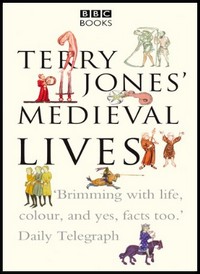
medieval lives I read a lot of fantasy fiction (amongst other things) and write some too. Fantasy worlds are overwhelmingly based on medieval European societies and the genre does come in for criticism for its lack of diversity. I love to read fantasy with other sources of inspiration. And I love really good medieval Europe style fantasy, not least because I love that period of history.

Medieval Lives by Terry Jones and Alan Ereira is the book of the BBC television series. Each chapter gives a snapshot of what a person’s life might have been like based on the role they had: peasant, minstrel, outlaw, monk, philosopher, knight, damsel and king. The format enables the authors to draw distinctions about how position and wealth affected peoples lives. There’s a conscious effort to do some myth-busting and include some surprising facts.

I especially enjoyed the chapters on damsels and knights. The one on damsels makes the point that women’s status in society is not a straight line of progress and that medieval women probably had more equality than Victorian women. There’s a fun bit about women arranging their own abductions in a effort to game the system. The chapter on knights discusses the concept of chivalry as a attempt to control the extreme violence of what were basically warlords.

It’s all very entertaining. As it’s the book of the TV series it’s understandably lightweight. That makes it accessible and it’s ideal as an introduction to the subject matter. I was left wanting to read more in-depth books that I could really get my teeth into and I think that’s a good thing.

Getting Things Done

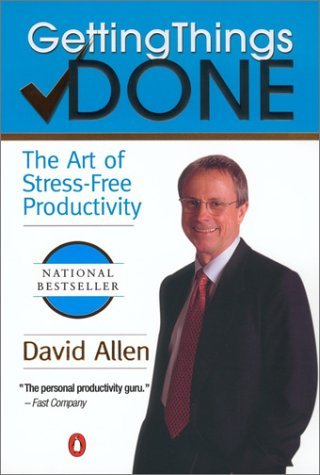
Getting_Things_DoneI love this book: Getting Things Done: How to achieve stress-free productivity by David Allen. The review will be long. The TLDR version is: This book will help you organise your work and life so you can handle all your commitments without getting stressed. It gives you principles that let you arrange things in your own way so that you’ll stick to the programme. The system is simple and powerful and frees your brain from worry. Getting Things Done is the best book I’ve ever read on time management, project management or productivity.

Allen’s proposition is that the brain can only cope with a limited amount of complexity. It can’t tell the difference in importance between reminding you to draft a position paper and reminding you to buy toothpaste. And it’ll give you both reminders at the most inappropriate times, reminding you about toothpaste during a meeting and about the paper when you’re in the bath.

When we feel like we have too much to do, or we don’t know what to do about the things we have to do, we tend to go numb. I call it brain fog. It’s the sense that there’s lots of things you should be doing but somehow you can’t get your brain to fasten on to anything. What happens to me is that I waste time doing easy but low value work at the expense of getting my priority work done. The important work doesn’t get done because I have to dig out all the relevant emails and scraps of notes or think about what I want to do about it. I might have 30 minutes on my hands but that doesn’t feel like long enough.

I like this system because it doesn’t tie you into doing it in a specific way. There are four stages: collect, process, file and do. The first step is that you have to collect all the things that come in to you for working on so you need buckets. An in-tray or inbox can be a bucket. A notepad or post its can be a bucket. An app on a tablet or phone can be a bucket. So long as, one way or another, you can be sure you have everything collected it doesn’t matter how many buckets you have or what they look like.

The next step is that you have to process all that stuff and capture it for when you have the opportunity to do something about it. Allen recommends calendars and to-do lists, but you can use what you want. The important part of this stage is to decide what to do with something and write it down. The brain can be more efficient if you are specific about what the next action is on any given project. If you’ve got a list of next actions, you can do them whenever you have ten or fifteen minutes spare because you’ve already done the decision making. The last piece of this incredibly simple system is to write everything down. Getting Things Done works with the brain’s natural inclinations and emphasises getting everything out of your head on to a list. If you’ve done that then the brain turns its attention to thinking up new things rather than constantly reminding you about the old things.

The principle about filing is to make sure the system you use is to hand. If you’re working at your desk and the file you need is not within reach you won’t get up to get it, you’ll put the thing you were doing to one side and move on to something else. This results in lots of mess. But it is true. Humans are lazy and genetically predisposed to conserve energy. So make it easy on yourself by rearranging your environment to work for you not against you. Finally, you have to do your stuff. And if your next actions list is comprehensive and your reference materials are to hand, then you’ll fly through your work.

I first read this book about eight years ago. I spent a whole Saturday in the office setting up a new filing system. It can take a lot of upfront investment in getting on top of everything but it’s worth it in the long run. The pay off in stress reduction and increased productivity is worth it. I’ve kept up a lot of the systems and I thought re-reading it would help me tighten up a little. What I realised was that my personal commitments have mushroomed and now I need to apply the same system to everything. I have a ridiculous amount of stuff to do and I’m not stressed about any of it anymore.

Consciousness Explained

consciousness-explained-500x500Consciousness is a tricky subject and how we come to be aware of ourselves is something not well understood. In Consciousness Explained Daniel C. Dennett explores the idea that consciousness is not something extra in us, that it is, instead, a by product of how our brains work.

First, Dennett dismantles the ghost in the machine argument. This is the idea that the mind is different to the brain/body which leads to the idea of a soul that continues after we die. It’s an observer, a translator of the processes in the brain, a someone that makes decisions, holds beliefs, acts. Then the book explores what else it might be that creates our sense of self and how it might have evolved.

Along the way, we learn a lot about the state of the science of the brain (or at least where it was in 1991 when the book was published, I imagine it’s moved on some way) and how things really work. There’s a lot of time spent looking at how vision works. I always thought that the eye fills in the gaps created by the pupil, but actually it doesn’t. It doesn’t have to fill in anything because it’s not recognizing the gap.

So, what’s left if there’s no ghost in the machine? No soul? Well, Dennett says that consciousness is a by-product of language and evolved because we tell stories. We are figments of our own imaginations, fictional characters in the story of our lives. Which, as a writer, I find charming.

“Our tales are spun, but for the most part we don’t spin them; they spin us.”

This is a hard read, no question. It’s a real work out for your brain muscle and I felt very virtuous reading it. I highly recommend it if you’re interested in knowing how your brain works, but I won’t lie, it takes some reading.


Strip off Your Fear: Radiate the Confidence Within

SOYF-web-coverThis is a book about setting yourself free to live the life you really want to have. In Strip off your Fear, Betsy Talbot talks about the reasons we keep our dreams small and hide ourselves away.

Each chapter focuses on a body part: hair, face, breasts, stomach, genitals and legs. The chapters talk about the ways we’re taught to find ourselves inadequate (dye your hair! wear spanx! cover yourself up!) then about the ways we think about that body part. Talbot then talks about what that body part does for us and the positive attributes it has. Through her descriptions of body language I came to see how people experience me as being a lot more confidant than I actually feel, and also to see how I can own that confidence.

I found the understanding of how we come to have limiting beliefs and project them on to our bodies to be a bit superficial. It suits the tone of the book which is light and positive but might suggest that these things are easily overcome. It’s not a start-of-the-journey book. If you’re pretty au fait with your stories and how you came by them, then this is a fun, inspiring book that will help you find the confidence of your new stories. I enjoyed it, and found it motivational. Could have used a chapter on arms though.

Physics of the Impossible

physicsimpossibleIn Physics of the Impossible, Michio Kaku tackles some of our favourite technologies from science fiction and parapsychology to see whether they are actually possible.

It includes chapters on force fields, telepathy, robots, time travel, perpetual motion machines and lots more. The chapter on robots was particularly interesting, because robots is something that we’re talking about a lot at work. That then leads to a discussion about artificial intelligence and its complications.

The technologies are classified into three classes. Class I technologies are things that are allowed in the laws of physics and will likely be seen within the next century. They include things like invisibility, phasers and starships. Class II technologies are theoretically possible but require resources that could only be at the disposal of a much more advanced civilization.

Lastly, there are two technologies that break the laws of physics as we understand them today. Of course, it’s entirely possible we don’t fully understand the laws of physics yet.

I really enjoyed this. It’s the kind of thing that makes me feel really excited about the future of humanity and our capacity to survive. It’s an easy-ish read, given the subject matter, and a lot of fun.

Eating in the Light of the Moon: How Women Can Transform Their Relationship with Food Through Myths, Metaphors, and Storytelling

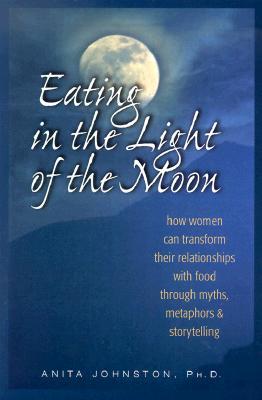
Eating in the light of the moonI picked this up because I’d become aware I wasn’t really enjoying what I was eating and I needed a reminder about working through feelings rather than suppressing them with food.

Eating in the Light of the Moon by Anita Johnston addresses eating disorders through folklore and mythology. Each chapter looks at the various motives we have for using food as self-medication, whether it’s chasing the perfect body because that’s what women are valued for, or controlling your food intake because someone else is controlling everything else in your life, or overeating because you spend all your willpower being the good girl. There’s a lot of chapters.

Each chapter uses a folktale to illustrate the issue, which I really enjoyed. I knew some of the stories but a lot of them were new to me. In context of the work, the symbolism and metaphors took on a deeper meaning than they might have if I’d read them in another context. I liked it. It got me thinking about things in a different way which was just what I needed. If you have any interest in eating disorders, personally or therapeutically, this could be a useful addition to your library.

Talking About the Elephant

talking elephantTalking about the Elephant by Lupa is an anthology of essays on neopagan perspectives on cultural appropriation. The essays cover various paths from Celtic Reconstructionism to Egyptian mysteries to eclectic paganism.

Cultural appropriation is where members of a dominant culture take sacred aspects of another culture and appropriate them for aesthetic purposes. A good, and recent, example is white people wearing traditional American Indian headdresses. Each feather in a warbonnet means the person wearing did something. It’s like wearing medals you didn’t earn. Members of the tribes of American Indians are very vocal about the appropriation of their sacred rites, such as dream quests and sweat lodges, and the people who use them without understanding the culture. They make the very valid point that religion is about community and you can’t separate the practice from the life.

Neopagans draw from any religions going – including the dominant Abrahamic religions – and they do it with the full range of motivations. Some neopagans are all about community and some are all about the individual connection with the divine. These essays are from people practicing various paths and talk about their experiences of cultural appropriation. In many cases, that means working through a rationalization for doing whatever you want and not feeling guilty about it. There is an interesting discussion about academic bias and lots of tidbits about various traditions and where symbols are derived from. While the essays are engaging and, I believe, genuinely try to tackle the issue, this anthology feels like it failed to get to grips with it.

I don’t know what the answer is here. I understand the desire not to give up the objects and activities that you’ve become attached to and have a connection with. I also feel that’s it’s not enough to say, well it’s ok to violate the living culture of a people who have been colonised and are still experiencing oppression so long as you do it respectfully. Maybe, the answer is to address the social issues that make cultural appropriation so harmful.

The Borgias and their Enemies 1431-1519

borgias I’ve been watching the series The Borgias and enjoying it enough to want to find out more about the actual Borgias. Because, you know, TV tends not to be terribly historically accurate and I was curious to know what it was all based on.

There’s not a lot out there, unless you want to pay thirty quid for something very academic. Christopher Hibbert’s book had good reviews so I chose that. It covers a large period of history and is a relatively short book, so it is necessarily superficial.

It covers the election of Rodrigo Borgia to Pope and gives some interesting background on the state of the papacy in the fifteenth century. We tend to forget just how corrupt the system was, just how tied into the political power-broking of the time. There’s a section about Cesare and his military exploits. And finally something about Lucrezia. It focuses quite heavily on her ability to rule and the fact that Rodrigo often entrusted the running of the Vatican to her rather than any of the Cardinals.

It was interesting and a very easy read. Certainly, a decent place to start. It wasn’t quite what I was looking for though. I think I wanted something that took apart all the juicy, salacious rumours about the Borgias and separated fact from fiction. I think I was also looking for something more in depth about the personalities involved. I guess I might have to shell out for one of those more academic books after all.