Archives

The Arbonaut

The Arbonaut is a memoir by Meg Lowman, a pioneer in ecology who developed techniques for reaching and studying forest canopies.

Meg covers her life as a scientist and the challenges of being a woman in science, including assault, dismissal, being underpaid and underrecognized. She also talks about the mentors she had along the way, mostly male, and how she tries to mentor young women coming up. It was interesting to read about her early explorations in answering questions about leaves when there was very little research documented in the journals. And also interesting to reflect on a time when papers could only be read in physical journals which came in the post. I’m not that young, but I’m very attached to having information instantly available.

There are chapters focusing on a few of the major projects she’s been involved in, such as Ethiopia’s Church forests, conservation in India’s Western Ghats, and counting species in Malaysian canopies. It’s sobering to read about deforestation and the loss of ancient woods. Planting new trees doesn’t make up for the loss of old ones, or, at least, it won’t for hundreds of years. Meg’s work has pivoted in her later career to focus on saving trees, setting up the Tree Foundation and launching Mission Green.

In between the chapters are short vignettes dedicated to types of tree, which I enjoyed a lot. It’s good to know more about trees.

This book was from my book subscription box, so probably not something I’d have picked up otherwise, but it’s worth a read. It’s insightful and you’ll definitely learn something!
That One Patient

This year I decided to get a book subscription box. I mean, I don’t lack ways to buy news books but I do like getting a treat in the post. Tea Time Bookshop have lots of choices of different genres so I picked Science Fiction & Fantasy and Politics, Sciences & Insights. The book in the first PSI box was That One Patient by Ellen de Vissier.

It’s a collection of newspaper columns originally published in Dutch newspaper De Volkskrant. It didn’t immediately appeal to me. Then last weekend I was scouring the shelf for something to read. I’d decided I wanted an easy non-fiction read alongside the challenging novel I’m reading. This seemed to fit the bill.

Sidebar: I know I said I was having a trashy novel phase but that only lasted a few weeks. I’ll get back to it.

That One Patient surprised me. The columns are the stories of medical professionals about patients who had a profound impact on their lives and careers. I’d expected it to be full of sentimental stories about plucky patients pulling through against the odds. There is a little of that, and there’s so much more.

There are stories of patients whose lives and deaths inspired the development of better treatments for others. There are lots of stories of doctors realising that treatment isn’t always best, learning to respect patients’ wishes, and understanding that patients know their own bodies best. As the medical professionals are mainly Dutch and euthanasia is legal in the Netherlands there are several stories about that experience, and it was those I found the most nuanced, sensitive and thoughtful.

I would never have picked this book myself so I’m glad to have had it put in my way. I enjoyed it more than I thought I would. It’s good to have read something out of my normal pattern. I’m looking forward to finding out what’s in the next box.

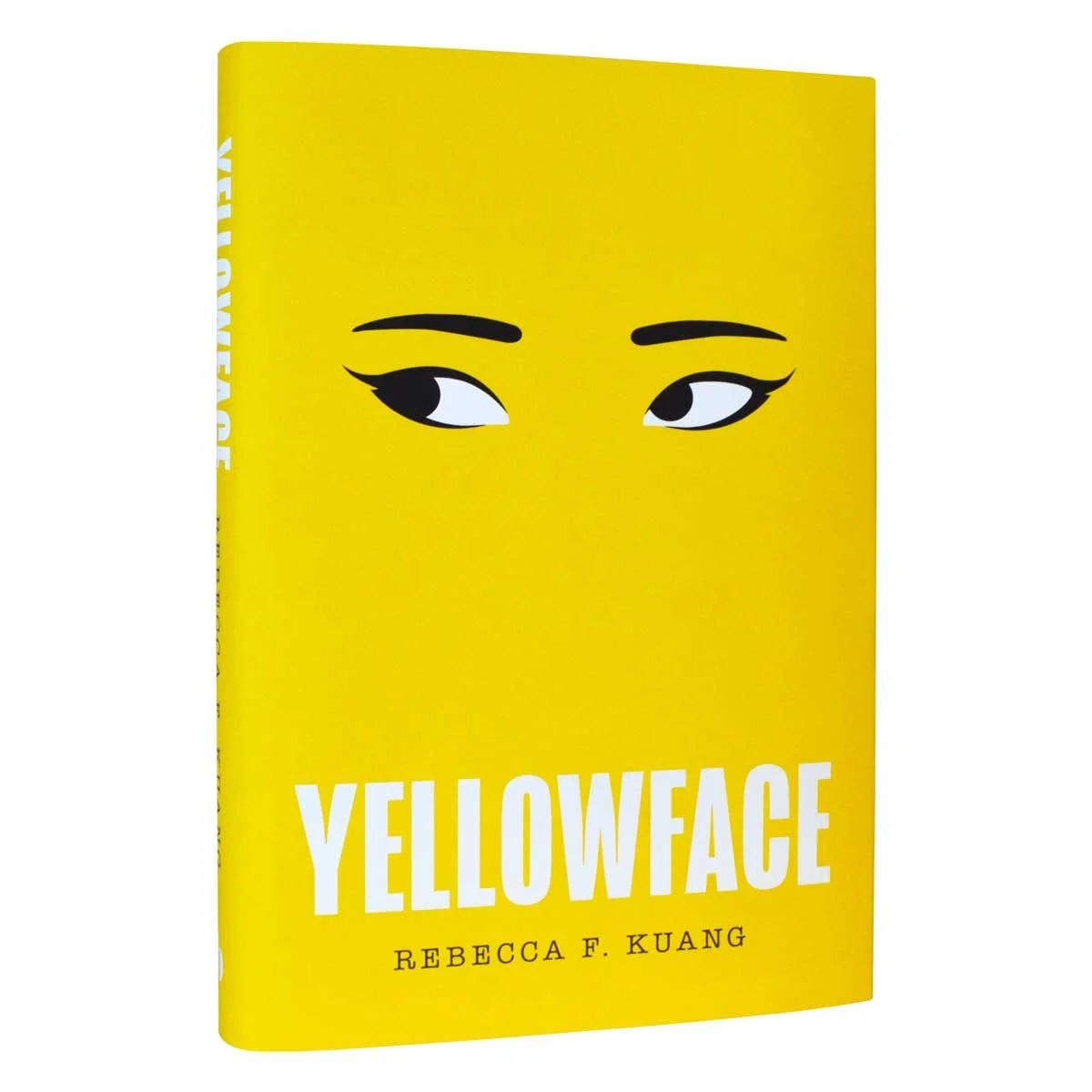
Yellowface

This book has been everywhere lately and I’ve seen lots of good reviews but it’s contemporary literary fiction which is not usually my kind of thing so I didn’t pick it up. When a friend recommended it and offered to lend it to me, I decided I would. Never turn down a free book!

Yellowface by Rebecca F. Kuang is the story of how a white author, June, steals a manuscript from her very successful Asian-American author friend Athena – on the night the friend dies. She takes a first draft of Athena’s next book and develops it and then it gets picked up by her publishers. It’s a success, much more so than her previous books. The publishers editing team supports her with the rewrites. I quite enjoyed the portrayal of how the edits suggested by the editor made the text more problematic – nuance and complexity being removed, foregrounding of white saviour characters – and how June is oblivious to the impact on the story. She’s more concerned with not being found out and being a ‘good’ author.

I also enjoyed the portrayal of the internet storm in a tea cup that develops around claims that June is claiming to be Asian when she’s not, through an ambiguous name change and author photo, and has plagiarized someone else’s work. It fizzles out and doesn’t matter much in the end, by June is thrown into depths of paranoia and guilt. But clueless and unself-aware as she is, June plows on and does it again. Under pressure to produce another book, June rifles through Athena’s notebooks and picks a short paragraph to flesh out into a novel. Unluckily for her, Athena developed this paragraph in writing workshop and the tutor remembers. June is also being haunted online by someone using Athena’s social media account, which adds a pleasing touch of mystery.

I liked it a lot. Enough to buy another of Rebecca Kuang’s books. It is perhaps not as deep and rigorous a critique of the publishing industry as it could be, and is not that literary after all (probably why I liked it), and belongs in that ‘trashy’ novel phase I’m having. It was a fun, easy read which was well-written and thought-provoking in places.

There is an interesting review of the book by @withCindy which I watched. It pulls out the complete lack of analysis around wealth and privilege that impacts success for all people that could have made this book more hard-hitting. I think the review is really on-point and worth watching. Yellowface is still a fun read.

Infomocracy

Periodically, I make an effort to diversify my fiction reading. It’s easy to slip into just reading authors I know, especially those that are quite prolific. My fiction reading has been dominated by John Le Carré, Mick Herron and Adrian Tchaikovsky lately, and it felt like time to find some new authors.

Malka Older was a good choice. I haven’t blogged in a while because I’m studying and that takes up a lot of time but Infomocracy was so good I wanted to share.

Infomocracy is near-future science fiction, set some decades into a future earth. Exactly when isn’t specified but ‘now’ is within living memory. The premise is that government is at a level closer to the citizens. The world is divided into centenals which are geographical groups of 100,000 people. That’s about a third bigger than a parliamentary constituency in the UK. Neighbouring centenals might have very different governments. This is all powered by Information, a global network that provides real-time data on everything with impartial analysis; the theory being that democracy is only possible with an informed populace.

Elections are held every ten years to allow for governing in between campaigning and Infomocracy is set at the third of these elections. The novel follows an Information operative and a campaigner for one of the governing parties, who both find evidence that one or more of the dominant parties (i.e. those with the most centenals around the world) are trying to subvert the system.

This is Older’s first novel and it is really good. Infomocracy is book 1 of a trilogy and I’m looking forward to reading the rest. The characters are engaging, the worldbuilding is solid and the premise is really interesting. I’ll admit, I’m kind of into policy and government and how all these things work so I appreciated the depth of understanding of psephology and how voters engage (or don’t) with facts vs campaigning. It’s also a cracking plot and a lot of fun. If you’re looking for something new to read, this is highly recommended.

Tantra

There will be a British Museum theme to most of the next few posts.

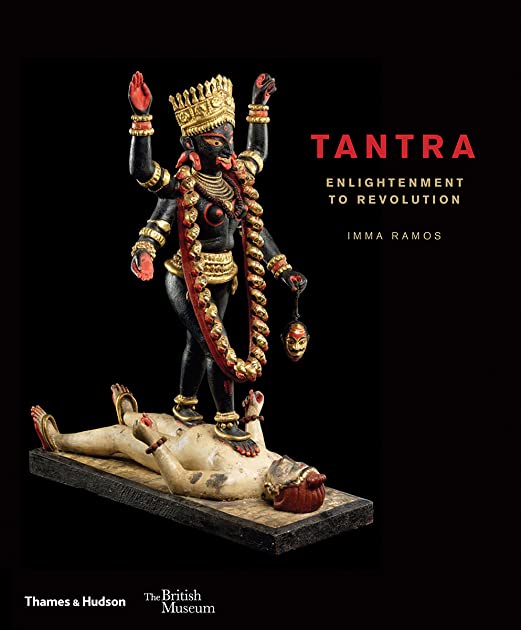
Tantra by Dr Imma Ramos is the book of the British Museum exhibition on Tantra. It had just opened in early 2020 when the pandemic hit and so I didn’t get to see the exhibition itself.

The book and exhibition tell the history of the development of Tantra as a reaction to and subversion of conservative and hierarchical Hinduism. It took the taboo or forbidden elements and turned them into ways to connect with the gods and absorb their power. There was a path that took the teachings and rituals literally and one which took them symbolically, using visualization rather than practice. Given that Tantra had a focus on power in the mundane world, it was enthusiastically adopted by rulers in the Indian sub-continent. Tantra spread east and was also absorbed by Buddhism, creating new Tantric paths with a Buddhist flavour. Using art and sculpture from the time, Dr Ramos shows how themes of conquering ego and ignorance are represented and unlocks the symbolism in the representation of Tantric gods and goddesses.

The book explores how Tantra was misunderstood and misrepresented by the British during the colonial period. Tantric sex means uniting the masculine and feminine energies in order to connect with divinity and is not about purely sexual pleasure, but the representation of this element of Tantra in sculpture and painting was interpreted salaciously by western minds. It was also considered pagan and demonic. The way Tantra was viewed and talked about in the West then evolved into the way it was adopted by the counter-cultural movements of the late 20th century, with an emphasis on sex rather than spirituality.

In India, Tantra became associated with the resistance to colonialism and became closely connected to Indian nationalism. Dr Ramos shows how Tantric deities were used to promote Indian-made goods and how the symbolism came to include the fight for independence.

This is an eye-opening book and it’s a real shame I missed the exhibition. I both learned and unlearned a lot.

Stonehenge

Welcome to my annual flurry of posts about books, where I realise I haven’t posted anything in months, have a few weeks of activity, and then get distracted by work and life again.

Anyway, recently I went to the World of Stonehenge exhibition at the British Museum and, as I do, I bought a book. Stonehenge by Rosemary Hill is about how Stonehenge has been interpreted, treated and used throughout the centuries. From the romantic fiction dressed up as fact of Geoffrey of Monmouth to roughly about ten years ago, Hill traces the history of our efforts to understand the ancient monument.

Particularly interesting is how the druid theory has taken on a life of it’s own. Starting as an idea based on nothing much more than a mention of druids by Tacitus, supposedly an eye witness account, and an idea that Stonehenge dated from the Roman era, it has morphed into a movement that sees druids celebrating the summer solstice amongst the stones. We know nothing about the druids as they left no written records. Everything that is said about them is a modern invention. It might be right, but we don’t know.

Hill covers the ownership of Stonehenge, mostly private and the campaigns to acquire it for the nation. Some of those owners chose not to allow any archeaological digs, which given the damage some of the early ones did is probably a good thing. More recent digs have discovered burial mounds, human remains, and evidence of the age of Stonehenge and that it was built in at least three stages.

Stonehenge has inspired art, literature and poetry for centuries. Hill’s explores how it has been used as a canvas for the spiritual and philosophical ideas of the age. She shows how the more bloody, sacrificial interpretations are comnected to times of civil unrest.

This is a thoughtful and engaging book, well researched and constructed. Definitely worth reading.

The Doll Funeral

I’m doing a writing course for the next nine months and the reading list is quite intimidating. There are nearly 100 books on it. It’s been less than two weeks and I’ve bought ten of them already. Obviously, I’ll buy more than I read and many will sit on the bookcase unread for years. But some will get read, and thus reviewed. Or what passes for a review on this blog.

The first of those is The Doll Funeral by Kate Hamer. I read a three-page extract as part of my homework this week. It was well-written with a rich, evocative style and a real sense of menace in those few pages. Enough to make me want to find out what was going on.

It was not the story I thought it was going to be. From the extract I expected that sense of menace throughout and for the story to be how the protagonist, Ruby, escapes her predicament. It’s not quite that. Ruby learns on her thirteenth birthday that her parents are not her birth parents. For Ruby, this is good news. Her father is violent and hateful towards her and her mother weak and ineffectual. The terror of this situation is effectively conveyed in the first third of the book.

Then the tone shifts. Ruby stands up to her father and, thinking she’s done something irreversible, flees into the forest. After a few days she returns to find that her adoptive parents have decided to ship her off to an aunt. Ruby runs again. This time she finds other lost children and attempts to survive a winter with them. Interleaved with Ruby’s story is her real mother’s tale. Then there’s the thread where Ruby sees the spirits of the dead. In the end Ruby finds out about her real parents and they’re not much better than her adoptive ones. It’s kind of a happy ending, but one that feels out of kilter with the menace of the beginning.

Overall, I didn’t enjoy this much. I liked the first third. The writing is evocative and creates a claustrophobic and frightening opening, but it made promises the rest of the book didn’t keep. In the rest of the book I was more interested in the mother’s story. I liked the way there was always the suggestion that Ruby seeing spirits might have been caused by getting hit on the head so many times, whilst still conveying how utterly real it is to Ruby. I quite like books that resist classification. Despite all that, I found the ending unsatisfying and was disappointed not to read the story I thought I was going to read.

Gravitas

I have always thought of gravitas as a quality; something a person has or doesn’t, that either comes naturally or develops through life experience. On examination my reasoning for that belief is flimsy. I’ve no clue how I thought some people acquire gravitas or are simply born with it and others don’t, irregardless of their experience.

Caroline Goyder argues in Gravitas: Communicate with Confidence, Influence and Authority that gravitas is a skill that anyone can develop. She talks about the way that the tone and pitch of your voice, your body language, the congruity between what you do and say, and, perhaps most of all, your self-awareness, contribute to how people receive you.

There are lots of useful exercises aimed at understanding how you come across and the thinking patterns that might be holding you back. There are lots of small things that are easy to implement and build up into a big impact.

I was convinced that gravitas is a skill and that anyone can learn to have more of it. I read a lot of this kind of book and don’t often feel the need to review them, but this one actually changed how I think about something.

Trainwreck: The Women We Love to Hate, Mock, and Fear… and Why

Sady Doyle’s Trainwreck is an examination of the media treatment of female celebrities (mostly celebrities, always women) when they go off the rails. Starting from the contemporary examples of Amy Winehouse, Britney Spears and Lindsay Lohan (the book was published in 2016 but draws extensively from Doyle’s journalism over the preceding ten years) Doyle examines what might really be happening. The stories created by the media take the same narrative: somehow these women have broken the rules and deserve the judgemental, voyeuristic treatment meted out to them.

First Doyle puts the contemporary examples in a historical context by comparing them to treatment of similarly transgressive women such as Mary Wollenstonecraft, Charlotte Bronte and Billie Holliday. Women who have expressed their humanity by refusing to be nothing more than objects for men to project themselves on to are labelled as crazy and hysterical. All their genius and work is erased by a focus on their sexuality and emotionality. It is, of course, a double standard. Men who have behaved in exactly the same ways are rarely punished for it and Trainwreck provides a number of examples of men whose careers have flourished despite addiction, or mental illness, or even merely expressing grief and anger.

What is it that we are supposed to learn from these examples? They perform the same function as girls in folklore such as Red Riding Hood, showing the dangers that will befall us if we stray from the path. The impossible, conflicting standards women are supposed to maintain are policed by the fear of what will happen when we stop trying to comply. When we speak up instead of remaining silenced.

This is a powerful, erudite and informed critical analysis of a pervasive part of our culture written in an entertaining and accessible way. It will make you re-think how you feel about the women dragged through the press and maybe have more compassion for them. Read it and allow it to make you angry.

The Long Way to a Small Angry Planet

The Long Way to a Small Angry Planet by Becky Chambers is about a crew of space tunnellers who are offered the biggest job they’ve ever had: to travel to the edge of civilized space to a small, uninhabited planet that is pretty much entirely made up of the fuel used to power spacecraft and tunnel their way back. The trip to the planet takes about a year and creating the tunnel will reduce that trip to a day.

This is very much a character driven novel and the bulk of it is spent on the year travelling to the small angry planet and using that as a vehicle to explore ideas about relationships. Those relationships are personal, cultural and societal. The crew is multi-species and the relationships are multi-dimensional; interspecies, same-sex, human-AI, friendship, sexual and romantic. There are a lot of ideas in the book about gender, sexuality, sentience and love. Mostly they are handled well, creatively and vividly realised, and it is refreshing to read sci-fi that is actually addressing the possibilities of connection rather than just treating contemporary norms around relationships as though they are biologically determined (and therefore unchangeable) rather than cultural.

On the larger scale, there are ideas about how people fit into societies and the tension between collectivism and individualism. This is in the background and provides context for the personal relationships. There are themes about conflicts between and within cultural groups and when the crew reach the small angry plant, we see big politics at play that reflect colonial histories and current world dynamics. Some of this is less well handled than the personal relationships.

The Long Way to a Small Angry Planet was a little slow for my tastes. There’s a bit of action at the end when the crew are attacked when they start to tunnel but most of the book is about people relating to each other. It’s worth a read for the ideas explored in it and those who prefer more character-driven fiction may well enjoy it more than I did.