Archives

The problem of simile

Simile: a figure of speech in which two unlike things are explicitly compared, as in “she is like a rose”.

Similes are useful as a descriptive shortcut. They rely on the reader understanding what qualities a rose has that might be applied to a woman. Is it that she is a particular colour? Capable of photosynthesis? Thorny? Possessed of exquisite and delicate beauty?

In fiction there is a further level of assumption, not only that the reader knows what qualities the simile is eliciting, but that the characters have that understanding too. In science fiction and fantasy simile becomes a problem. Do roses exist in your world? If you’re writing fantasy set in an earth-like world there probably are roses and you can use them in simile without trouble. If you’re writing space opera set in a time and place far away from comtemporary earth then you’re going to have to give it a bit more thought.

In something I was reading lately, a space opera, a character visiting an alien world and culture describes an animal as resembling the komodo dragon from old earth. This character doesn’t come from earth. She is a second or third generation (at least) colonist. The planet was colonised by descendants of the original colonists who set out in a generation ship about one hundred years in the future. If komodo dragons still exist on earth what are the chances of this character having the first idea what they look like? The effect is that the reader’s immersion in the world of the novel is disrupted.

So, if I can’t rely on simile for creating a picture in the mind of the readers, what can I do? Well, one solution is to get better at description. It seems to me similes are the lazy option. Taking the time to describe my worlds without using references to things my readers would be familiar with will add greater depth to my stories.

The other option is to create similes that work within the world. This is something that could be derived from effective description. Characters would naturally compare things to other things, but only to things with which they are familiar. The trick is creating that familarity with the reader. This definitely seems like a more challenging solution but one which might lift my writing a bit above the ordinary. If I can pull it off.

Hemingway vs. Austen

Writer Unboxed has a recent post on warm versus cool writing which made me rethink some of the things that I’ve heard and read about writing.

Cool writing, as illustrated by the work of Ernest Hemingway, is dominated by ‘showing, not telling’; action and narration are prominent with the reader left to infer what the characters are feeling.

Warm writing is the other end of the spectrum, delving deeply into the interior worlds of the characters and focussing on emotion. It is the style used predominately in the romance genre and is illustrated in the article by the work of Jane Austen.

The Writer Unboxed post asks who is the better writer. I don’t think I could honestly say who was the better writer, given that they are separated by time, geography and subject matter. I enjoy the works of both but I prefer Hemingway, which indicates that I am a writer on the cool end of the spectrum and could use some warming up.

The spectrum of warm to cool is an interesting way of looking at different styles of writing that gets away from arguments about good and bad writing. I think the next time I read a romance novel I might have better insight into the style of writing.

A-Z blogging challenge: J is for Job

Have to have a job to pay the bills, but it’s far away and I spend three hours a day commuting. J is for Job in the sense that I don’t get paid for writing and I like to have nice stuff.

But there’s also an element in which having a job meets some emotional needs that writing doesn’t. A couple of years ago I gave up my day job to focus on writing for a little while. It was amazing and fulfilling and as soon as I get the chance, I’ll do it again. However, when I went back to work I realised there had been something I’d missed. A job offers the opportunity to see the results of your labours quickly; it offers tangible results clearly linked to specific actions. The pay-off on a writing project takes a lot longer and sometimes it can be easy to lose sight of your gains.

A-Z blogging challenge: H is for Help

I’ve been stuck on H for ages. When I originally made my list, I thought I might talk about health, about whether your health is good, bad or variable and what impact that has on your writing. But the more I thought about the content of the post, the more it felt like whining. So, I abandoned that idea and looked for another H word. Turned out to be a bit of a struggle. Heroes? Happiness? Hump? Hurdles? Meh.

And then, help. Help, I don’t know what to do. I don’t know what to blog about. I don’t know how to make what I want to say sound interesting. What do you do when you need help?

When I get stuck in my writing, I have a few places to turn to for help. The first is my extensive collection of books on how to write. Which can always be supplemented by buying more books. This is particularly useful when I know what I need to do, I just don’t know how to go about it.

Or I can turn to either of the writing groups I’m involved in. I can get lots of different perspectives on the problem, which helps open up potential solutions. Most useful when I don’t think I’ve fully got to grips with what the problem is and I need help seeing it from other angles.

And of course, there’s always the interwebs. Opinions and advice galore! It takes time to filter it and you often have to wade through a load of shit in order to get to what you need, but on the plus side, I’m quite likely to find myself going off a tangent and finding something new. I love following internet trails to find out where they go.

Where do you go for writing help?

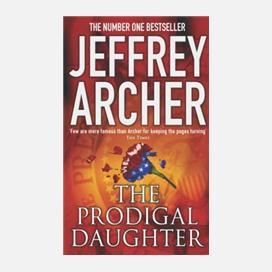
100 Books in 2011 Challenge: The Prodigal Daughter

Jeffrey Archer is an easy target. He’s a best-selling author that a lot of people think is a dreadful writer. So, given that I read in order to improve my writing skills, it seems to make sense that I should read some of those novels and authors that are widely considered to be bad. I can see why they are bad and learn from that. In some cases, they actually aren’t bad, they’re just popular and successful.

In the case of The Prodigal Daughter by Jeffrey Archer, it was bad. It was bad enough to make me angry. It spans about sixty years and is the story of a woman who inherits a massive hotel chain and then becomes president of the USA (whoops, spoilers).

Archer starts with her birth, then shows selected highlights from her childhood, educational career, she runs away to marry the son of her father’s sworn enemy and builds up her own really successful chain of high-end designer clothes stores, her father dies and she inherits his hotel chain, she runs that for a while until she gets bored and then goes into politics.

For the first two thirds of the book my problem was the style of telling the story. Given that there is so much time to cover there has to be a lot of narrative, interspersed with scenes of pivotal events. The narrative is often clumsy and expository. There’s an awful lot of telling and it’s not handled well. The scenes don’t really show the protagonist’s character (which is what they are meant to do) rather Archer tells us and doesn’t match his action with what he’s trying to get across. The dialogue is clunky. The protagonist is not very likable, mainly because she’s perfect and everything just falls into her lap. She has a couple of ‘set-backs’ but they’re not real reversals or challenges, just opportunities for Archer to show that she’s even more perfect than he’d already told us.

I had mixed reactions to the last part of the book. To start with, I felt more positive about it. This is the part of the book where she’s entered politics and is trying to get a seat in Congress, then campaigns for the Senate and then to be the Democratic party nomination for President. It also covers her transformation from dove to hawk which is irritating and feels like polemic. However, it is a detailed and interesting look at the American electoral process and is more action-orientated than much of the rest of the book. There are moments of tension, even though you know the protagonist is going to win everything eventually because she always does. Then as she campaigns for the Democratic Party nomination, she gets well and truly screwed over by her opponent. It’s probably the best bit of the book. She becomes the Vice-President, with a promise that he will step down after one term and support her. Once he has the presidency he sidelines her in favour of his former running mate, now Secretary of State. Then there is a nuclear missile crisis. The President is visiting his mistress and is uncontactable and the Secretary of State crumbles under the pressure. Our protagonist saves the day and is a big hero. Then the President announces he is stepping down and publicly gives his support to the Secretary of State.

That’s not quite the end and I wouldn’t normally describe the plot in such detail, but it brings me to the point that offended me most about this book. At this point, I thought, wow, she’s really going to have to fight for this, that’ll be good. But wait, there’s only a few pages left. What’s going to happen? What happens is a deus ex machina. The President dies of a heart attack and our protagonist automatically becomes President. The End. What, Archer, you couldn’t be bothered to write any more? You’d made your word count so you decided just to leave it there? Rubbish.

This, I think, is a perfect example of a writing breaking their promise to a reader. Not only was the book badly written and quite boring for most of it, but at the end, Archer cheats. He cheats the reader and he cheats his main character. Avoid like the plague. And I still don’t understand how he’s managed to sell so many books.

Writing isn’t easy

I’m not sure where I picked it up but I had a belief that if you had a talent for something, then it should come easily to you. If you were good at art, then drawing well and finding things to draw would be a snitch. You’d sit down at your easel and knock off sketches and pictures feeling happy and joyful because you were doing something you loved and were good at. The energy would be high and you’d be really productive and you’d always want to do art instead of everything else.

Sometimes writing’s like that. But more often than not it’s really hard work. It’s a struggle to get anything down on the page, nevermind something good. It’s hard to say what I really want to say while making my characters come alive. What’s on the page rarely seems as vibrant and solid as what’s in my head.

Does that then mean that if I find writing hard sometimes, that I’m not very good at it? And if I’m not good at it, then do I have to give up on my dream?

It’s not that simple. I also have beliefs around needing to work hard to get something I want, in order to deserve it. I have beliefs around not being good enough, in general, for anything. And I’m self-sabotaging and have poor self-regulation. But you know what? I know all this stuff and therefore I can make it work for me rather than against me.

I’m going to write this on a piece of paper and stick it up over my monitor.

“Sometimes writing comes really easily and sometimes it doesn’t. Sometimes what I’ve written is good and sometimes it isn’t. These things are not related.”

Sometimes when the writing flows, what I produce is great and sometimes it isn’t. The same is true when I really have to grind it out. The same is true for rewriting. Sometimes I immediately hit on exactly what I want and sometimes it takes me an hour to get a sentence right. Sometimes I let the resistance and fear discourage me but I’m working on that.

A-Z blog challenge: E is for Emotion

Writing prose with emotion is hard for me. I start off with scenes that are flat and emotionless. My characters are acting and talking as if what is happening isn’t touching them emotionally. It’s as if they don’t care and are just shrugging it off. Are they fighting for their lives against a winged demon? Oh yeah, it’s just everyday stuff, whatever, blah, blah, I’m so bored.

This should be a moment of terror. The character believes they might die. But it’s terror tempered with determination to live, the will to push themselves mentally and physically beyond what they’ve ever done before. Maybe there’s a little elation in the mix. In an action scene like this the character’s adrenalin will be high and that complex cocktail of feeling has to come off the page and raise the reader’s heartbeat.

What I want is overblown drama on an operatic scale. I want to leave my reader exhausted and wrung out. But it’s hard to push myself to get there. I’ve learnt to moderate my emotions and I’m afraid that, instead of being moved, the reader will think I’m ridiculous. I don’t want to make a fool of myself so I draw back and I contain the emotion. I let it out in tiny little drips that people barely notice. And, for real life, that’s ok.

It’s like a tap. For real life, I want a gentle trickle. For my writing, sometimes I want a torrent. But the tap is stiff with disuse and I struggle to fully turn it on. When I do manage it, I feel embarrassed. I’m working on that by practicing writing pieces that are as emotionally laden as I can make them. These are just practice pieces that will never see the light of day and so I don’t have to worry whether a reader will find them ridiculous. I can learn to control the emotion tap in private and when it comes to writing scenes in my work-in-progress then I will have the skill to get the emotional balance right.

How do you feel about writing with emotion? Is it easy or difficult? Are there some emotions you find harder than others?

A-Z blog challenge: D is for Distraction

Oh, there’s just so much of it! The things I could spend my time doing:

Watching tv
Playing video games
Messing about on the internet
Hanging out with friends
Getting a master’s degree
Playing with my cats
Dancing
Reading non-writing related blogs and news
Watching butterflies
LOLcats

And of course there are the things I think I should be doing:

Cleaning
Decorating
Hanging out with friends
Keeping up with my correspondence
Exercising

But instead I’m writing. At least in theory. I don’t have a lot of spare time at the moment so everything that I could do I have to think ‘will this take time away from my writing?’ The answer is almost always yes because I can’t reduce the hours I work (which is not all that many to be fair) or reduce my commuting time, so there’s nowhere else for the time to come from. If the answer is yes, then ‘is this something I’m willing to give up writing time for?’ If I’m honest, in the past, I often have given up writing time – because I’m tired, or because it’s hard, or because I didn’t believe in myself enough, or because I didn’t feel I could say no to friends or family or other obligations. But I’ve reached a stage in my writing where the answer is going to be no much more often.

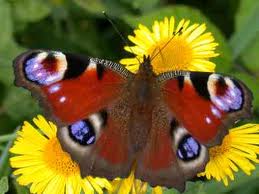
Oh look, a butterfly. Being chased by a lolcat. What was I doing again?

A-Z blog challenge: A is for Analysis

I like to analyse stuff. This week I have some time off from my day job and I am working on my novel. For me, this means looking at the 65,000 words of scenes that I have and trying to work out in what order they should go. So I have scene cards and a spreadsheet, and I finally worked out what the damn thing is about, and I’m trying to get it all together.

Writer-friends of a less analytical bent say I should worry less about this kind of detail and just write and then everything will just fall into place. Not for me it won’t. Or at least, it might, but it won’t be as effective as it will be if I do it deliberately. Analysis leads to mindful practice. To learn how to write you need to write. I read a little while ago that you need to write a million words at least. And that is probably true but, like training to become better at anything, it will be more effective if you are mindful of what you are doing. You could write a million words and will be a little better at writing at the end of it without giving it any thought. But if you pay attention, and analyse what you’re doing, the million words will work harder for you and you’ll be much better by the end.

To analyse writing I read loads of ‘how-to-write’ books. Some are fantastic and have some really helpful stuff in them. Some are not that helpful at all. Others are incomprehensible – which for me are those ones about The Hero’s Journey or the three act structure (more on this in a later A-Z post). I read widely and try to work out what makes a good book good. I ask for the opinions of my writers’ groups. I read loads of blogs about books and writing. And I filter everything through a series of questions:

Who said it? What qualifies them? What do I think of their opinions? What biases do I know them to have?

How do I feel about what has been said? If I have an emotional reaction of any kind, but especially a negative one, then this is something to look at very closely.

How does it fit with what I already know/believe? Is it something that deepens my understanding? Is it something that challenges my understanding?

How can I use this information/feedback/idea? Is there enough detail here for me to apply it? How would I change my writing to accommodate it? What direction will it take me in and is that where I want to go? How will this help me improve?

I also do critiquing for other members of my writing groups and I realised a couple of years ago that the person really getting the benefit from the exercise was me. Looking at the work of a fellow unpublished author, noticing what was working and what wasn’t, along with the discipline of trying to suggest how it could be done differently, gave me a great opportunity to understand what I was doing with writing. Naturally, when you come across a passage that isn’t working you think about how you would have written it. This may or may not be useful to the person being critiqued, but it is certainly useful to the critiquer.

My favourite question is why? It always has been and is true in all the spheres of my life. Why did something happen? Why did a person behave like that? I need to know. And I guess that’s why I write – to pose the question and explore the answer.

Respecting the art of writing

Over the years I’ve been involved in writing groups I’ve found myself in conversations about how much technique matters. It appears there are two schools of thought.

On one side are those who think it doesn’t matter much. They argue that worrying about correct spelling and formatting kills the creative flow and it’s much more important to get the story out. Punctuation and other such tedious matters can be sorted out by the editor/agent you will definitely get once you’ve finished your novel.

The other school believes technique does matter. If you don’t master the basics of technique and present your work in a professional manner, it won’t even get looked at. No-one will be able to enjoy the genius of your story if they have to read every sentence three times to work out what you mean.

I’m on the side of technique. I care very much about the correct use of commas. I think understanding sentence structure helps you make your point clearly. There are twenty eight books on my shelf on the subject of writing and there were some I read that I chose not to keep. I read blogs on writing. I critique other people’s work so that I can improve my own. I read as many novels as I can and try to analyse the technique, although sometimes I forget if I’m enjoying the story. Some of the most fun I can have is talking about books and writing.

For me, technique supports storytelling. The two are intertwined. The most beautiful, perfectly executed writing can’t make me enjoy a story I don’t like, but I can appreciate the craft. The most interesting story can, however, be lost under poor writing. I’m not really talking about the odd spelling mistake or confusing you’re and your; these are small things that don’t interfere with understanding what the writer meant. More confusing is random placement of commas, running dialogue in with narrative, malapropisms, and poor paragraphing. Short sentences that start with the same words nearly all the time get boring, no matter how much I liked the idea of the story.

When you’re writing your first draft, it doesn’t matter. Just get the words down. Worrying about presentation at that stage isn’t productive. But when you rewrite technique is what will make your story come alive. Knowing how to finesse your words will get your great story noticed.

I think, in life generally, how you do what you do matters as much as what you do. Attention to detail makes a difference to the result. That’s what makes something great as opposed to good. I do agree that perfectionism can be used as procrastination and my working life has taught me that a perfect product not delivered on time (or at all) is not perfect. Getting the task done is more important in some circumstances. So, I’m a recovering perfectionist learning to love good enough. Caring about technique doesn’t necessarily mean you’re a perfectionist; it means you want to do the best job on your story that you can. Good enough doesn’t mean ‘oh whatever, that’ll do’; it means the best you can achieve in the time you have.

And I think I’ve always found it hard to express what I feel about how technique supports and enables storytelling. So when I read Editors on Editing: Respect Your Art on Women’s Memoirs, I thought that is exactly what I mean. Sloppy technique shows a lack of respect for your art. Writing technique is the equivalent of stretching your canvass and choosing the right thread and needles.