Birdman

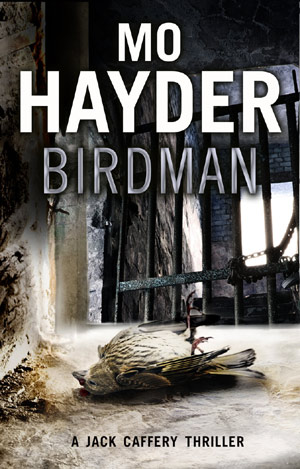
birdman-re-issue-november-21Birdman is Mo Hayder’s debut novel and the first to feature Jack Caffrey, a handsome yet troubled detective. I enjoy a thriller and Mo Hayder is easy to read. Which should not be confused with easy to write.

Someone is murdering women and sewing live birds into their chests. Disturbingly, Hayder is able to present several plausible suspects. There’s a lot going on in the book aside from the investigation; there’s Caffrey’s struggle with the unresolved disappearance of his brother, and his overlapping romantic relationships. The plot is handled well and the real murderer is introduced early and hidden in plain sight.

Caffrey’s resolution of the crimes opens up some questions for the reader. Caffrey takes a personal path that might feel very satisfying of a need for retribution, for terrible crimes to receive terrible punishment. Birdman is a blend of horror and thriller and it is the horror ending we’re presented with; the evil that has risen is wiped out of existence. Only then can we sleep safe in our beds. But Caffrey is an officer of the law; he’s meant to serve it, not take it in his own hands. It’s an uncomfortable presentation of what a person might do when their sense of right and wrong is complicated. On reflection, this is a more thoughtful book that it appears, and I enjoyed it a lot.

 

The Point is to Change It

150px-The_point_is_to_change_itI have always bought more books than I read, which has resulted in a bookshelf of unread books that I call book mountain. It is currently the smallest it’s ever been. Still some of the books on there have been in my possession for some time. Such as The Point is to Change It which I must have bought fifteen years ago.

Compiled from essays and articles first published in Living Marxism, this book examines trends in political life in the aftermath of the death of history. With the Berlin Wall down and the Soviet Block collapsed, how does the left respond to capitalism? The book was published in 1996 and, twenty years on, the world it talks about is depressingly similar to the one we currently live in. I can’t help but agree that the world needs to change.

The tone of the book and some of the things that are conflated with social ills didn’t sit well with me. It’s presented as progressive and as suggesting solutions to the problems of capitalism. It doesn’t really do that. There’s a thick seam of nostalgia for some idyllic past when we didn’t waste our time with the women and blacks getting upset about trivial things, when we weren’t so soft, and valued self-confidence over victimhood. There’s a lot of privilege and entitlement in that kind of nostalgia. The values extolled are very much those attributed to white, straight men and denied to others. And there are no real solutions to speak of. There’s a manifesto at the back. It’s two pages out of two hundred and seventeen. It is mostly a rehash of the problems and lacks any call to action. Even if you did agree with the analysis (and there’s much in there that I do agree with once you detach it from the whining), you’d be hard pressed to know what to do about it.

The Viking Gods

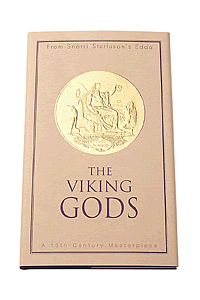
the-viking-gods-114-pI went to the British Museum’s Viking exhibition and I’m minded to read the Edda at some point. However it’s a big, heavy book and I’m putting it off on the basis that I don’t want to carry it back and forth to work. In the meantime, I also bought The Viking Gods, a small, lightweight book of snippets from the Edda, translated by Jean I. Young and accompanied by illustrations by Lorenz Frӧlich and Eggert Pétursson.

It’s a beautifully presented book. I liked the illustrations and enjoyed the stories. There’s not much depth but there’s a little bit of origin myth, a page for each of the main gods and some stories of life in Valhalla. It was lovely, and whetted my appetite for the Edda itself. When I’m feeling strong.

Stupid Cupid

stupid cupidStill on the search for a romance I can enjoy…

I ran out of book while I was at work so went raiding the book drop. I wasn’t feeling that mentally energetic so I went for an easy read. And I’m still looking for that sweet and sexy feminist romance. At this rate I might have to write it myself. Please leave any recommendations in the comments!

Stupid Cupid by Arabella Weir is the story of a woman who persists with a wedding despite the absence of the groom. Hat is dumped by her fiance, Jimmy, about six weeks before their wedding. She’s in shock and without any better idea, she just continues with the wedding train. Part of her thinks that Jimmy is just having cold feet and will change his mind. Part of her just doesn’t want to deal with calling off the wedding. And part of her wanted a wedding far more than she wanted a marriage.

The weeks pass quickly and the situation is complicated by Hat’s perfect sister and hypercritical mother. A friend suggests a beard; Hat should have a stand-in pretend to be Jimmy and go through with the wedding with her. Said friend just happens to have a suitable man to hand. Naturally, Hat finds the new chap much more to her liking.

It was ok. Not nearly as infuriating as the last romance I read and Hat was a reasonably rounded character, even if she did suffer from low body-confidence and too much self-deprecation. The supporting characters were a little stereotypical and included the gay best friend and louche old lady. It’s supposed to be a comedy but it didn’t make me laugh. My taste isn’t for farce though, so if you like that sort of thing, you might enjoy it more than I did.

7 Secrets of the Prolific

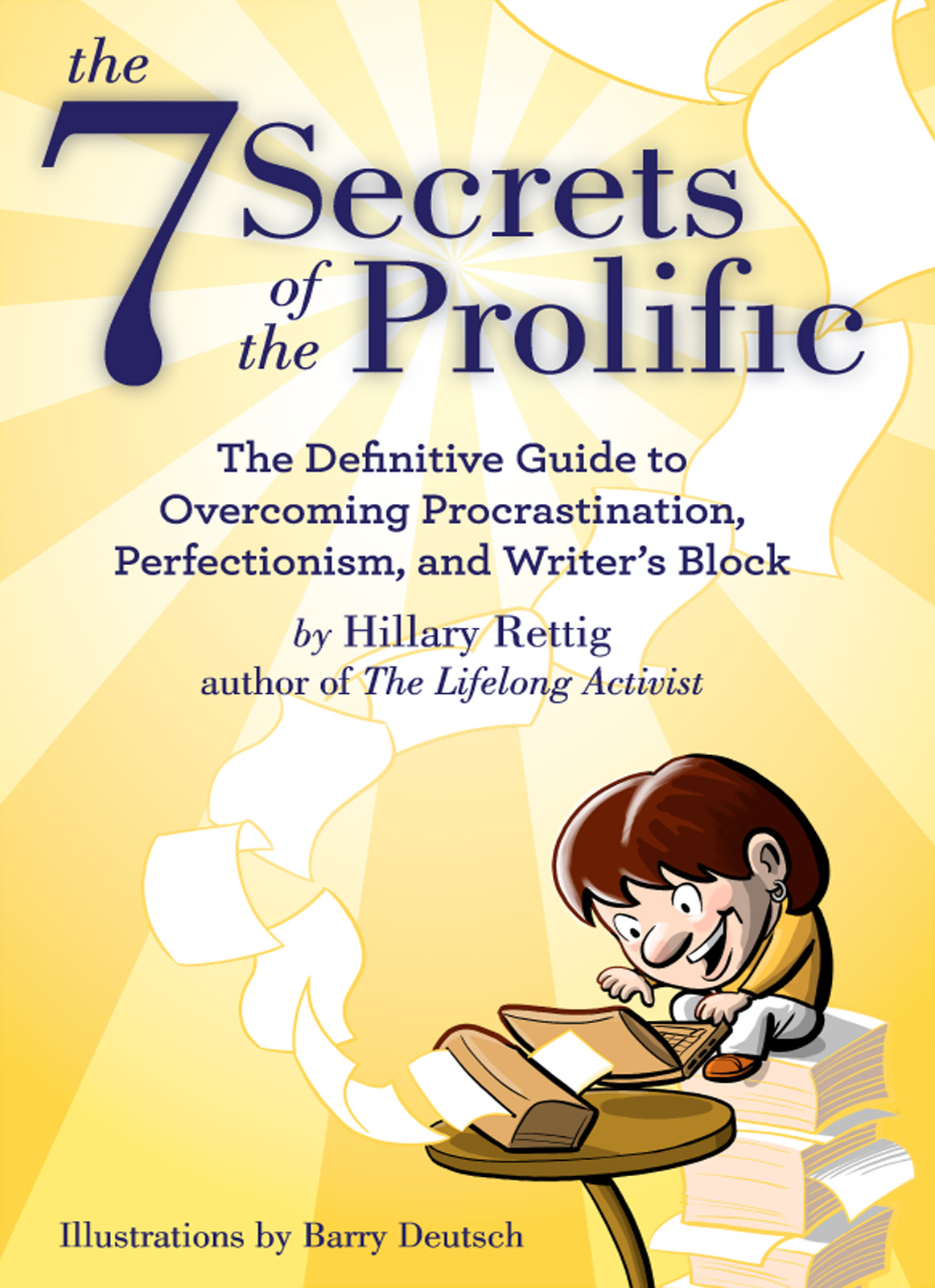
the-7-secrets-of-the-prolificThe 7 Secrets of the Prolific: The definitive guide to overcoming procrastination, perfectionism, and writer’s block by Hillary Rettig is one of the most useful books I’ve ever read. I was struggling to finish a novella manuscript. I don’t really get blocked; I can always write something and I have numerous projects on the go. What I struggle with is completing a piece.

It turns out that the problem is perfectionism. I’m alright at the start of a project when I have this amazing idea in my head and I have the whole book to realise that vision. As I go on, I run out of time and become increasingly aware that what’s on the page is vastly inferior to what I imagined. I know this. The problems perfectionism causes me are legion.

There was a lot in this book to help, mostly focussed on what perfectionism actually looks like in your life. I know I’m a perfectionist and I know how that happened. What was eye-opening was attributing some of the things I do around procrastinating to perfectionism. My inner voices would have me believe it’s laziness, but my inner voices are full of shit and need to shut up.

The proof of the effectiveness of this book is that I finished the novella. I am currently editing it and preparing it for submission to publishers. I got over the mental blocks that were making it hard, painful and slow. I got past the need for it to be perfect and began to be able to appreciate what I’d achieved.

The 7 Secrets of the Prolific is self-published and there’s a chapter in the book extolling the virtues of self-publishing and how to do that in a professional manner. It was thought-provoking and made me reconsider whether I would self-publish a novel.

This is a great book, I got so much out of it, and I highly recommend for anyone with procrastination issues.

The Big, Not-so-Small, Curvy Girls, BBW Romance Dating Agency

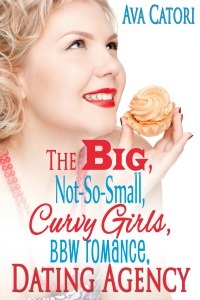
curvy girlsIt turns out I don’t like writing reviews of books I really didn’t enjoy. (Even though I do it a fair bit). I’ve been putting this one off for some time.

Romance isn’t my normal genre and it’s not a favourite, but I occasionally read it because sometimes I do want a romantic story. Unfortunately, it seems that I what I consider romantic isn’t the same as the romance genre and I’m often disappointed. Also, I claim to read widely and sometimes I have to prove it. 😉 When I bought The Big, Not-so-Small, Curvy Girls, BBW Romance Dating Agency I was looking for something sexy and sweet and easy to read. And if not too much to ask, non-stereotypical gender roles. That was too much to ask so I settled for a protagonist that is fat.

What I got was depressing and infuriating. The main character Becky, wants to start her own business, a dating agency for big women and men and those that appreciate them. A laudable goal, except the book was written in 2013 and it doesn’t appear to have occurred to her that online dating is a thing. There are loads of websites, catering to all sorts of persuasion, from people wanting to date within their own religion to people looking for a specific body type. She’s got a lot of competition.

Becky is self-deprecating to an off-putting degree. While it might be realistic that she’s insecure about whether or not the object of her affections likes her back, I really wanted to read about someone positive, assertive and body-confident. Becky’s best friend Sam seemed a bit like that and I would rather have been reading about her.

The other thing that annoyed me may well be a trope of the genre and not specific to this book. I don’t read enough romance to know. Becky and Reed (said object of affection) spend a lot of time mooning about how lovely and amazing the other is, how they like them more than they should (Diet Coke ad type beefcake Reed has a model girlfriend, who is conveniently unpleasant), and how they are falling in love with the other. All this is based on very little interaction. They are declaring undying love after about three short dates. I spent much of the book frustrated with the total lack of a basis for liking each other. I don’t know how difficult it would be to write a romance where two people develop affection for each other through shared interests and spending a lot of time together, but I suspect it would be hard. And lack drama and be a bit dull for the reader. Even so, the intense emotional reactions appeared elicited by the mere sight of the other and wasn’t convincing at all.

I didn’t like it.

Ancient Traces: Mysteries in Ancient and Early History

ancient tracesThis is another one of those books that wasn’t what I thought it was. I’ve had it on my shelf for a while. I thought it was an archaeology book about early humans. It sort of is, but mostly Ancient Traces by Michael Baigent is a conspiracy theory book.

The central premise is that evidence exists that suggests that humans evolved much earlier than is generally believed and didn’t evolve from apes. The academic establishment has systematically suppressed any evidence that doesn’t support the current dominant paradigm.

Baigent presents a number of related ideas: humans evolved much earlier than thought; we co-existed with dinosaurs; dinosaurs still exist in remote areas of the world; humans evolved from a sea creature rather than from apes.

I’m not sure how much I believe but I hadn’t heard many of these stories/theories before and it is all very entertaining. Baigent style does verge on the hysterical when talking about how evidence has been suppressed but otherwise it’s pretty readable. The ideas in the book are thought-provoking if not well-supported. It was fun.

The Spiritual Revolution: Why religion is giving way to spirituality

Spiritual revolutionThis book is the findings of a research project asking whether there has been a fundamental shift in Western cultures away from religion towards spirituality.

The Spiritual Revolution posits that the decline in attendance at formal church services and in those describing themselves as members of congregations is matched by a rise in people describing themselves as spiritual and participating in what might be described as new age activities. The study also considered whether that trend might be reversed by looking at the demographics of the population studied. The study was conducted in Cumbria and some comparisons to the UK as whole are made.

The most interesting part of the book to me was the discussion about how the decline of participation in traditional congregation mirrors the decline in all sorts of associational activities, such as trade unions, professional institutions and political parties. I’ve worked for organizations that rely on committees of volunteers for a while now and the factors described in this book are very much at play. It gave me a different perspective on what’s going on. I’m not sure what I’ll do with that yet, but I feel it’s important to know.

The Spiritual Revolution is the published findings of a study conducted by Paul Heelas, Professor of Religion and Modernity, and Linda Woodhead, Senior Lecturer in Christian Studies, from Lancaster University. If you’re interested in the subject and prepared to tackle some fairly dry text, then it’s worth a read.

Medieval Lives

medieval lives I read a lot of fantasy fiction (amongst other things) and write some too. Fantasy worlds are overwhelmingly based on medieval European societies and the genre does come in for criticism for its lack of diversity. I love to read fantasy with other sources of inspiration. And I love really good medieval Europe style fantasy, not least because I love that period of history.

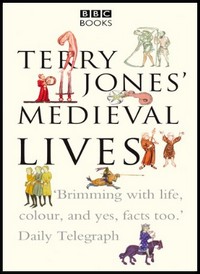
Medieval Lives by Terry Jones and Alan Ereira is the book of the BBC television series. Each chapter gives a snapshot of what a person’s life might have been like based on the role they had: peasant, minstrel, outlaw, monk, philosopher, knight, damsel and king. The format enables the authors to draw distinctions about how position and wealth affected peoples lives. There’s a conscious effort to do some myth-busting and include some surprising facts.

I especially enjoyed the chapters on damsels and knights. The one on damsels makes the point that women’s status in society is not a straight line of progress and that medieval women probably had more equality than Victorian women. There’s a fun bit about women arranging their own abductions in a effort to game the system. The chapter on knights discusses the concept of chivalry as a attempt to control the extreme violence of what were basically warlords.

It’s all very entertaining. As it’s the book of the TV series it’s understandably lightweight. That makes it accessible and it’s ideal as an introduction to the subject matter. I was left wanting to read more in-depth books that I could really get my teeth into and I think that’s a good thing.

Seidways

seidwaysI think I bought this book looking for a text on magickal practices in Viking society. Seidways by Jan Fries isn’t that, for the good reason that there isn’t much known about those practices. Sometimes I skim the blurbs of books and make quick purchases, so I come away with a wrong idea about the book. Mostly, that works in my favour, because I might not have picked the book up if I’d had the right impression and that would have been a loss.

Seidways is an exploration of ecstatic magickal practices from around the world and from myth weaved in with the author’s personal experiences of using the techniques. Seidr, or seething, is altered conscious induced by shaking. Fries takes us on a bit of tour from Siberian shamanism, to African bushmen, to fragments of Celtic myths, to Sufi trance dancing, and most points in between. Refreshingly, the book is presented not as fact but as conjecture and opinion with open acknowledgement of how limited the source material can be.

There is some discussion of belief, the placebo effect, and the role of theatre in healing. Much magic is directed towards healing the sick and is more effective when the patient and the practitioner believe it will work. Dramatic workings involving wild dancing, shaking, trembling and apparent possession by gods or spirits help to create that belief for both.

For me, it broadened my idea of what a magician might look like and the techniques described in this book will find their way into my writing. Fries’ style is simple and engaging. It was easy to read, despite the esoteric subject, and each time I put it down I was looking forward to picking it up again. I enjoyed it.