Mindplayers

mindplayersMindplayers by Pat Cadigan
Published 1988 by Gollancz

In a world where virtual reality is inside everyone’s head and you can choose to be someone else if you tire of your own personality, somethings are still illegal. Like being crazy without a license. Seeking altered states of consciousness and living an impulsive, directionless life, Allie Haas tries a black market trip into paranoia. It leaves her unconscious and dying and her dealer drops her off at a mental drycleaner, leading to both of them being arrested.

Allie is offered a deal: train as a mindplayer to facilitate the work and games of others, or be imprisoned. She takes the deal.

Mindplayers is a fascinating exploration of our inner mental worlds and how we use narrative to create ourselves and our lives. Allie finds intimacy with others in the mental realm, discovers what happens when someone has their personality stolen and helps other discover meaning in their creative work. It’s like meditation and psychology combined, enhanced and lifted to another level. What might be possible if we could have such insight into ourselves?

I really enjoyed this. It combines great storytelling with serious exploration of science and technology and its impact on humans. Science fiction at its best.

The Rent Trap

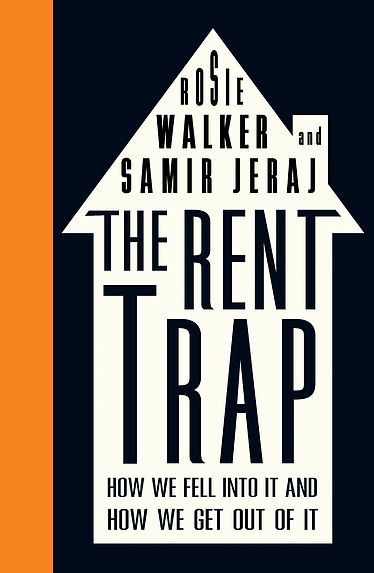
rent-trap-coverThe Rent Trap by Rosie Walker and Samir Jeraj
Published by Pluto Books in 2016

The Rent Trap explores the world of private renting and how rising house prices make home ownership out of reach for many renters. It looks at the instability caused by short term contracts and the impact on families. The book covers the de-regulation of the housing market and what that means for tenants.

Most landlords aren’t property developers. Most are individuals who’ve bought a second house as an investment for their retirements, or owner-occupiers renting a room to help with the mortgage payments. But what this means is that the people paying for the house aren’t the ones who’ll eventually own it and this is creating wide inequality. It’s interesting to see how individual small decisions, made for good reasons, create a huge problem in the absence of regulation.

Worth a read.

Shake Hands with the Devil

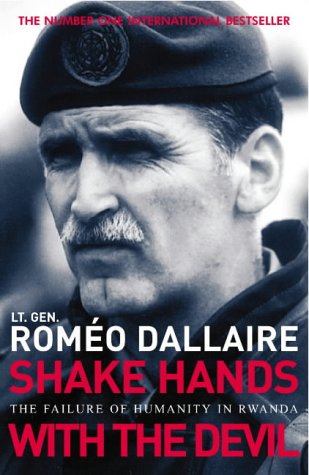
shake-hands-with-the-devilShake Hands with the Devil: The Failure of Humanity in Rwanda by Lt. Gen. Romeo Dallaire
Published by Random House in 2003

I went to Rwanda last year on a work trip and it inspired me to learn more about the genocide in 1994. I visited the excellent Genocide Memorial and bought several books.

Shake Hands with the Devil is the memoir of the force commander of the UN mission to Rwanda. It starts slowly, with some time spent on Lt. Gen. Dallaire’s career and experience, but by the end of the book it is clear why this needs to be covered in such detail.

This is a book about the actions of the international community in response to the crisis, or, more precisely, the lack of action. As Dallaire describes his experiences in Rwanda and with the UN it becomes clear that there was a lot going on that he was not aware of until far too late. The politics surrounding the genocide – the relationships the Rwandan government forces and the Rwandan Patriotic Front had with France, the US, and other western countries independent of the UN, the domestic situations in those countries and the public tolerance for another foreign intervention, the under-resourcing of the UN – contributed to something truly terrible. Shake Hands with the Devil doesn’t exonerate the Rwandans who made this happen and the choices both sides made, but he does make clear how the structural, systemic issues in international relations supported and exacerbated those choices.

There is a tragic honesty in this memoir: Dallaire comes across as a man well and truly out of his depth. He lauds and celebrates the officers and soldiers assigned to the mission but doesn’t hide his own failings. Indeed, the early pages spent exploring his own experience serve to show how his lack of real conflict experience hampered him as well as demonstrating the abilities that qualified him for the role.

Shake Hands with the Devil is an eye-opening read. The exposure of the way the UN has to operate, and what that means for people it is supposed to help, is damning.

Devices and Desires

devices-and-desiresDevices and Desires by K. J. Parker
Published by Orbit in 2005

Sentenced to death for innovating in a country that tightly controls its industry, an engineer, Ziani Vaatzes, escapes prison and flees to an enemy nation. Outside the Republic the warring duchies are much less technologically advanced, a situation the Republic desires to continue, so Vaatzes offers one of them his knowledge to build war machines. As the Republic is prepared to go to war to recover its errant engineer, the Duchy is in no position to refuse. But Vaatzes motives are more complicated than that. As this is the first in a trilogy, exactly what Vaatzes is up to is not clear by the end of the book, but by this point there have been many switches and double crosses.

Devices and Desires is a huge book, both in length (700 pages) and scope. Aside from Vaatzes there are a number of point of view characters and subplots, including a love triangle between warring duchies. It takes a little while to get going as Parker establishes his world but once it does I found myself quite reluctant to put it down. One aspect that annoyed me was the virtually entirely male cast of characters. Parker chose to write about highly patriarchal societies and I am tired of reading about them. I’d really like to read some fantasy that conceives of society in a different way. Recommendations please!

That aside, I enjoyed it. Devices and Desires is complex and Parker manages to keep the intrigue up right to the end. There’s more going on than is revealed, and it still isn’t revealed by the end of the book. I may at some point pick up book 2 to find out.

The Secret State

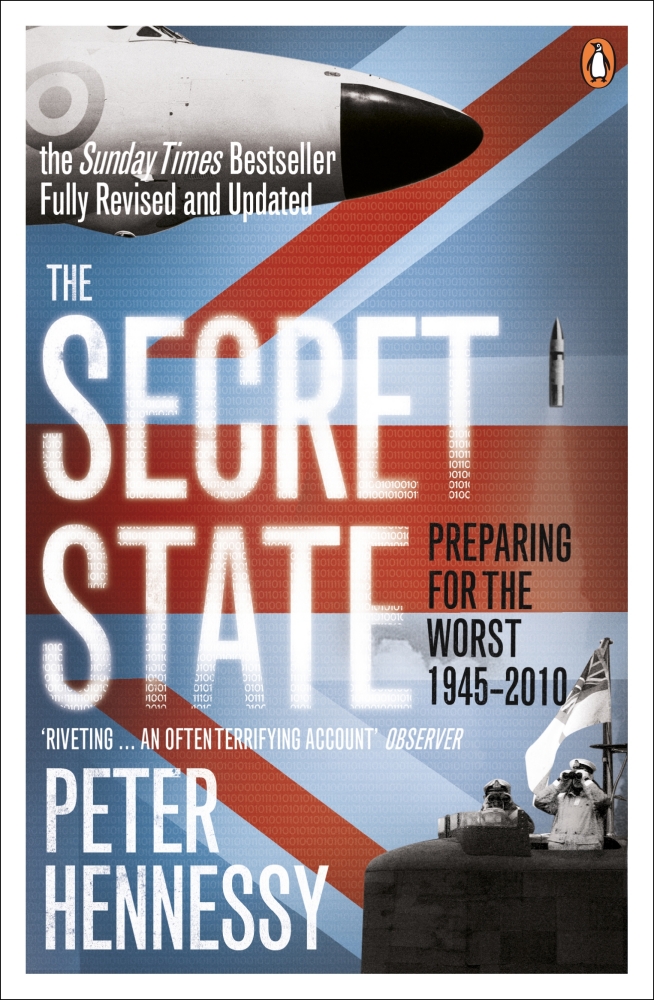
secretstateThe Secret State by Peter Hennessy
Published by Penguin in 2002, updated in 2010

The Secret State is about Britain’s secret plans to respond to an attack on the UK during the cold war and beyond. It covers the rationale behind investing in nuclear weapons and why UK governments chose that rather than a civil defence programme.

It is a fascinating book full of detail from Peter Hennessy’s conversations with key political figures as well as information from documents of the time no longer secret. It makes sense of where we find ourselves now with the Trident programme and the reasons it is hard for governments to make a different choice about it now. It didn’t change my views about Trident and nuclear deterrence but it did help me understand the reasoning behind arguments in favour of it.

I found it quite amusing/terrifying that a large part of the rationale for a British nuclear capability was that governments in the immediate post-war period thought that the US was more likely to start World War III than the USSR, and an independent British nuclear capability would ameliorate that. I wonder if our current government still thinks that.

This is an interesting and informative read and I really enjoyed it.

The Gifts of Reading

I was at a book reading (of The Rent Trap by Rosie Walker and Samir Jeraj) at David’s Bookshop in Letchworth recently, and because I have poor impulse control in book shops, I bought more books. One of them was an essay on giving gifts, specifically giving books as gifts, by Robert Macfarlane, called The Gifts of Reading.

In it, Macfarlane reflects on the impact on his life that books given as gifts have had on his life and on his relationships. He speaks about gift giving more widely and the power of giving with no expectation of return. The corollary of that is the ability to receive gifts with love. Indeed the book is more about gifting than it is about reading. It’s lovely. Reading it feels a bit like meditation.

The proceeds from the sale go to Migrant Offshore Aid Station which is reason enough to buy it, I think.

Necrotech

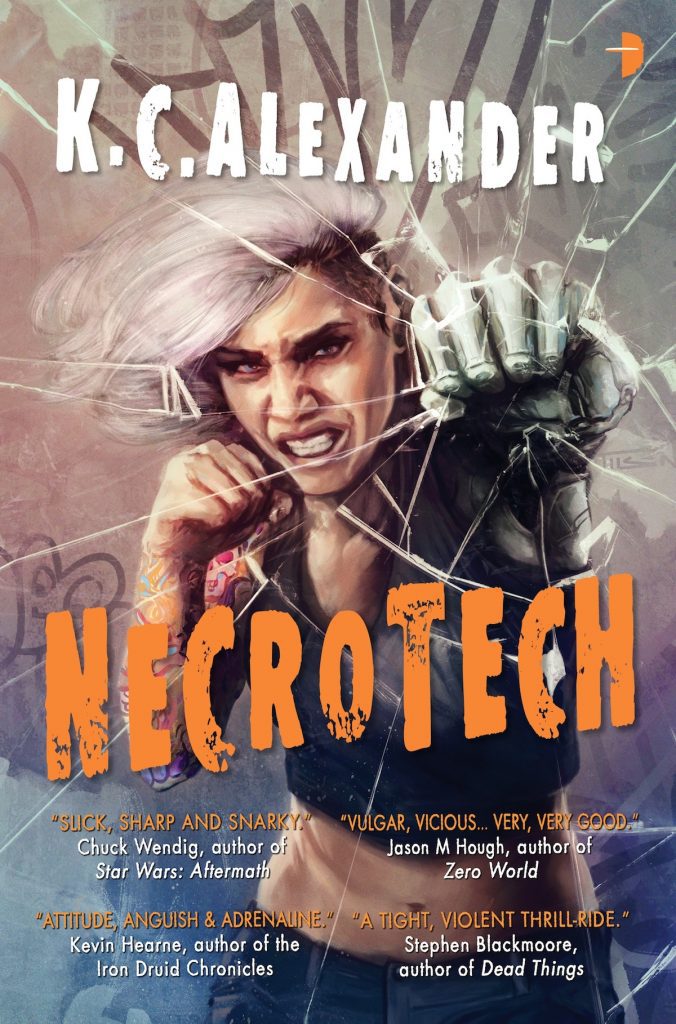
necrotech-book-cover-676x1024Necrotech by K. C. Alexander
Published 2016 by Angry Robot

This was a lot of fun. Riko is a street thug, the muscle in a gang of criminals clinging to existence in a near-future cyberpunk dystopia. She wakes up in an unfamiliar lab and has to fight her way out. Riko thinks it’s just the result of a bender but soon discovers her world is far more messed up than that. In order to find out what happened to her Riko is forced to reassess all her relationships and everything she thinks she knows about her world and herself.

Necrotech is fast-paced and relentless and carried me quickly into the world. It’s possibly the most entertaining book I’ve read this year. The world-building is full of lots of lovely, rich details. I particularly liked the idea that everyone has a chipset implanted in their brain for communications which constantly exposed them to advertising, unless you can pay to remove ads.

Riko is an interesting narrator. She has a bolshy attitude and a strong tendency to punch first and ask questions later – even when she knows full well that this is against her best interests. Towards the end of the book Riko begins to develop some flickers of self-awareness. She has doubts all the way through due to the memory loss – because she doesn’t know what happened she has to question her actions. Some of the evidence she uncovers indicates that she might be involved in activities Riko finds repugnant, and yet she can’t be confident that it’s not true. I hope this is the first in a series because the book ends on the cusp of some serious character development.

If there’s one thing that I found a little disappointing it’s that Riko is a strong female character in a man’s world. In almost all respects, Necrotech has a diverse cast of characters with a range of skin colour, sexuality, and physical abilities presented in a way that adds to the worldbuilding. It’s really very good. Except for the lack of supporting female characters. I would have liked more. But it’s a minor point.

Necrotech is gripping, funny, shocking, and absorbing. I read the first few pages and couldn’t put it down. The pace keeps up all the way through the book and the surprises keep coming as Riko uncovers more. I loved it and I’m looking forward to a sequel.


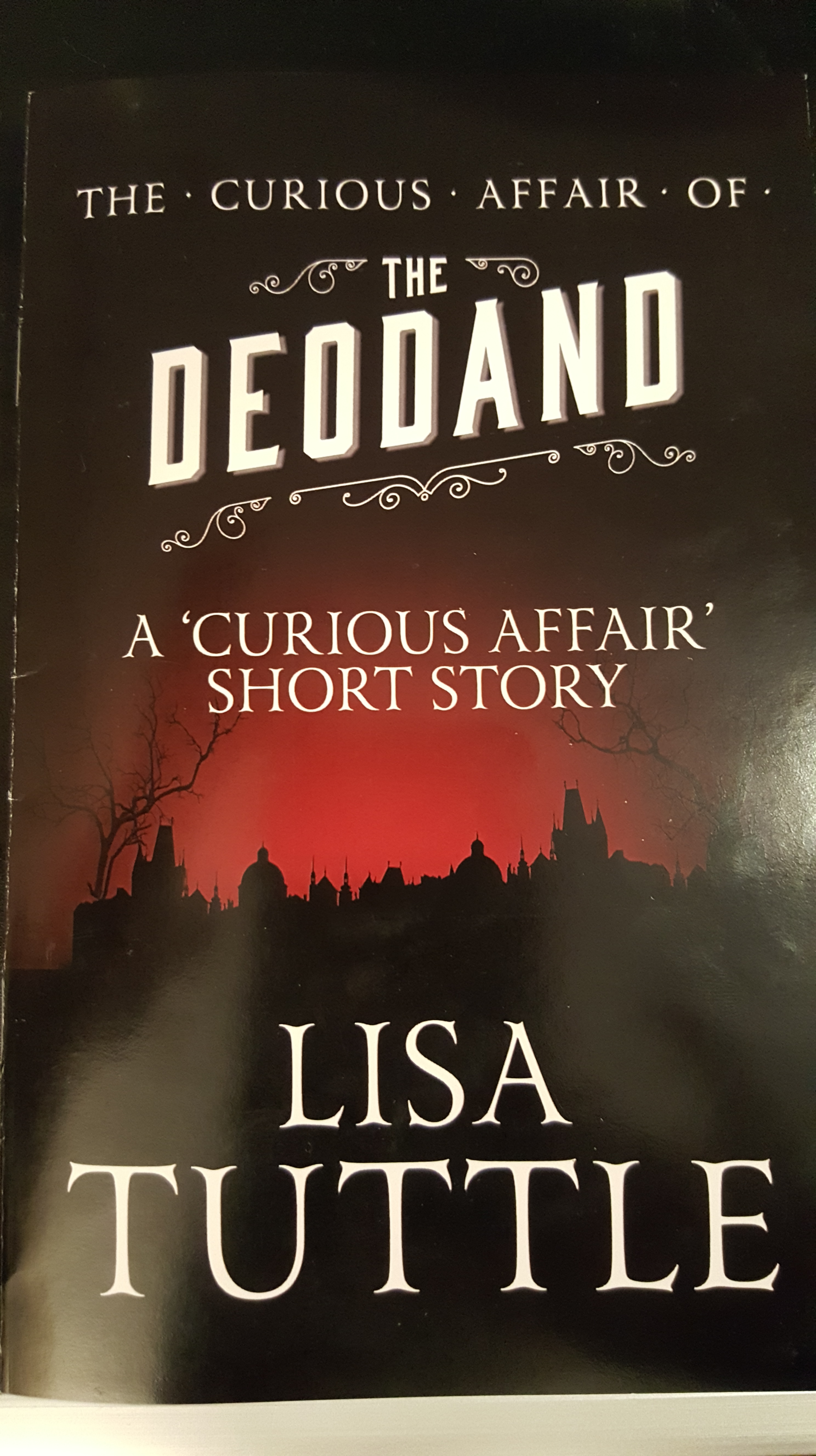
The Curious Affair of the Deodand

20160930_092151The Curious Affair of the Deodand by Lisa Tuttle
Published by Jo Fletcher Books in 2016 as a sampler

I went to FantasyCon last weekend and had a fabulous time. In my goody bag were a number of samplers for books. Unusually The Curious Affair of the Deodand is a complete short story and is what inspired Lisa Tuttle’s recent novel, The Curious Affair of the Somnambulist and the Psychic Thief.

It is a Victorian detective story, very much an homage to the Sherlock Holmes stories, in which Jasper Jesperson and his newly hired assistant Miss Lane investigate an unsolved murder with supernatural elements. As I was reading I was sure I’d read or heard the story before and I think it was made into a radio play, but I can’t find it now. However the story appears to be available on the internet and was also published in the anthology Down these Strange Streets.

Lisa Tuttle’s writing is wonderful. I don’t often enjoy short stories but this I liked a lot. I suppose I could call it a cozy horror. It’s creepy and the horror is hinted at, but like a cozy mystery it is genteel, the detectives are amateur, and has an intimate feel to it. I’m sure I’ll be reading the novel at some point.

Singularity Sky

singularity-skySingularity Sky by Charles Stross
Published by Orbit in 2005

Singularity Sky is Charles Stross’s debut novel. Humanity has spread out among the stars and fractured into societies with different technological levels and administrative structures. Rochard’s World is an outpost of the New Republic, an authoritarian, mid-20th century tech level society. An entity called the Festival arrives and showers technology on the world, granting wishes in return for information. The government responds by attempting time travel, which is prohibited by the god-like Eschaton.

Rachel Mansour, agent of Earth’s UN and Ambassador to the New Republic, and Martin Springfield, agent of a shadowy agency acting as an engineer on the New Republic’s flagship, are working to prevent the violation of the time travel rules.

It has spies, technology indistinguishable from magic, slapstick humour, time travel and explosions. It also has a dose of political philosophy. It is lacking in diversity, in part due to the setting. The New Republic is a patriarchal society and members struggle to accept Rachel as female. She wears trousers and so they see her as an effeminate man, unable to conceive of a woman with authority. I appreciated the recognition of the absurdity but feel an opportunity to diversify the background characters was missed.

I said a while ago I wasn’t going to review books I didn’t enjoy and in part that’s because I don’t finish reading them. I can’t say I loved Singularity Sky, but I liked it enough to finish it. I found it quite heavy-going, especially the first part, and I’m not really a fan of slapstick humour, particularly in the written form. There are some interesting ideas in Singularity Sky and the concepts are intriguing, more so perhaps than the plot or characters. If that’s how you like your sci-fi, then this might be for you.


Four Ways to Forgiveness

forgivenessI love the title of Four Ways to Forgiveness by Ursula Le Guin.

It’s a short story collection and normally I would steer clear of short stories as I don’t find them as satisfying as novels. This book came to me as part of the collection from an emigrating friend and, while I didn’t connect with the Earthsea series, I’d really enjoyed The Left Hand of Darkness. A combination of title and author drew me to the book.

The four stories in Four Ways to Forgiveness are set in the same world/universe as The Left Hand of Darkness on the planets Werel and Yeowe. Werel’s societies are based on enslavement on one ethnic group by another. One nation, Voe Deo, colonised a nearby planet using a largely slave population to exploit the planet’s resources.

The first story, Betrayals, is set on Yeowe after the War of Liberation, in which the slave population overthrew the bosses. Yoss is a retired school teacher who reluctantly cares for her mad neighbour, Abberkam, who was a war lord and now lives alone in a sparsely populated area of Yeowe. Yoss has reasons to hate Abberkam and reasons to distrust men in general, but an attachment forms between them. Then Yoss’s house burns down: Abberkam rescues her cat and offers her a room in his house.

I liked this story the most. It is gentle and wistful, yet approaches some heavy themes. It talks about forms of oppression and how freedom requires more work than simply overthrowing the masters. Age has mellowed two characters who might have been enemies in their younger days, and the relationship is facilitated by Abberkam’s confessions, apologies, and adoption of more respectful behaviour. It is both sweet and real. Forgiveness is reached through time.

Forgiveness Day moves to Werel and the story of an Envoy of the Ekumen in one of the smaller, more traditional, countries. Solly is a female of an egalitarian society and she struggles to adapt to a patriarchal system. Although her struggle isn’t as great as Gatay’s struggle to accept a female Envoy. She strikes up a friendship with a member of a troupe of entertainers – they are transvestites and it is considered shocking to openly associate with them – who also happens to be involved in a movement to liberate Werel’s slaves. The story touches on Solly’s attempts to treat the slaves she’s given as equals and their resistance to her behaviour. There is a terrorist attack and Solly and her bodyguard are taken hostage. During their captivity they come to know each other better and understand the roots of the things they had been offended by. Forgiveness is reached through understanding.

The third story, A Man of the People, is also a story of an outsider to the Werel/Yeowe system. Havzhiva is Hainish and grows up expecting his life to follow a defined pattern. He grows to realise he wants more and leaves his community. It’s a difficult choice as few people leave their community and, if you do, you can never really go back. You might be able to return physically but the psychological connection has changed. Havzhiva spends his youth studying and exploring relationships. Eventually he becomes ambassador to Yeowe and it is there he finds a home. The society is struggling with change. The men believe themselves free but the women find themselves oppressed by the former male slaves. Everyone carries the physical scars of slavery and war. Slaves were allowed no family life or education and those institutions are in their infancy. The cities are changing (progressing) faster than the rural areas. There is conflict between different visions of a free Yeowe. Havzhiva forms a friendship with a nurse that lasts lifetime and at the end he tells her he has learned acceptance. Forgiveness is reached through acceptance.

A Woman’s Liberation, the final story, is the story of Rakam, a female slave. As a child she grows up in a compound and sees her mother rarely. Her mother goes to the house and is not a field slave. As she grows, she knows her skin is darker than the other slaves and comes to realise this is because one of the bosses is her father. Her mother secures her a place in the house as slave to the plantation owner’s wife, Lady Tazeu. She is raped repeatedly by Tazeu, who is isolated and lonely and has limited freedom of her own. Rakam is given to the boss’s son, who refuses to use her because she can’t consent, and tells her that he is working to free all his father’s slaves. When the estate is destroyed and the slaves take their freedom they are simply captured again and taken to another estate. Conditions have become harsher. Rakam says she has papers but they are taken from her. The path to freedom is dangerous and is not one act of liberation but must be defended everyday. Rakam is freed again and makes her way to the city where she educates herself. This story reflects how people internalise the philosophies of oppression as children and must work hard to change what they believe about themselves. Rakam realises that there are layers of freedom struggle. This story is most directly analogous to the institution of slavery on our own world and the complexities of liberation experienced by the enslaved. Rakam becomes a teacher and a writer, a powerful voice and a respected academic. Forgiveness is reached through achievement.

The stories of Four Ways to Forgiveness are all linked and together build up a picture of changing societies and the struggles of the people seeking emancipation. The writing is elegant, the characterisation is deft. These are deeply political stories yet character always comes first. I found them enriching and moving. Not only did I enjoy them as stories, but I learned something about the human experience. Wonderful.