Archives

Half of a Yellow Sun

Half of a Yellow Sun by Chimamanda Ngozi Adichie has been on my shelf for a while. I was leant it by a friend and have been feeling bad about having kept it for so long. Lately, I’ve seen Adichie’s name mentioned in a lot of the media I read and it inspired me to pick it up. I can’t say why Yellow Sunit has sat there unread for so long, except that I thought it might be heavy-going.

I was wrong. It is a beautiful read. Half of a Yellow Sun depicts the Nigerian civil war in the years just after independence from the British Empire and the short-lived existence of Biafra through the point of view of three very different characters. Ogwu is a village boy who gets a job as a house-boy to a university professor with radical views. He grows up in awe of learning and listening to the political debate his master and friends engage in. When the war comes he’s torn between looking after the family and becoming a soldier. He’s forcibly conscripted and his experience is horrific. Olanna is the daughter of a wealthy business man and was educated in London. She loves Ogwu’s professor despite her family’s disapproval. When times are easy she seems to struggle to navigate her relationships but when times are hard she’s the one that holds it all together. Richard is a white man that comes to Africa to escape his family. Before Nigeria becomes independent he thinks he has a good position. He loves Igbo art and culture, almost to the point of fetishizing it, and finds it’s purest expression in Kainene, who is Olanna’s twin. He rejects British expatriate culture and embraces Nigerian culture. After independence he finds that no one trusts him, but he stays in Biafra and doesn’t leave even after Kainene dies.

This is a big book in many ways. There is so much in it. As well as the three point of view characters there is a host of secondary characters that pop out of the page. Characterisation is good. Everyone in it is real. It’s a literary novel so it is heavy on narrative. Generally I like more action-driven books, but when the literary genre is done well it is amazing. This is done very well. The narrative builds the setting and the characters and brings the world to life rather than weighing the story down with exposition. I knew very little about this time and period of history – African decolonisation after WWII was my favourite class at university but we covered a lot in low detail – and I really enjoyed being educated about it. It was moving. I laughed and I cried. Mostly I cried.

There are some books that are so good I feel like giving up writing because I could never produce anything anywhere near as good. This is one of those books.
Matterhorn

September’s book club book was Matterhorn by Karl Marlantes which is a novel set during the Vietnam War.

I can’t really say what the book is about without cheating and looking at wikipedia because I only made it through the first hundred pages (of six hundred).

In those first one hundred pages nothing happens. There is a lot of scene setting and a lot of clumsily incorporated detail. The main character comes across as quite whiny and none of the characters are sympathetically drawn.

I was just bored. Which was disappointing because this could have been fascinating, had it been told differently. I’d really wanted to read it. I felt like another couple of rewrites could have made it a much better book.

The Golden Notebook

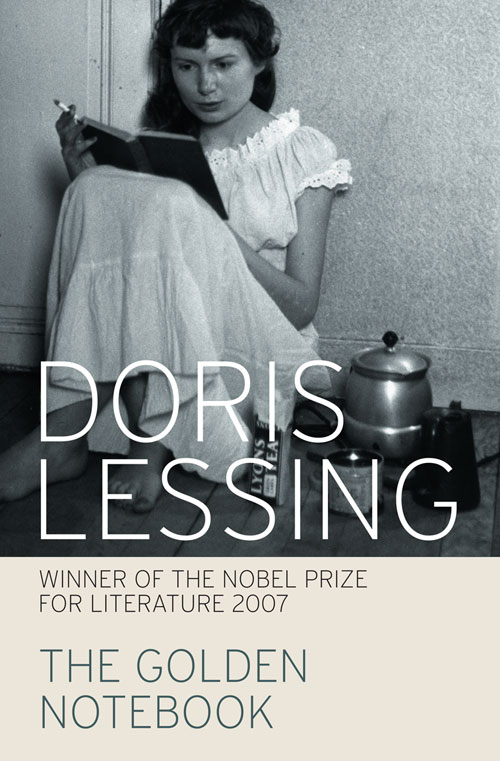
Another in my list of feminist classics I should have read but haven’t: The Golden Notebook by Doris Lessing. It is the story of Anna Wulf, who has written a novel that was a huge success but she finds herself mentally and emotionally stuck afterwards. There is something about what she has written that disgusts her and she struggles to bring that into her conscious understanding. This is the subject of Free Women, the shell story, and it is told through Anna’s interaction with her friend Molly, their children and the men in their lives.

Within this, Anna writes in four notebooks. A black notebook records her writing life; a red one her political views and experiences; a yellow for her emotional life; and everyday events go in a blue one.

The black notebook explores the experiences in her life that her novel was based on, how she feels about those events now, and how she responds to other people’s responses to her work. Anna gradually uncovers what makes her feel so ambiguous about her work.

Anna is a communist and a sometime member of the British communist party. The novel is set in the fifties and refers to formative experiences in the forties, so Anna’s communist beliefs were arrived at in a time before Stalin’s abuses were widely known. In this notebook she explores her disillusionment and disappointment politically.

In the yellow notebook Anna talks about her experience with her psychotherapist, her relationships with men, how she feels about being a single mother, her friendship with Molly, how she feels about what is happening to her mentally and emotionally.

The last notebook, blue, records every day events, sometimes by Anna writing and sometimes she pastes in newspaper clippings.

Finally, after several years, all the threads of Anna’s life come together in a gold-covered notebook and she finds a way to move forward with her life.

I thought I would find this hard-going, but it’s not at all. It was deeply engaging and beautifully written. I found it enjoyable and I really connected with a lot of elements. Structurally, it was interesting. The use of the notebooks to split out the threads of Anna’s life meant that there was a fair amount of jumping back and forth in time and the same events appear in more than one notebook. This creates a disjointed feeling that mirrors Anna’s mental state.

One thing that was interesting was the feminism. The book is called a feminist classic, but Lessing has gone public with a denial that she is a feminist. In the edition I read there is an introduction in which Lessing addresses this discussion around the novel. What I found astonishing, and kind of charming, is that Lessing says that she’s not a feminist because she believed the equality of women (and various other equality issues) was so obvious that it would be resolved by the end of the 20th century. Clearly, it’s a far more intractable problem than she thought.

I would argue that The Golden Notebook really isn’t that feminist. It is in the sense that it’s a book about a woman who has a fully rounded life and is a single woman – a free woman in the book’s terms. However, aside from Molly, Anna has no close female relationships. In fact, she’s aggressive and competitive with other women. It’s feminist in the sense that the vile attitudes of the men in her life are sharply delineated, but not in the sense that Anna constantly defines herself, and allows herself to be defined, in terms of her relationships with men.

It is more than that though. It is also about mental illness, political ideology, and the writing process. Lessing’s introduction says that throughout the time the book has been in print it has been interpreted through all these lens, but never as a whole. It’s a greatly thought-provoking book and I feel intellectually enriched for having read it.

Babel Tower

One of my top ten books is Possession by A. S. Byatt and so it stands to reason that I would like other books by the same author. I read Angels and Insects and wasn’t blown away. I bought Babel Tower and it has sat on my bookshelf for ten years. Part of the reason I haven’t read it is that it is a hardback and is 615 pages. The other part is that I was worried I wouldn’t like it. Oh, how wrong I was.

On the surface it is the story of Frederica Potter, a woman who was a Cambridge graduate in the early 1960s, then her sister died and while she was grieving she married an inappropriate man. At the start of Babel Tower Frederica has a two year old and is realising that she made a mistake in her marriage. When she runs into an old friend it accelerates this realisation. The cracks in her marriage widen and her husband becomes extremely jealous and violent. After he hits her with an axe, she leaves and begins a life in London.

There Frederica renews old friendships and makes new ones, including one with the author of a book which is tried under the Obscenity Act. At the same time, Frederica starts divorce proceedings. What the book is really about is the terrible position and treatment of women in the 1960s and it is very feminist. It is also about the nature of art and about obscenity, morality and freedom of expression.

The quality of the writing is astonishing. It was so rich and complex without ever becoming florid. I wish I could write like this. On every page I was in awe. It is the third in a series of four and, of course, I haven’t read any of the others but it easily stands on its own. Byatt is a literary writer who is gripping, tense and utterly absorbing. This was amazing and I could barely put it down. You should definitely read it.

100 Books in 2011: The Post Office Girl

The Post Office Girl by Stefan Zweig was the last Book Club book of 2011. I didn’t think I would enjoy it, but actually I loved it.

Christine is a young woman living in Austria in the years after the first world war. Life is hard, there’s not enough money and the rooms she lives in with her mother are permanently damp.

Her aunt, who emigrated to the US before the war, is touring Europe and invites Christine to join her in a ski resort for a week or so. Her mother is too ill to go, so Christine goes instead. Her aunt and her husband are very rich and Christine is catapulted into a world of luxury.

But it comes to an abrupt end when gossip starts that Christine is not wealthy and is in fact a poor girl dressed up in her aunt’s clothes. Christine returns home to find her mother has died and everything seems so much grimmer now.

Life goes on and Christine feels ever more estranged from the village. She decides to spend weekends in Vienna to try to recapture the glamour of her holiday. While she is there she visits with her sister and brother-in-law, Franz. On one occasion her brother-in-law runs into Ferdinand, who he had known in the war. In a quirk of fate, Franz got sent home and Ferdinand spent two years as a POW in Siberia. Ferdinand is bitter and disappointed at the arbitrariness of life and Christine finds her soul mate in him.

Their affair is made grim and joyless by their consciousness of their poverty and eventually begins to fizzle out. Then, unexpectedly, Ferdinand comes to see Christine in the post office because he has been laid off. He has a plan for them to commit suicide together and Christine agrees, but then Ferdinand discovers how much money is kept at the post office and hatches a new plan to steal the money ad flee to France. The book ends with him presenting his plan to Christine and asking if she wants to go along with it.

From a slightly slow start, this develops into a really fast-paced book. The pace is achieved by a POV tight into the head of the POV character resulting a stream of consciousness type narrative that is quite breathless. The emotion is ramped right up and it borders on melodrama at points. For me, that worked brilliantly. The swirl and joy and freedom of the two weeks Christine has in an environment where money appears to be limitless leave the reader as giddy as Christine. And then the plunge back into the grim, grinding, drabness of her life without money is just as all-consuming.

I liked the depiction of the relationship between Christine and Ferdinand. They didn’t seem to like each other much, but the fact that they understood each other in a way no one else could bound them together. They shared despair and a sense of unfairness.

The ending was a bit strange, and lost the tone of the rest of the book. I suspect this is due to it having been published post-humously. Despite that, I really enjoyed this. It was difficult to put down, moving and the social commentary is still, tragically, relevant.

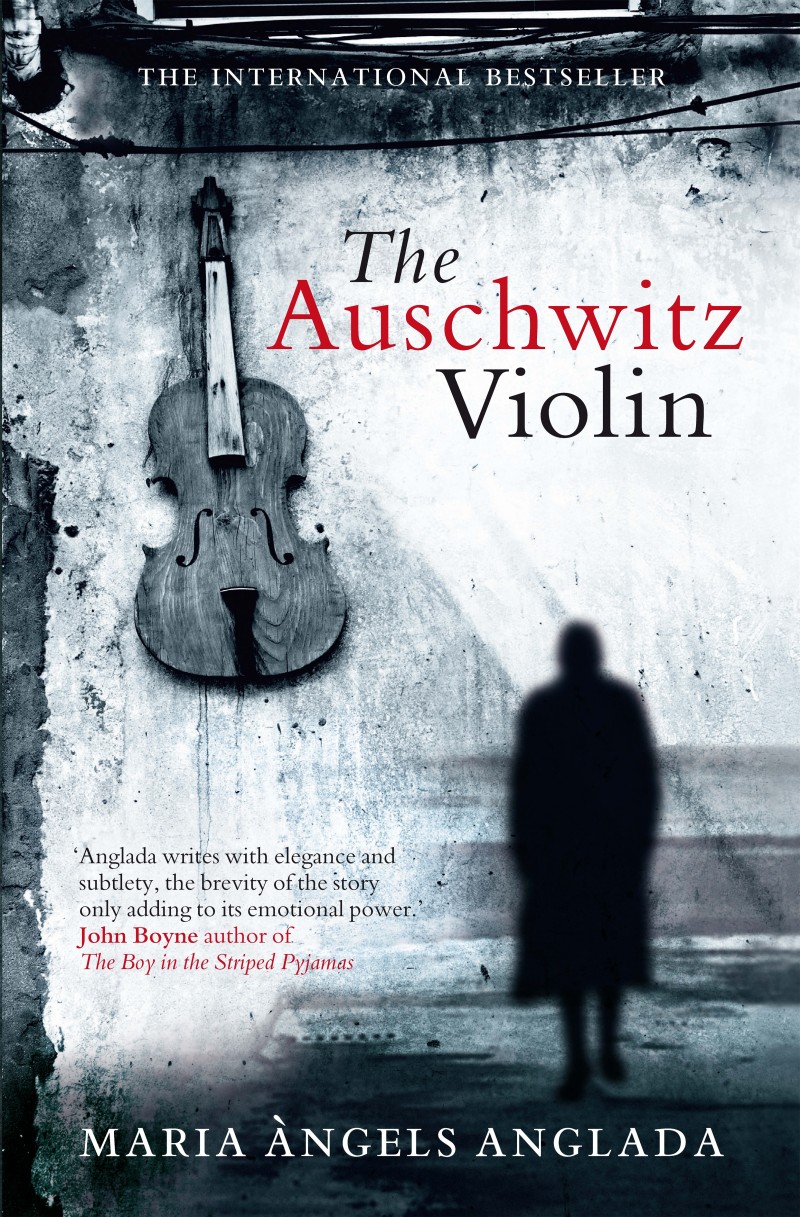
100 Books in 2011 Challenge: The Auschwitz Violin

This one raises an interesting question: is it ok to not like a book on this subject? The Auschwitz Violin by Maria Àngels Anglada, trans. Martha Tennent, is the story of a violin maker interned in Auschwitz who is ordered to make a violin for the camp Commander. He does this amid the starvation and terror of life in the concentration camps.

This is a novella, or at around 25,000 words, a long short story. Looking at it as a short story makes the structure make a bit more sense. What I missed in this book was depth. Life in the concentration camps was horrific and I’ve read a few thing dealing with that subject. Yet it doesn’t come across here. I get the sense that the horror is being skated over. Maybe that’s a matter of taste – I do, after all, like visceral writing. Or maybe it’s an issue of courage. Perhaps the author didn’t want to commit to describing the conditions in Auschwitz in gory detail. I can see how that can seem gratuitous. Unfortunately, for me, that made it hard to connect to the fortitude of the protagonist. It didn’t seem like that much of an heroic struggle because the impact of the environment wasn’t fully brought out.

The writing itself is good and the story has great potential. I just found myself questioning the choices of the author about the structure of the story and what she chose to show. All the way through, I was thinking that I might have done it differently.

So, this book didn’t really do it for me. I felt distanced from the story by the technique. I’d read this story if it was re-written by someone else. And yet I feel a bit uncomfortable saying that I didn’t like the book because of the subject matter. If you like literary fiction, and don’t like horror, then this may be for you. It was a bit too sanitised for my taste.

100 Books in 2011 review: Alone in Berlin

Book club is off with a bang this year. January’s choice was Alone in Berlin by Hans Fallada (trans: Micheal Hofmann) and I loved it from the from start to finish.

Otto, an ordinary German living in a shabby apartment block, tries to stay out of trouble under Nazi rule. But when he discovers his only son has been killed fighting at the front he’s shocked into an extraordinary act of resistance, and starts to drop anonymous postcards attacking Hitler across the city. If caught, he will be executed.

Soon this silent campaign comes to the attention of ambitious Gestapo inspector Escherich, and a murderous game of cat-and-mouse begins. Whoever loses, pays with their life.

The opening chapter is one of the most powerful I’ve ever read. I read on the train and I was bawling my eyes out. Michael Hofmann’s translation is perfectly pitched and Alone in Berlin is an easy, fast read. Which may be surprising given the subject matter.

Fallada’s characterisation is exquisite. All of the characters are individuals and they come alive on the page. There are no stereotypes or stock characters here. And each character, regardless of how nice they are, is treated with empathy. Through these people Fallada shows how easy it is for civilization to crumble. The state can encourage the basest behaviour through making difference illegitimate, dissension dangerous and rewarding obedience. Systematic terror makes it hard to be a good person and easy to take advantage of the less fortunate. And it happens slowly, insidiously, until before you know it the world you thought you lived in is gone.

I love moral ambiguity and Alone in Berlin is replete with it. The Quangels made daily acts of resistance that achieved nothing except giving them back their self-worth. And you might say that knowing in your heart that you didn’t completely give in is important, yet Anna and Otto’s actions eventually damage the lives of several of the people around them. Their resistance had a tangible cost and an intangible outcome. Was it really the right thing to do? Should they have done something more? And this isn’t the only time the question of right and wrong is raised with complex, unclear examples. It’s not easy and all the pain of living with your choices is laid bare in this novel.

Alone in Berlin is an excellent example of an author that shows and rarely tells. We know who these people are because of what they say and do, not because the author tells us who they are. And this is a book originally written in 1947 so the omniscient POV is used and on occasions Fallada gives himself permission to use the authorial voice. Another member of the book club (who read the book in German) says that Fallada uses the Dickensian tradition of giving characters names that describe them.

If you like fiction that strips away the vanity of civilization and shows us what we are, what we can be, with brutal, uncompromising truth, then you will love this. For me, this is one of the best books I’ve ever read.

Thoughts on reading: Wolf Hall

I’ve been putting this one off since the end of September. It felt a bit like hard work. Wolf Hall by Hilary Mantel was the Book Club book for September but this time I can’t blame the Book Club for making me read something I wouldn’t have touched otherwise because there was already a copy on book mountain when it was suggested.

It was winner of the 2009 Man Booker prize and I don’t often read those, but sometimes they pique my interest. Reading this was a strange experience and I think the reason is that there are a lot of things that I like about this book but in the whole, I didn’t enjoy it.

I loved the character of Cromwell. Mantel made him really sympathetic without compromising the hardness of his character. The description was lush and vivid, full of sound, smell, touch and movement, and using metaphor to work every ounce of worldbuilding out of it. It was loaded with symbolism – and I did like that because I felt I understood what was being conveyed. Sometimes I read books that are heavily symbolical and I feel like I speak a different language to the author because, although I recognise that an object is a symbol, I’m clueless as to what it’s a symbol of. Not in this case and I found it quite instructive in how symbolism can be used in a way that supports description and setting. Rather than being wanky.

The viewpoint in Wolf Hall is quite experimental. It is in limited third person and is so tightly held to Cromwell that it is almost first person. It’s also in the present tense which is hard to sustain over 160,000 words. That was impressive but I wondered if this was the reason I found this book very hard to read. It was so slow. It took me a good couple of weeks and I spend at least two hours a day reading and I’m a fast reader. But I recently read another book in the present tense, of about 140,000 words, and that was a very quick read. Both would also be considered literary fiction, so it’s not the genre. The length of it was off-putting to some members of the book club, but what’s 160,000 words in epic fantasy? Nothing! Anyhow,  it was hard work. So much so that I had to stop in the middle and read a Charlaine Harris. I think what Mantel did with the viewpoint and tense was really interesting but it spoilt the enjoyment of the story for me.

I liked the title, but in the end I felt that that was misleading. We don’t get to Wolf Hall until the end of the book and although in the author interview at the back of the book, Mantel says that Wolf Hall is a metaphor for Henry’s court, I didn’t get that. And given that her use of metaphor was so effective throughout I don’t believe that she meant that. I think she just liked it as a title and used it even though it wasn’t quite right for the book.

There was a lot I liked about this book and I wanted to enjoy it. Because it was so slow and such hard work to get anywhere with, I didn’t enjoy it. In spite of all the things I liked about it. In spite of a great character, brilliant dialogue and gorgeous writing. I was frustrated and disappointed.

Thoughts on reading: A House for Mr Biswas

You know there are some books that you’re really supposed to like, or at least pretend to like. A House for Mr Biswas by V. S. Naipaul is one of those. All the world appears to think it’s great.

This was the December read for my book club and I don’t think I would have ever read it otherwise. I’m going to start with the good. The prose was gorgeous; it was incredibly well-written. I’ve never given much thought to life in Trinidad between the two world wars and the setting is vividly drawn. The social relations and culture described were new to me and I liked that. The characters were equally well realised. In technical terms it was clearly brilliant.

And I just didn’t like it. Which I suppose answers the question of what matters more, the writing or the story, because all that beautiful writing couldn’t make this story interesting to me. It is a fictional biography of a horrible man who has horrible relationships with other horrible people. It’s supposed to be a comedy but I didn’t get it. It was a struggle to finish it and I only did because I have a rule about finishing books I start. Unless you’re already a fan, give this one a miss.

Thoughts on reading: Corum

I’m working my way through Michael Moorcock’s The Eternal Champion series and recently I read Corum. Elric is one of my favourite characters in literature and I enjoy the self-conscious/aware nature of the multiple worlds cycle that is the Eternal Champion. Although one might argue that Moorcock is simply telling the same story over and over again. Of course, there is an art in that. Multiple interpretations of the same story layer up into a deeper understanding of the themes that are explored.

Corum comprises The Knight of the Swords, The Queen of the Swords and The King of the Swords. The language is amazing; the descriptions are lush and full of depth. Characterisation is not so deep, because the characters are ciphers. They perform the function of metaphor. What is happening here is myth not story.

Moorcock is the literary end of science fiction and I think you either like it or you don’t. Or at least, that’s true for me. I usually don’t have much time for literary fiction because it turns out I’m all about the story. However, Moorcock’s worlds are so fantastic and the description so beautiful that I am completely engaged. I find Moorcock much easier to read than most literary fiction.

I also enjoy the links with the other works and in the last volume of Corum, Elric makes an appearance, so that’s good. I enjoy the layer where the story is inviting the reader to compare it with its other versions in the Eternal Champion multiverse.

I enjoyed it. Corum’s not as good as Elric though.