Archives

The Mildenhall Treasure

The Mildenhall Treasure is a collection of thirty-four silver objects found in a field in Suffolk in the 1940’s. This Object in Focus book by Richard Hobbs tells the story of its discovery. There was some controversy over who found what and exactly where, as well the delay in declaring the find under Treasure Trove law.

The Mildenhall Treasure comprises dishes, bowls, spoons and trays but is not a complete dinner service. The pieces have complex imagery and there are different styles. Hobbs looks at the imagery in detail to see what we can learn about who might have commissioned and used it. He also explores the sophisticated metal-working techniques used to make the pieces. It was originally thought that objects as fine as these would have been imported to Britain, but more recent archaeology suggests they could have been made by local craftspeople.

As with all Object in Focus books, The Mildenhall Treasure is a fascinating little book that uses a single object to explore history, culture and technology.

Luxury and Power: Persia to Greece

One of the current exhibitions at the British Museum is Luxury and Power: Persia to Greece and as always, there is an exhibition catalogue which is written by James Fraser, Lloyd Llewellyn-Jones and Henry Cosmo Bishop-Wright. As with all BM catalogues, it is so much more than that. There are beautiful photos of the objects in the exhibition and some context for what they are, and there is also an exploration of the meaning of luxury.

People convey status in a variety of ways and almost all societies and cultures have differences in status, no matter how egalitarian. The book looks at how the Achaemenid Persian empire, a highly hierarchical political system based on kingship, used luxury to communication extreme wealth and power. The possession of fabulously costly objects set royalty and nobles apart. The wealth needed to have the objects created was out of reach of almost everyone. There is also a luxury in the impracticality of many of these things. To be able to afford the inconvenience of wearing pounds of gold and gems as jewellery and clothing means that you can have others serve you, that you don’t have to carry out even the smallest task for yourself.

As the Greek city states, led by Athens, became more powerful the Greeks defined themselves in opposition to the Persians. Luxury wasn’t power and status, it was decadence and decline. Which is not to say that Greeks weren’t wealthy, just that ostentatious displays of luxury were associated with the enemy, with all the things that Greeks were not. Wealth was poured into social projects, especially temples and public architecture. Luxury was used to express the power and status of the state rather than the king and his family.

Luxury and Power: Persia to Greece is an interesting look at concepts that have always been present in societies in all ages. It provokes thought about how luxury and power are expressed and used today. The book itself is a lovely hardback with purple inside covers and gold embossing. Not quite the kind of luxury on display in the book/exhibition, but unnecessary enough to feel special.

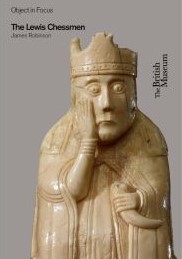
Object in Focus: The Lewis Chessmen

I’ve never paid much attention to the Lewis Chessmen, despite their prominence in British Museum gift shops. However, one of my reading quests is to read all the books in the Objects in Focus series, so here we are.

The Lewis Chessmen, by James Robinson, takes an in-depth look at both the chessmen themselves and the intriguing story of what happened after they were discovered in the early 19th century.

There are enough of the chessmen to indicate at least four (incomplete) sets, but there is also some indication that individual pieces were sold off before the hoard left the isle of Lewis and came on to the antiquities market. How and exactly where the hoard was found is shrouded in some mystery and the book examines the gaps in the stories, the rumours, and the possible events that might explain what happened.

The chessmen are made from walrus ivory and the book looks at the difference between walrus and elephant ivory and what that means for craftwork. It also explains the economics behind using walrus ivory, a more difficult material to work. Examining the styles of clothing the chessmen wear and the motifs on the thrones of the kings and queens show that the chessmen were likely made in Scandinavia in the 12th century. And finally. the book takes a look at the history and spread of the game of chess.

These little books are always a delight and this one was surprisingly engaging.

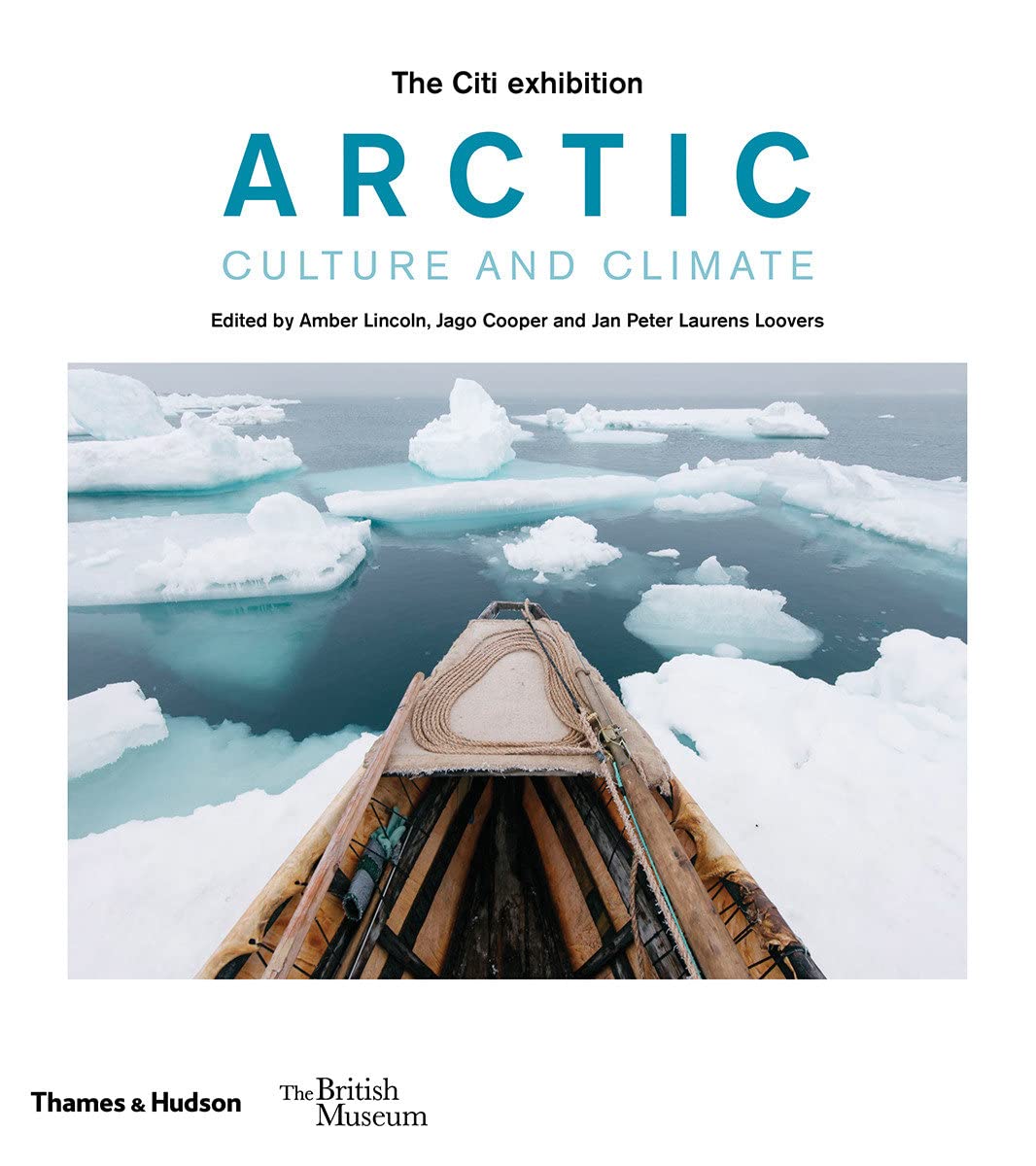
Arctic Culture and Climate

There were two exhibitions just starting at the British Museum in March 2020 when the UK went into its first lockdown in response to Covid-19. One was Tantra and I read the exhibition guide for that last year. The other was Arctic Culture and Climate.

The circumpolar North has been inhabited for nearly 30,000 years. The exhibition explored this history and the ways the peoples of the Arctic have adapted to their environment, as well as examining the impacts of climate change happening now and how Arctic peoples are responding.

It starts with looking at how Arctic peoples in the past and now have arranged their lives to work with the seasons and the different weather and conditions that resulted. This involved moving with herds of reindeer or occupying specific sites only for short periods in the year. Some activities were only performed in certain seasons and some animals only hunting at certain times. The book then looks at the ways Arctic peoples used the materials available to them to produce clothes, tools and vehicles. Particularly in terms of clothes and the use of sealskin and furs the Arctic peoples were technologically sophisticated at an early age. When the Vikings reached these lands they found their clothes and tools quite inadequate.

There is consideration of the evidence for pre-historic settlement of the Arctic. Much is considered to be underwater in the Bering Strait – once a land bridge between Russia and the Americas but submerged at the end of the Ice Age. It’s also worth noting that many recent archeological finds are the result of commercial development of the sites and this has happened less in the very far North. Some have been found and the material that has been discovered is challenging the colonial view of the peoples of the circumpolar North. Whether people started in the east, in Siberia, and moved west is not clear. The finds in north-east Russia appear to be oldest, but the evidence is far from complete. Regardless, there was much communication and trade around the arctic circle, much more so than there was north to south.There is a discussion of the contact between the Arctic and the southern peoples from the sixteenth century onwards and the impacts of trade and colonization.

Lastly, the exhibition looked at the lives of the peoples of the circumpolar North as they are today. It talks about indigenous liberation movements and the campaign for rights to land and traditional hunting practices. It also looks at how traditional technologies have incorporated modern materials. The impact of climate change is particularly felt by the Arctic peoples as they are closest to some of the most dramatic effects. Loss of ice and rising sea levels affect the animal populations, hunting techniques and the land that settlements are built on. Over the last 30,000 years, there have been several periods of warming and cooling which have caused great change in the lives of the peoples living through them and it is hard from this distance to know how well people adapted. It seems that modern peoples have more ability to know what it is happening, but less flexibility to change how we live.

The book itself is lovely: a hardback book with a white cover and some gorgeous photographs of objects and landscapes. In amongst the pages covering the exhibition artifacts are essays looking at art, or specific clothes-making techniques, or one town’s experience of the effects of climate change. It’s a shame I missed the exhibition as this book made me wish I’d seen it.

Various Objects in Focus

Over the last year I’ve read several books from the British Museum’s Objects in Focus series. These are lovely little books that provide a bitesize history of significant objects in the Museum’s collection, often with interesting contextual information from when the object was created and when it was discovered. There’s also often information about conservation techniques and how new technologies are increasing our understanding of archaeological and historical objects. They are also the perfect length for a once a week commute. I can read a whole one in one day.

As I’ve been somewhat lax in blogging, rather than do a post for each book, I’ve collected them here.

Lindow Man

Lindow Man is the preserved remains of a man found in a bog in Cheshire. Over 2000 years old, these remains are the best preserved from Iron Age Britain. The book covers the discovery and excavation of the remains and gives insight into what has been learnt from them. The man died a violent death but it is not know if it was murder, sacrifice or execution and speculation abounds.

The Standard of Ur

Unearthed in excavations in the ancient city of Ur in Mesopotamia (in present-day Iraq) the ‘Standard’ is a beautifully decorated hollow box. It’s called a Standard because of it’s positioning in the tomb. This is potentially misleading as it’s function is not known, if indeed it had a function beyond being art. One of the things that these Objects in Focus books allow is photos of the detail of the art that wouldn’t be possible seeing it on display in the Museum.

The Warren Cup

This is a luxury silver cup from the Roman Empire, dating to the first century AD. It depicts scenes of male lovers and, as well as being an astonishing piece of both art and artisanship, illustrates some of the social mores of Roman civilization. However, because of the nature of the scenes it languished unstudied and unappreciated. Even in 1999, when the Museum acquired the cup, there was a stir in the media.

Model of a Summer Camp

The Model of a Summer Camp is an intricate and detailed model carved from mammoth-ivory depicting a festival of the people of Sakha (north-east Russia). The model was created in the mid-19th century for the Universal Exhibition in Paris in 1867 where it was bought for the Museum. Although the model itself is not that old, the festival it depicts goes back centuries.

The Discobolus

The discus thrower is probably one of the most recognisable classical statues and will be familiar to many people. The book talks about the impact of the eighteenth century vogue for restoring classical sculptures – by filling bits in, adding new pieces or by inadvertently combining parts from different statues. Apparently quite a lot of statues, including the Discobolus, have the wrong heads.

The Meroë Head of Augustus

This is a bronze portrait of the Roman Emperor Augustus. The book looks in detail at the metal casting techniques used and the skill with which such a life-like image could be produced. It also looks at how the production and distribution of these types of statue were used a means of demonstrating power amongst far-flung imperial territories.

The Portland Vase

A beautiful Roman glassware vase which was smashed by a drunken visitor to the Museum in 1845. It’s re-construction and subsequent re-reconstruction has enabled the understanding of how the vase was created using techniques in glass that had been lost for centuries.

A’a: a deity from Polynesia

A’a is a carved wooden deity with many other smaller figures attached to it. Like many ethnographic objects collected by missionaries in the British Empire, not much is known about what it really represents. However, study of the materials, artisanship and working with local people who still retain the skills and knowledge can illuminate some aspects of the society that created it.

Bronze Head from Ife

Thought to represent a King, the bronze head is from Nigeria. The book has an interesting look about the attitudes of European artists towards non-European art as primitive and how objects such as the Bronze Head challenged those regressive theories.

The British Museum, A History

Published in 2002 to mark the 250th anniversary (in 2003) of the British Museum, The British Museum, A History is a history of the institution told by a former Director of the Museum, David M. Wilson.

Much of the focus of the book is on the first 150 years from the origins of the collection and the twisting path the Museum has taken to grow into the towering presence we know today. The careers and personalities of the Directors and curatorial staff in this period are presented in great detail, as at that time there were not so many of them so as to make it impractical, and a sense of their influence of the development of the Museum is vividly created. Donations and purchases of some of the most significant objects in the Museum are also covered in detail, showing how the collection came to be assembled; often by luck, accident or opportunism and only occasionally (more so in the last 50 years) by deliberate policy.

The 20th century is dealt with a bit more briskly. The impact of the wars is discussed and especially the long shadow of WWII; some galleries weren’t completely repaired until the 1980s or 1990s. There is discussion of the structure and organization of the Museum trustees and employees. It’s an organization that has evolved rather than been planned. Decisions about organizational structure have often been made in response to specific events and constrained by tight, inadequate budgets, which leads inevitably to problems that have to be addressed later down the line.

What was most interesting to me is the relative youth of the academic study of history, art history and archaeology. Wilson talks about the need for the Museum to develop expertise in these areas as they were not taught by the universities. It was a bit of a revelation to me that art history wasn’t even a thing until the 1920s.

This book is probably only for fans of the Museum and appears to be out of print now, but I enjoyed it. It’s been on my ‘books to read’ shelf for about twenty years (it’s a large, heavy, not at all portable hardback) so I’m pleased I finally got round to reading it.

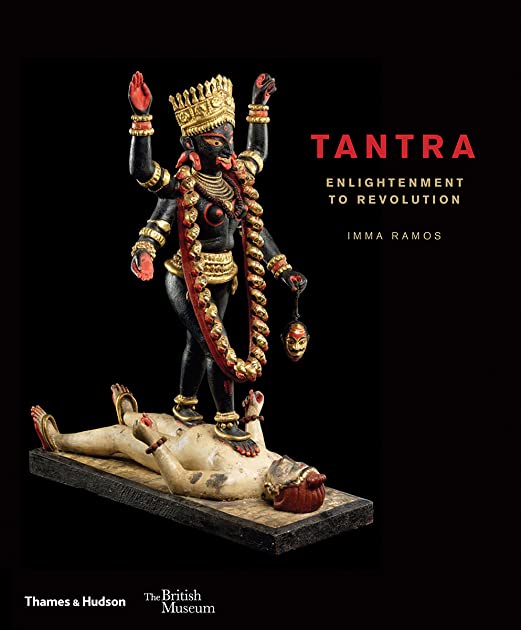
Tantra

There will be a British Museum theme to most of the next few posts.

Tantra by Dr Imma Ramos is the book of the British Museum exhibition on Tantra. It had just opened in early 2020 when the pandemic hit and so I didn’t get to see the exhibition itself.

The book and exhibition tell the history of the development of Tantra as a reaction to and subversion of conservative and hierarchical Hinduism. It took the taboo or forbidden elements and turned them into ways to connect with the gods and absorb their power. There was a path that took the teachings and rituals literally and one which took them symbolically, using visualization rather than practice. Given that Tantra had a focus on power in the mundane world, it was enthusiastically adopted by rulers in the Indian sub-continent. Tantra spread east and was also absorbed by Buddhism, creating new Tantric paths with a Buddhist flavour. Using art and sculpture from the time, Dr Ramos shows how themes of conquering ego and ignorance are represented and unlocks the symbolism in the representation of Tantric gods and goddesses.

The book explores how Tantra was misunderstood and misrepresented by the British during the colonial period. Tantric sex means uniting the masculine and feminine energies in order to connect with divinity and is not about purely sexual pleasure, but the representation of this element of Tantra in sculpture and painting was interpreted salaciously by western minds. It was also considered pagan and demonic. The way Tantra was viewed and talked about in the West then evolved into the way it was adopted by the counter-cultural movements of the late 20th century, with an emphasis on sex rather than spirituality.

In India, Tantra became associated with the resistance to colonialism and became closely connected to Indian nationalism. Dr Ramos shows how Tantric deities were used to promote Indian-made goods and how the symbolism came to include the fight for independence.

This is an eye-opening book and it’s a real shame I missed the exhibition. I both learned and unlearned a lot.

Stonehenge

Welcome to my annual flurry of posts about books, where I realise I haven’t posted anything in months, have a few weeks of activity, and then get distracted by work and life again.

Anyway, recently I went to the World of Stonehenge exhibition at the British Museum and, as I do, I bought a book. Stonehenge by Rosemary Hill is about how Stonehenge has been interpreted, treated and used throughout the centuries. From the romantic fiction dressed up as fact of Geoffrey of Monmouth to roughly about ten years ago, Hill traces the history of our efforts to understand the ancient monument.

Particularly interesting is how the druid theory has taken on a life of it’s own. Starting as an idea based on nothing much more than a mention of druids by Tacitus, supposedly an eye witness account, and an idea that Stonehenge dated from the Roman era, it has morphed into a movement that sees druids celebrating the summer solstice amongst the stones. We know nothing about the druids as they left no written records. Everything that is said about them is a modern invention. It might be right, but we don’t know.

Hill covers the ownership of Stonehenge, mostly private and the campaigns to acquire it for the nation. Some of those owners chose not to allow any archeaological digs, which given the damage some of the early ones did is probably a good thing. More recent digs have discovered burial mounds, human remains, and evidence of the age of Stonehenge and that it was built in at least three stages.

Stonehenge has inspired art, literature and poetry for centuries. Hill’s explores how it has been used as a canvas for the spiritual and philosophical ideas of the age. She shows how the more bloody, sacrificial interpretations are comnected to times of civil unrest.

This is a thoughtful and engaging book, well researched and constructed. Definitely worth reading.

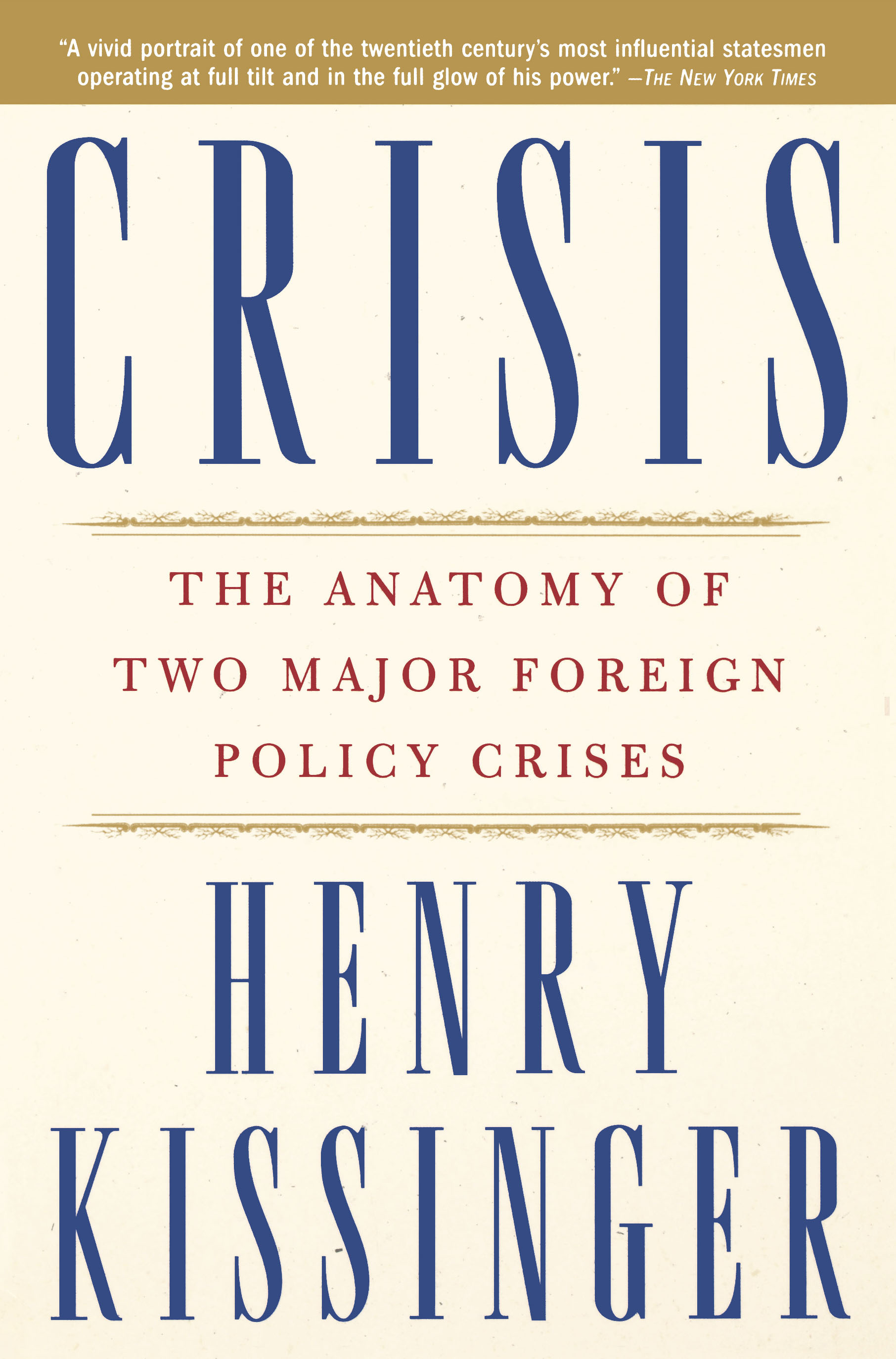
Crisis

I started reading Crisis by Henry Kissinger as Covid-19 lockdown started in the UK. It seemed… appropriate, given that it’s a record of a group of people trying to respond to a situation that is changing on a daily basis with limited information.

Crisis covers the Yom Kippur war and the last days of the Vietnam war. Most of the book is dedicated to the Yom Kippur war in 1973. It is largely transcripts of phone calls between Henry Kissinger and the various other actors involved. It is fascinating to read actual transcripts because people don’t speak in proper sentences, context (which we don’t have in this book) is what makes everything make sense and simply from the words on the page it is impossible to know what is going on. Not really. You get the impression that differences in opinion in the US government – between the executive, the various committees, Congress and the Senate – mean that stuff isn’t getting done. Kissinger finds himself making promises that others don’t fulfill. Then people don’t tell the truth, or change their minds, or are relaying the best information they have but it’s just wrong.

Kissinger calls out that some of his colleagues found it hard to let go of the belief that the Israeli army was so superior to the Egyptian army that the war would be over in a couple of days, even when the evidence clearly showed the two armies quite evenly matched. He notes how assumptions impeded decision-making. Although it’s also clear, especially in the section on the Vietnam war, that he doesn’t examine his own assumptions. Trying to work out what’s going on – especially as it’s a long time since I read anything about that war – without any context is challenging: however, lacking the context meant I was more focused on the content of the verbal communication. It is really amazing how randomly we speak and yet manage to understand each other. And really clear how easy it is to misunderstand.

The section on the Vietnam war is shorter and has more commentary around the transcripts. It focuses on the last days of the war when the US is trying to get people (US military, US civilians and Vietnamese people who had worked with the Americans) out of South Vietnam before the North Vietnamese arrive. Kissinger allows himself to show much more emotion in this section about the responsibility the US had to get people to safety and his frustration with the US government failing to agree sufficient budget.

Crisis is an interesting book, both for what is intentionally revealed and what is unintentionally revealed.

The Balkans 1804-1999 Nationalism, War and the Great Powers

Misha Glenny’s The Balkans has been my breakfast book for the last year. Breakfast books are the many large, heavy books I have on my shelf that I can’t commute with so they get read in twenty minutes stints while I have breakfast. Sometimes twenty minutes is enough time to read a reasonable chunk. Other times, when a book is densely packed with facts and ideas, then twenty minutes gets me about five pages. If I’m lucky and really paying attention. The Balkans was very much the latter.

The book is very insightful. Glenny has spent much of his career as a journalist working in the Balkans and is most knowledgeable. The structure of the book is chronological, taking a span of years and addressing what is happening in each of the areas of the Balkans. I hesitate to say countries because, although nationalism has been a driving force behind much of the conflict in this part of the world, the experience of colonialism over this period has meant that the areas known as Bulgaria or Greece or Albania or Serbia (or others) have grown larger and smaller at various times. What becomes evident because of the structure of the book is the near constant experience of war for people living in the Balkans between the mid-19th century and the 1950s. The social and psychological legacy of that is appalling.

Glenny’s lens is one of imperialism. The start of the period he covers is the wane of the Ottoman and Austro-Hungarian empires. The ways in which they sought to undermine each other or to retain power at the edges of their influence had a destructive effect on the peoples of the Balkans. Interference from the other great powers, Britain, France and Russia, made things generally worse. The great powers only sought to extract the wealth of the area as they did all around the world. Nazi Germany’s interest in the region was marginally more positive in that it had an economically beneficial impact, but following classic colonial policy agriculture was encouraged and manufacturing denied. When the Balkans (mostly) become part of the Soviet Union, it looks much like more imperialism to Glenny. The Balkan countries are treated as bread baskets for Russia and state terror follows a similar pattern to that of earlier empires.

Only a handful of pages at the end are devoted to the events in Yugoslavia after the fall of the Iron Curtain, which was a little disappointing (but it seems Glenny has written more elsewhere on the subject) but the threads of history and the interference of the great powers (preferring to call themselves the international community now but still playing the same game of putting their strategic interests over the lives of ordinary people) are visible.

This was a compelling and often disturbing read that inspires me to learn more about the Balkans. I remain convinced that nationalism is one of the stupidest ideas humanity has ever had. And there’s some stiff competition.