Archives

How I Live Now

I don’t often read YA fiction because of all the adult fiction I haven’t read yet. Last year I accidentally read some and wasn’t sure how to judge it. I couldn’t decide whether it was rubbish because it wasn’t well written or it was rubbish because my expectations were inappropriate for YA fiction. I didn’t have that problem with How I Live Now by Meg Rosoff.
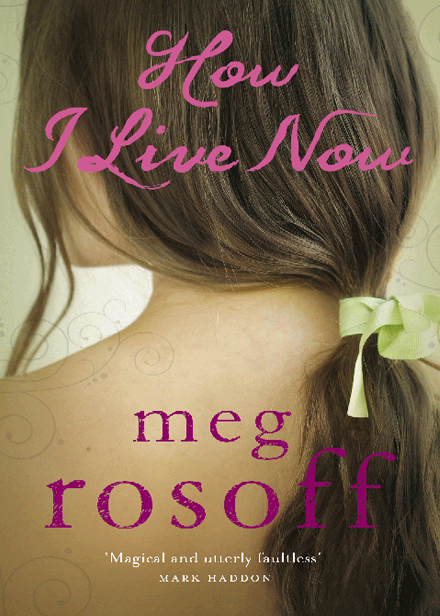
Daisy moves from New York to rural England to stay with her aunt as she’s having issues with her wicked step-mother. She finds an idyllic pastoral life with her three cousins and settles in quickly. Her Aunt Penn is some sort of international diplomat and never around. She falls in love with her cousin Edmond and begins to remember how to be happy.

Then a war breaks out and the kids don’t really know what’s going on, except that Penn is in Norway and can’t get back. They’re used to managing for themselves and for a while life goes on until their farm is requisitioned by the army. The boys are sent to one family and the girls to another. Daisy decides she’s going to take Piper, her youngest cousin, and make her way back to where Edmond and Osbert are staying.

The walk takes days and they’re hungry and dehydrated. They find the farm where the boys were staying and they’re gone, so the girls make their way home where they stay until Daisy’s father finds her and brings her back to New York.

Six years later, Daisy returns to the farmhouse and is reunited with her cousins. They are all dealing with the after effects of what they went through.

How I Live Now was June’s book club read and came to us via World Book Night. I didn’t expect to enjoy it but I found Daisy’s voice utterly engaging. There are some hard issues dealt with them in this book and the way they are handled is very clever. Younger readers might not pick up on them but older teenagers will. The world is convincingly bought to life, although the parts about New York don’t always ring true.

I found the ending a little weak, almost as if it was tagged on as an afterthought. The part where Daisy covers her years in New York after the events of the book seemed rushed and not as dense as the rest of the story. But ignoring that, the rest is excellent. I may not read more YA fiction because of it, but if I do I now have a benchmark. (For the record, what I had read previously was not nearly as good as this). I’ll be giving this book to a friend in the target demographic and I hope she enjoys it.


The Player of Games

The Player of Games by Iain M. Banks is the first of his science fiction novels that I read. At the end of last year I read two of his more recent ones that I was blown away by and wished I could nominate them for my book club. I couldn’t because we have a page length limit of about 600 pages and these two books were both well over that. So, I thought I would nominate The Player of Games which I first read more than ten years ago. I wondered if I would like as much now as I did then.

The Culture is a socialist utopia run by artificial intelligences where people can pursue any life they like. (I totally want to live in the Culture). There are a group of people and AIs who form Contact which is like the Culture’s diplomatic service and armed forces rolled into one. Within Contact is a more shadowy organisation called Special Circumstances. These are the groups that manage the Culture’s relationships with other civilizations. Gurgeh is a man who has spent his life mastering all the games there are to play and is acknowledged as one of the foremost gamers in the whole Culture.

Gurgeh is manipulated into travelling to Azad, a more barbaric civilization to play the game that rules their society. How competitors place in the game determines the positions they will hold in public life. Azad is a hierarchical society riven with inequity and they don’t believe anyone from outside Azad will stand a chance in the game. Naturally, Gurgeh does better than anyone expects and the stakes become very high.

One thing I do notice about Banks’ books is that they start slow and end with a bang. I enjoyed this greatly, but perhaps not as much as I did the first time around. The reason for that is that Banks’ later books are much better :-). There’s a nice amount of ambiguity about who is playing who and several games are being played at once. It’s a gentle introduction to the world of the Culture and the themes that Banks’ likes to explore with it. There’s only a low level of machines with personality disorders which is disappointing but despite that, I would highly recommend it.

Tiger of Talmare

Tiger of Talmare by Nina Scott is a novella that I stumbled across while I was browsing Amazon for contemporary science fiction written by women.

Mel is a space pirate who has been hired to hijack a spaceship carrying the cryogenically frozen Zach to be tried for a massacre on Talmare. Zach is a tiger-human hybrid soldier, who happens to have been chasing Mel across the galaxy for the last ten years, ever since she stole his ship.

The cryochamber is damaged so Mel has to revive Zach. He convinces her he’s innocent. The man who hired her is the real culprit and is trying to silence Zach. As the story is uncovered it turns out there is connection to a troubled member of Mel’s crew so Mel decides to do the right thing. And as this is a romance as much as an adventure, Mel and Zach get it on.

This is a fun romp heavy on action and dialogue. These elements are well done and the book is pretty entertaining. It’s a novella, coming in at a mere 100 pages, so there’s not much room for anything else. I think these characters have a lot of potential and if the story was fleshed out with description and context it would make a great novel.

I liked it. It’s currently free as an ebook, so give it a go.

On a side note, I’m keen to read science fiction written by women. Any suggestions? I’m looking for people publishing now, rather than classics of the genre.

The Hidden Empire

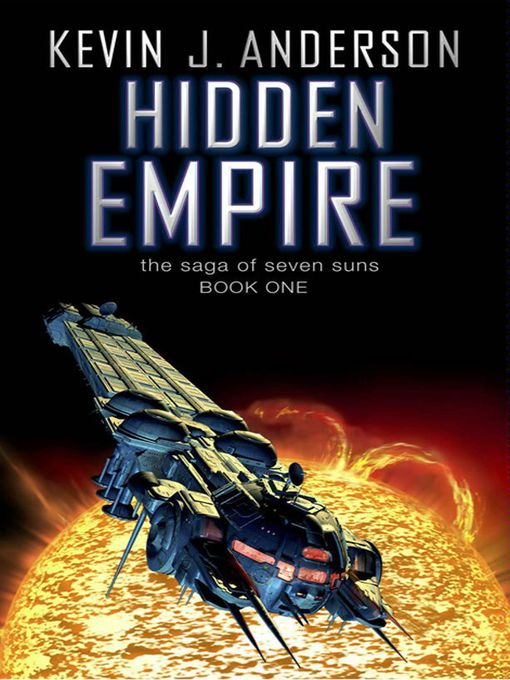
The Hidden Empire by Kevin J. Anderson is the first book in The Saga of Seven Suns series which runs to seven books. It’s a meaty space opera of around 660 pages. A nice substantial book to really get my teeth into. In theory.

Humanity expanded out into the universe in generation ships. They encountered the Ildirans who gave them advanced technology for spaceflight and helped them settle colony planets. They’ve discovered another extinct alien race and in the course of learning about them they’ve found a tool for tunring gas giants into suns.

Using this tool triggers a third alien race to reveal themselves and declare war on both humans and Ildirans.

As this is the first book in a series of seven it is largely setting up the war. Through numerous characters Anderson builds up a picture of human and Ildiran society and draws the relationships between them. The Hidden Empire is broad in scope which I liked, but it lacks depth which I didn’t like.

Chapters are short, lasting only one or two scenes. This makes the pace quite quick. The chapters are told from the point of view of a single character and often ends refering to the character whose chapter is next so there is a pleasing chain effect.

What it lacks is depth. There is one main bit of human society (Hansa) and two further cultures (Theroc and Roamer) which have a tense relationship with the main bit. But the groupings are simplistic. For example, the Hansa have devolved to a psuedo-monarchy for their system of government and the rationale seems rather weak. There is also a lack of understanding of the dynamics of oppression and marginalisation. The characters are shallow stereotypes that exist primarily as narrative mouthpieces. The whole thing is heteronormative and white-centric – probably not consciously, but it does demonstrate a lack of thought or analysis.

I finished it (and I won’t be finishing anything truely terrible this year), but I won’t be reading the rest of the saga. While I do love fiction with a broad sweep I need that to be balanced with depth, good characters and complex relationships.

100 Books in 2011: Line of Polity

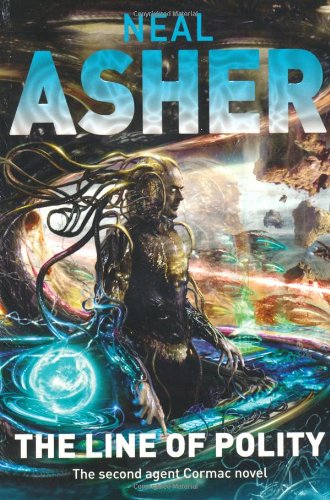
Line of Polity is the second in the Ian Cormac series by Neal Asher, which is sci-fi spy thriller, basically James Bond in space.

A rogue scientist is experimenting with ancient alien technology far more advanced than that of the Polity, and his intention is to use that technology to make himself all-powerful.

The outlink station Miranda has been destroyed by a fungus that appears to have been deployed by Dragon, a mysterious alien being. The refugees from Miranda are picked up by a ship from Masada, a world outside the Polity which is ruled by a theocracy and keeps most of its population as slave labour. There is a rebellion on Masada led by Lellan Stanton, the sister of John Stanton, an arms dealer.

Because of Dragon’s involvement, Ian Cormac is sent to investigate.

Describing this as James Bond in space is not doing it justice as Neal Asher’s books are much richer and more complex than Ian Fleming’s were. Cormac is a more rounded creation and the supporting characters are much more real as well.

Gant is back. He was killed in the first book but it turns out he had himself backed up and so was downloaded into a golem body. Gant and Thorn were my favourite characters from the first book and I was happy to have Gant back. He spends a lot of time wondering whether he is still the same person as he was. When he is reunited with Thorn, who had not known Gant was backed up and so had grieved for the loss of his friend, there is some awkwardness in the relationship. The way Asher uses this relationship to explore what constitutes a person is really well handled and he portrays a deep, intimate friendship between these two men.

Many of the central characters are from the first book, allowing much development. Cormac is much less centre stage than he had been, but he is still struggling with being disconnected. As well as excellent characterisation, and the great dialogue that goes along with that, Line of Polity has plenty of plot. This is an action driven novel as Cormac chases both Dragon and Skellor about the universe. The ending is a bit of a shock. Cormac pulls off a clever trick, forcing Skellor to choose between destroying Masada and killing Cormac. Skellor chooses Cormac and runs into an outpost world run by arms dealers, who Cormac fools into thinking he is attacking. Their defence system is the only thing that can destroy Skellor at this point and it does so. It also seems that Cormac dies in the process. Right up to the last page I was waiting for Asher to reveal how Cormac survived, but he didn’t. Which leaves me desperate to read the next one. Genius. (There are currently three more Ian Cormac novels, so he has to have survived, right?)

I thoroughly enjoyed this. If you like space opera, particularly Iain M. Banks, then you’ll enjoy this. It’s exciting, entertaining and well written.

100 Books in 2011: Surface Detail

Continuing on with wrapping up the last few book reviews for the 100 books in 2011 challenge we have Surface Detail by Iain M. Banks.

Lededje Ybreq is an indentured servant who is killed by her owner. She is revived on board a Culture ship, courtesy of a neural lace given to her by a passing eccentric ship when she was younger. Once she is used to the idea of being alive again, she seeks to return home to kill him.

Meanwhile, several lesser civilisations are engaged in a virtual war over the right to have virtual hells. The Culture is profoundly anti-Hell but felt that it shouldn’t participate. The war has been raging for decades and the anti-Hell side is losing. Because of this it is about to break out in the Real.

Lededje finds herself travelling home with the warship Falling Outside the Normal Moral Constraints, a delightfully psychotic mind created to be a weapon but knowing it will almost certainly never get the chance to show its full capability.

Lededje’s journey home takes her right into the middle of the outbreak of war in the Real, giving Falling Outside the Normal Moral Constraints the opportunity it never thought it would get.

I love the Culture and I want to live in it. With Surface Detail, Banks has created a new Culture novel that is possibly one of the best. I love the ideological discussions presented by the existence of virtual Heavens and Hells and what that means for civilization. One hell world is explored through the POV of two activist characters who voluntarily go to their world’s Hell to support the anti-Hell movement. The pain, despair and hopelessness is vividly brought to life. I found myself profoundly anti-Hell.

Characterisation is excellent, and my favourite of the many memorable characters was Falling Outside the Normal Moral Constraints. I love ship minds in the Culture novels; they’re so very entertaining. FONMC was wonderful. It is the mind of a ship created to be the ultimate deterent and loves destruction and mayhem, but is aware that it may never get to truly express itself. So it’s avatars are cruel, mean, spiteful and sadistic, and charming, elegant and manipulative, like the psychopath that the ship really is. And when FONMC gets to destroy an entire fleet of warships all by itself, it is so joyful that it is hard not to be happy for it.

In Surface Detail, Banks does not disappoint. It is full of interesting characters, sparkling dialogue, and rich with intellectual concept. It will make you think, and laugh, and cry. Highly recommended. This is a contender for best book of the year.

100 Books in 2011: Winter Song

Winter Song by Colin Harvey is the third book I’ve read from small press Angry Robot. As I’ve thoroughly enjoyed all of them and have paid for none of them (they’ve all been freebies from conferences or joining the British Fantasy Society), I’m feeling a bit uneasy. I think I might have to make a point of buying some more books from them.
Karl Allman’s spaceship is attacked and he bails out, landing on a barely habitable planet. Centuries ago, humans spread out from Earth. In some cases, people were genetically altered to be able to cope with conditions on planets not habitable by ordinary humans. In other cases, planets were terraformed. Since then, the factions have split and humanity is at war with itself. Allman’s ship gets caught in the crossfire and the planet he lands on is one where terraforming was started but not properly finished.
He is found by a community of people who colonised this ice planet so they could live a traditional Icelandic life. In this community, there is a girl named Bera, grieving her dead baby, who is scorned and rejected by the rest of the community because she won’t name the father of the baby. She nurses Allman back to health at which point, the head of the community, Ragnar, demands that he work to pay off his debt. He learns that the world is basically poisonous to humans, the terraforming is reversing, and there are other creatures, trolls, that might be sentient.
Allman learns from Bera that the remains of the original colonists’ ship, the Winter Song, lie somewhere far to the south. Ragnar won’t let him leave so he has to escape and Bera comes with him. They journey across the ice, followed by Ragnar, and along the way, Allman learns that Bera was raped. They also encounter a troll and discover that the trolls are modified humans that settled the planet before it was terraformed. 
I loved this. The story is complex and deals with a number of themes, which are handled so well that it is never overwhelming. Harvey writes POVs from both Allman and Bera and conveys the miscommunication in their relationship brilliantly and with sensitivity. This is an example of really good science fiction. It’s a human story that’s prime focus is the characters, set in a hard sci-fi world that highlights some serious social themes. The resolution of the story is excellent; it’s downbeat but perfect for the story and emotionally satisfying.
And there are sort of Vikings. Is it just me? Am I just picking books that take inspiration from Norse mythology and the Vikings? Or there a Viking theme in publishing right now? 
Anyway, this was really good. I recommend it.

100 Books in 2011: All the Windwracked Stars

All the Windwracked Stars by Elizabeth Bear is a bit genre-busting. It is heavily grounded in Norse mythology with liberal sprinklings of sci-fi, steampunk and high fantasy.
After Ragnarok, of which there are and will be many, one Valkyrie survives because she ran away. Her name is Muire. When she comes back after the battle, wracked with shame, she finds a single valraven still alive who takes her for his rider. She heals him and, in doing so, turns him from a flesh and blood creature to one of metal and fire. Then she rejects him. Centuries later, Muire is living in the sole remaining city of Valdyrgard which is kept alive through technomancy while the rest of the world dies around it.
Mingan, the Grey Wolf (Fenrir?), returns to Valdyrgard, hunting for something. Muire senses him and believes she must kill him to avoid another Ragnarok. In tracking him down, she discovers that the souls of the Valkyrie have been reborn as new people. These new people don’t remember themselves but Muire and Mingan know who they are. An ancient love-triangle is reignited. Muire wants to restore the Valkyrie to themselves.
I loved this. It is dark and sexy, full of flawed characters trying to do the right thing, but finding it hard to work out what that is. The characters are complex and complicated and so are the relationships between them. The villains have excellent motives and it is hard not to sympathise. The heroes want to do what’s right, but the consequences of that are often wrong. They all struggle with the way they feel and the burdens they carry.
The language is lyrical and poetic. The rhythm is slightly odd but perfectly pitched. I really enjoyed reading it for the sake of the arrangement of the words. It was lovely.
If I have a criticism, it’s that it is a shame that the only person of colour in the book is the most abused, damaged, infantilised and sexualised character in the book. Those two things didn’t have to belong to the same person and it plays into some unpleasant racial tropes.
Other than that, this was one of the most engaging books I’ve read this year. I enjoyed it enormously and will definitely pick up more of Elizabeth Bear’s work. Highly recommended!

100 Books in 2011 Review: Gridlinked

Gridlinked by Neal Asher is essentially James Bond in a space opera setting. Ian Cormac has been an agent for Earth Central Services for thirty years and has been linked to the AIs that govern the Polity for all of that time. His latest mission involves coming off the grid and learning to problem solve like a human as the AI network is potentially compromised by an alien intelligence from beyond the galaxy. In order to deal with this he is pulled off his current mission (which is not going so well) but not before he’s killed the sister of a psychotic terrorist. Who then proceeds to chase Cormac across the galaxy generally getting in the way until the final confrontation.

 The book is filled with a cast of engaging characters, both human and AI. Cormac’s adjustment to life without access to the AI grid, without all the information he could ever want, is convincingly portrayed. The moments when he has to ask other people about themselves and realises how much he has forgotten about making a connection are poignant and well-handled.

The dialogue is crisp. The pacing is good; it’s a 125,000 word novel and it packs much more in than you’d think. The twin strands of the plot are balanced nicely and even right at the end the possibility that everything will go horribly wrong is strong.

There are points when Cormac is talked about by other characters and we learn that he is somewhat legendary. Yet he comes across as a relatable character. He’s not legendary in his own mind and he doesn’t have the disrespectful arrogance of James Bond.

I really enjoyed this. I’ve bought another one and I’m looking forward to reading it. If you haven’t read Neal Asher before, I’d recommend him.

100 Books in 2011 review: Aces High

Aces High is the second in a shared world series edited by George R. R. Martin. It’s alternate history sci-fi which takes the 1950s as its jumping off point and postulates that a virus outbreak creates mutated humans. Some get superpowe

rs and others get physical and mental disfigurements. The first book deals with people coping with becoming either an ace (superpowers, normal looking) or a joker (physical and mental disfigurements).

In the second book, set in the 80s, both aces and jokers are fighting alien invasion. It’s a series of short stories, written by a number of leading sci-fi writers, that builds up a story arc over the whole book.

I’m not really into superhero stuff but I quite like these. The writing is variable in style (not in quality) but all the stories blend well together. It has a kind of noir-ish feel, is a little bit pulpy and comicky, and is perhaps a little dated. But overall, it’s fun, lightweight, easy reading.