The 15 fictional characters that have influenced me the most

Yay! Internet meme time! The latest internet meme that I have found is to list the 15 fictional characters that have influenced you the most. Tricky one this. I find it really hard to remember specific characters. You’re supposed to spend 15 minutes thinking about it but I spent an hour. Also, I’m not sure about what is meant by influential, have any of these characters induced me to think or behave differently? I don’t think so. Some of the lists I looked at seemed to just go for their favourites. So, I’ve gone for the 15 fictional characters that resonated most for me, in the order in which I remembered them:

  1. Elric
  2. Faith from Buffy the Vampire Slayer
  3. Sandor Clegane from A Game of Thrones
  4. Han Solo
  5. Roy Batty from Bladerunner
  6. Mendoza from Cities of Gold
  7. Aragorn from Lord of the Rings (the books not the films)
  8. Ivy from Soul Caliber
  9. Lara Croft
  10. Richard Sharpe
  11. Eleanor of Aquitaine (alright, historical rather than fictional, but any biography of a person that lived over 1000 years ago has quite a high amount of fiction in it)
  12. Red Riding Hood from A Company of Wolves
  13. Lisa Rowe from Girl, Interrupted
  14. Attia from Rome
  15. Eric Northman from the Sookie Stackhouse novels

So, stats.
7 women, 7 men, 1 male cartoon character
6 from books, 3 from TV, 2 from games and 4 from films

Who are the fictional characters that stayed with you the longest?

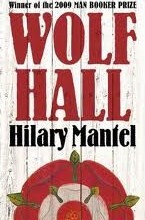
Thoughts on reading: Wolf Hall

I’ve been putting this one off since the end of September. It felt a bit like hard work. Wolf Hall by Hilary Mantel was the Book Club book for September but this time I can’t blame the Book Club for making me read something I wouldn’t have touched otherwise because there was already a copy on book mountain when it was suggested.

It was winner of the 2009 Man Booker prize and I don’t often read those, but sometimes they pique my interest. Reading this was a strange experience and I think the reason is that there are a lot of things that I like about this book but in the whole, I didn’t enjoy it.

I loved the character of Cromwell. Mantel made him really sympathetic without compromising the hardness of his character. The description was lush and vivid, full of sound, smell, touch and movement, and using metaphor to work every ounce of worldbuilding out of it. It was loaded with symbolism – and I did like that because I felt I understood what was being conveyed. Sometimes I read books that are heavily symbolical and I feel like I speak a different language to the author because, although I recognise that an object is a symbol, I’m clueless as to what it’s a symbol of. Not in this case and I found it quite instructive in how symbolism can be used in a way that supports description and setting. Rather than being wanky.

The viewpoint in Wolf Hall is quite experimental. It is in limited third person and is so tightly held to Cromwell that it is almost first person. It’s also in the present tense which is hard to sustain over 160,000 words. That was impressive but I wondered if this was the reason I found this book very hard to read. It was so slow. It took me a good couple of weeks and I spend at least two hours a day reading and I’m a fast reader. But I recently read another book in the present tense, of about 140,000 words, and that was a very quick read. Both would also be considered literary fiction, so it’s not the genre. The length of it was off-putting to some members of the book club, but what’s 160,000 words in epic fantasy? Nothing! Anyhow,  it was hard work. So much so that I had to stop in the middle and read a Charlaine Harris. I think what Mantel did with the viewpoint and tense was really interesting but it spoilt the enjoyment of the story for me.

I liked the title, but in the end I felt that that was misleading. We don’t get to Wolf Hall until the end of the book and although in the author interview at the back of the book, Mantel says that Wolf Hall is a metaphor for Henry’s court, I didn’t get that. And given that her use of metaphor was so effective throughout I don’t believe that she meant that. I think she just liked it as a title and used it even though it wasn’t quite right for the book.

There was a lot I liked about this book and I wanted to enjoy it. Because it was so slow and such hard work to get anywhere with, I didn’t enjoy it. In spite of all the things I liked about it. In spite of a great character, brilliant dialogue and gorgeous writing. I was frustrated and disappointed.
I’m on Twitter

In my day job I have to tweet about the technical publications I’m working on. I’d been avoiding it all last year on the basis that I’m on LinkedIn and a few other places, and after all social media isn’t just Twitter. Then I had my appraisal in December and I was ‘encouraged’ to tweet. Specifically to tweet. I offered to write a blog, although I’ve no idea what I’d say, but tweeting is the thing, so tweeting it is.

And I feel a bit weird about it. It feels like going into a room crowded with strangers and shouting something random out. This makes me anxious. But of course, I am now tweeting. It’s kind of addictive. And I figured if I could tweet about boring work stuff then I should also be able to tweet about what I am passionate about – writing.

If you want to follow me, I’m @BoudicaM. Anybody else out there in this strange world? Leave your twitter names in the comments.

Thoughts on reading: A House for Mr Biswas

You know there are some books that you’re really supposed to like, or at least pretend to like. A House for Mr Biswas by V. S. Naipaul is one of those. All the world appears to think it’s great.

This was the December read for my book club and I don’t think I would have ever read it otherwise. I’m going to start with the good. The prose was gorgeous; it was incredibly well-written. I’ve never given much thought to life in Trinidad between the two world wars and the setting is vividly drawn. The social relations and culture described were new to me and I liked that. The characters were equally well realised. In technical terms it was clearly brilliant.

And I just didn’t like it. Which I suppose answers the question of what matters more, the writing or the story, because all that beautiful writing couldn’t make this story interesting to me. It is a fictional biography of a horrible man who has horrible relationships with other horrible people. It’s supposed to be a comedy but I didn’t get it. It was a struggle to finish it and I only did because I have a rule about finishing books I start. Unless you’re already a fan, give this one a miss.

Writing goals for 2011

Last year I said my writing goal was to finish my work-in-progress, Sacrifice. I didn’t do it. I added 10,000 words, came up with a better working title (Immortal), and re-wrote some parts of what I’d already written. It was all going well up until August. Then I hit a bad patch writing-wise; I got really busy at work and I had some stress in my private life at the same time. Those two things left me with very little energy for writing.

Happily, things are easing and I’m writing again. So, my first writing goal for 2011 is simply to make more progress on Sacrifice. I want to get to 75,000 words and I want to get it ready for submission.

I had hoped that I would have a short story published this year but the ezine that had accepted it went under. So, my second writing goal for 2011 will be to submit that story to other markets and either get it accepted or collect six rejections.

What are your writing goals for 2011?

Most and least enjoyed books of 2010

I read a lot of books last year. Many were good, some were great and some were horrible. All taught me something about writing and some were a great deal more enjoyable in the process. So here are the three I enjoyed the most and the three I liked the least.

Top Three
1. Black Man by Richard Morgan
2. Matter by Iain M. Banks
3. Boudica, Dreaming the Eagle by Manda Scott

Bottom Three
x. Wolf Hall by Hilary Mantel
y. A House for Mr Biswas by V. S. Naipaul
z. A Wicked Liaison by Christine Merrill

So, interestingly, two of the books on the least favourite list are highly critically acclaimed. Both Wolf Hall and A House for Mr Biswas (‘thoughts on reading’ forthcoming) were technically brilliant but the experience of reading them was unpleasant. The out and out winner though was A Wicked Liaison. My brain was stained for months after reading it.

The three at the top had a lot of competition; most of the books I read last year were enjoyable. The three that I’ve chosen are my favourites are the ones were I struggled to read as a writer because I was so carried away with the story. Black Man won out because the scope of it was breathtaking and because the plot twists were genius.

Thoughts on reading: Matter

This is not one of 2011’s 100 books. I read this last year and I’m a little behind in my thoughts on reading posts.

I’m a huge fan of Iain M. Banks. I think his science fiction is way better than his mainstream stuff (which I do still enjoy). Matter simply confirmed that for me. I loved it. It is a Culture novel that starts of in a world in another civilization’s sphere of influence that has not developed space technology of it’s own. This part of the story is more of a mediaeval fantasy. One of the main characters has left this world to join the Culture and decides to return on hearing of her father’s assasination, where she discovers interference by other civilizations and her trip turns into a Special Circumstances mission.

The scope and detail of the novel are vast and intricate. I don’t know how I would be able to keep hold of all that information while writing. Banks is pretty much good at all the elements of writing. The characters are great with fantastic names. The dialogue is excellent. Story structure is good. The mystery at the centre of the novel was handled really well; it was clear that things were not as they seemed, would not work out the way the characters believed they would, but it was not obvious what would happen. Happily, I didn’t get the surprise but when it was revealed I was ‘oh yes, of course’, which is how I like it.

The ending was amazing. It was Shakespearean in it’s death-toll and I was gripped. It was completely absorbing. This is one of my favourite books of 2010 and you must read it!

The problem of naming characters

I submitted a short story to Electric Spec yesterday (keep your fingers crossed for me!) and one thing I had to do to get it ready was re-name all my characters.

I have such trouble picking names. I’ve managed to get past it enough to write first drafts, on the basis that I can pick any name and fix it later. But then at some point I have to pick names for the characters that aren’t silly, obvious or cheesy. That’s where I struggle. I find it really hard to just come up with names, whether they are mainstream, fantasy or science fiction type names.

So what makes it so hard? Partly it’s because I think many of my original choices are derivative. I’m easily influenced by what I’ve been reading lately, especially if it’s Iain M Banks or something. And some times they are just naff sounding. I also tend to pick names that begin with R, G, S and T, and have either one or two syllables. There is definitely a lack of variety.

In the end I do get to change them and with the help of a few random name generators I usually end up with names I like. How do you all pick names for your characters?

Thoughts on reading: Selling Out

I have a huge stack of books I’ve read waiting for blog posts. Some seem like much harder work than others. Selling Out by Justina Robson is one of the easy ones.

This is book two in the Quantum Gravity series, and this time I’ve actually read the first one. What I love about this is the blend of science fiction and fantasy. It’s set in the near-future after a world-changing event, the nature of which is not clear at this point. The protagonist is an experimental cyborg spy who is sent on missions to the new worlds (elf, fairy, demon, etc) that were revealed by the event. I’m all for a bit of genre-bending and Robson is a great writer so it all comes together seamlessly.

When I read the first book I thought it was fun and well-written but lacking the depth and complexity of Living Next Door to the God of Love, which was the first of Robson’s novels that I read. After reading Selling Out I think I might be wrong. It’s still great fun, and still has a light feel to it, but the character development and foreshadowing in this book make me suspect that by the time I get to the end of the series a grand vision will have been realised.

In this book, I noticed how the dialogue stood out. It worked hard to move the plot along and reveal character. It’s snappy, witty and highly engaging.

Justina Robson is one of my favourite authors and I can’t wait to read the rest of the series. And everything else she’s written.