Archives

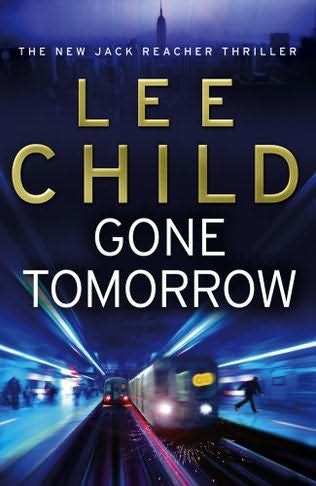
100 Books in 2011 Review: Gone Tomorrow

Last week I miscalculated with how much I would read on the train. I knew I only had 40 pages of Globalization and its Discontents to go and I was half way through Beginnings, Middles and Ends, and I thought that would be enough for the commute. Only it wasn’t. I finished them both on the way into work and had nothing to read on the way home. Fortunately, we have a book-dump at work where people can leave books and take ones other people have left. I was happy to find Gone Tomorrow by Lee Child. I’ve read a couple of these and they are fluffy, light and fun.

Jack Reacher is a ex-military policeman who lives under the radar travelling around the US. He tends to run into trouble. In this case he’s in New York, on the subway, and he believes he sees a suicide bomber. Reacher intervenes and the woman kills herself. The rest of the book is devoted to finding out what she was doing and why she killed herself.

The style is very much about detail. Actions are described to the level of: Reacher ordered coffee. It arrived. It was black and in a white mug. He added three sugars from rectangular white sachets with blue writing on them. This is not actual text from the novel. Short, choppy sentences tend to add urgency and increase the pace. Detail adds credibility and draws the reader into your world. With this book I realised it can go too far. There came a point when the short sentences were just grinding. The detail sometimes seemed obsessive and more about stretching the plot out to fill the word count. Although that wasn’t entirely necessary as this was a big book. I did learn some interesting facts about men’s tailoring though.

This was not my favourite of the Jack Reacher novels that I’ve read and I think that’s because there was too much detail around things that weren’t that relevant to the plot. The story in amongst the detail was entertaining and well-handled. I did want to know what happened and why the woman on the train had killed herself. Child does plot really well.

Character is another matter. I’m not a fan of Jack Reacher; I think he’s a bit of a dick. At the end of the novel, another character accuses Reacher of letting his emotions get the better of him and it’s good that we were told otherwise I wouldn’t have known. The characters around him are a mixed bag. Some are drawn reasonably well, and I like that there’s plenty of female characters playing non-stereotypical roles. Others are a bit cardboard cut-out. But that’s ok. After all, it’s all about the plot.

This is not his best, even among the few I’ve read, but if you’re looking for something easy and light, or to examine plot, then you could do worse.
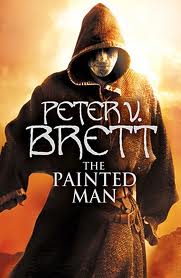
100 Books in 2011 Review: The Painted Man

I was excited to read The Painted Man by Peter V. Brett. There’s been a lot of buzz around it and I like the cover a lot.

There are three point-of-view characters; Arlen, Leesha and Rojer. We meet them when they are children and follow their stories through to their mid to late twenties. In the book demons come out at night and they can’t be fought, partly because they are so numerous, so humanity hides behind warded walls. But still, many people are lost to the demons, including the families of Arlen and Rojer. The damage done to Leesha is done by other people. After the formative events of their childhood are described, they each leave their home village in search of a way to fight what happened to them. Each finds they have special skills: Arlen learns to fight demons by tattooing wards on his body; Rojer can charm them with his fiddle and Leesha is a talented healer. Towards the end of the book, their paths converge and they fight a pitched battle against the demons.

This is a book with a theme. It’s about how people respond to fear and what it does to them. Which is a good theme, but it’s very obvious and sometimes it feels like the story takes a backseat. That’s a shame, because there’s a good story in here. Although I suspect it might be in the second book of the series. What this really felt like was backstory. Here are three characters who are going to form an amazing demon-fighting team who I think I would like to see ridding the world of demons, but I have to wait for a whole book while we set up their motivation.

Also, the worldbuilding is quite poor. At the level of detail, it’s ok. Villages and individual buildings feel quite solid. The problem is at the macro level. The various city-states of this world are one dimensional in terms of economy and culture. The latter is particularly problematic as the references to real-world culture are too clumsy. Here’s a city in the desert, so we’ll basically make them arabs but without any depth of understanding of arabic or Islamic culture. The other four cities are generic medieaval European templates. It all felt a bit paint-by-numbers. Not that this isn’t a fine tradition in fantasy, but getting the worldbuilding right is one of the elements that separates great fantasy from the rest.

Anything that get’s published has something about it; something that caught the imagination of an editor. So, what was it about this book? From the small biographical details available, I don’t believe that the answer is ‘connections in the industry’. It’s a debut novel, so we can rule out previous sales history. I think it comes down to story. I like the concept. It’s an interesting twist on the ‘farmboy becomes hero’ trope. I wanted to read what seems to have been held over to book 2. Perhaps reading the rest of the trilogy and viewing it in the whole will make more sense.

One thing to take away from this book is about making choices about what to show. For all of the characters the books covers fifteen years and so Brett has to choose which events he shows and which he summarises. He has to pick out a number of scenes and events that represent the formative experiences of the characters. I’m not sure I would have made the same decisions in all cases.

If you fancied reading this, then you might be better off skipping straight to the second book.

100 Books in 2011 Review: Size 14 is not Fat Either

Size 14 is not Fat Either is the second Heather Wells mystery by Meg Cabot. Heather is an ex-popstar trying to start a new life working at a college in exchange for free tuition. Students keep dying, the police are useless, Heather stumbles around investigating but not and inadvertently getting into danger. Of course, she has the obligatory complicated private life – a popstar ex-boyfriend whose private detective brother is her landlord and a student with a crush. And her Dad turns up to live with her after spending 20 years in jail.

The size 14 (18UK) is a reference to the fact that Heather is a little overweight. I found it quite difficult to work out whether this was size positive or not. It starts with Heather getting some off-hand negative comments from a barista she fancies which sparks some self-hating inner monologue. Overall, Heather is a competent woman struggling to adapt to a radically new life against the pressure of friends and family. She has come from an incredibly image conscious industry and one could argue that her self-talk could be a lot worse.

Writing-wise, it’s good. It’s not stand-out spectacular, but it’s good. Dialogue is effective and Cabot creates rounded, well-drawn characters. Even the bit-part characters get a bit of personality. The plot works out in a convincing satisfying way, although the motives of the killers seem somewhat light for the gruesome murder committed. However, this is chick-lit and it’s supposed to be an easy read. Cabot has a light, assured touch suitable for the genre. If you’re looking for something fun and relaxing, you could do worse.

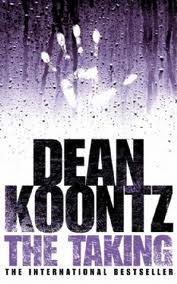
100 Books in 2011 Review: The Taking

Dean Koontz is one of those popular writers who are considered to be technically very good and a few years ago I read Intensity. The concept of the book was that the writing should be intense to reflect the story and it really worked. Intensity was amazing. So I was looking forward to reading The Taking. I thought it would be a well written, fast paced thriller.

Sometimes I can be very wrong about things.

The Taking is the story of a woman who wakes up to a weird fog and rain. She discovers that the whole world is affected and as the television broadcasts stutter out, she and her husband leave their mountain home to go in search of other humanity. They decide that their job is to gather up the parentless children. People have different reactions to the eerie weather and the things that start to appear in it. It seems that the earth is being terraformed by aliens but all is not what it appears.

The concept that the earth is being terraformed by aliens is a really interesting one. Terraforming is usually thought about in terms of making another planet suitable for human life and I liked the idea of flipping that about. How would that feel? What would we do about it?

Unfortunately, that’s not really what The Taking about. And I will reveal the twist because, believe me, it is not worth reading this book to find it out. The Taking is a second cleansing of an immoral humanity by the Abrahamic God; a second flood. It reverses Arthur C. Clarke’s law that any sufficiently advanced technology is indistinguishable from magic to say that technologically advanced, faithless people will interpret world-shattering supernatural events as the technology of a much more advanced species. This is a story about God saving the good and destroying the bad and I find that so much less interesting.

So, I didn’t like the story, but what about the execution of it? I felt it was poor. And certainly not up to the standard I remember Intensity was. It’s mainly telling. We are told what Molly, the protagonist and POV character, is feeling. We are given her backstory in small but awkward lumps. The interaction between her and the other characters is described and rarely shown. There was very little dialogue and I think that is really the vehicle that authors use to turn telling into showing. I found the book to be silent. No one was talking in my head. I thought that would be amazing in a film where the use of silence has a disturbing, creepy effect but it wasn’t coming across on the page.

The supporting cast of characters were flimsy and even Molly didn’t have much personality. The interactions between them are sparse and devoid of connection. The description was ok. In fact, I did keep thinking this would really work as a film, but as a book it lacked depth. And dialogue. Which is not how I remember Intensity.

So, in all, I will probably read more Dean Koontz as so far he has been 50% amazing and 50% awful, so I need to read at least one more to tip the balance. If you are going to try Koontz, don’t pick this book.

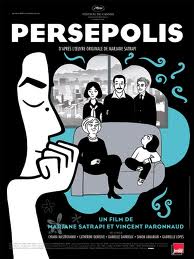
100 Books in 2011 Review: Persepolis

I’ve decided graphic novels count towards the 100 books challenge, which is good, because this gave me a chance to catch up a bit this week. Still behind target though; last week was week 13 and I should have read 26 books by the end of it. I’ve only read 22. At some point, I’m going to have to read some really short books. Maybe some more graphic novels.

The March book for my work book club was Persepolis by Marjane Satrapi. Having seen the film (and enjoyed it), I was looking forward to this.

It is the memoir of an Iranian woman, dealing with her childhood in Iran around the time of the revolution i.e. the late seventies and the eighties. She is the child of Marxists intellectuals and the great-granddaughter of the last Emperor. The book shows how her life was affected by the increasing restrictions on freedom of speech and movement. For a few months she lives in Austria, which provides different challenges.

It’s marvellous. It is so moving, both sad and funny. Satrapi reveals the things that had the greatest impact and is brutally honest with herself and her actions. Sometimes she leaves the emotion quite raw and at other times she gently pokes fun at herself. Given that there are so few words, she uses them to great effect.

This was lovely. And educational. So far this year book club has been swinging from one extreme to another – from amazing to turgid and back to amazing again this month. Persepolis is highly recommended.

100 Books in 2011 review: Aces High

Aces High is the second in a shared world series edited by George R. R. Martin. It’s alternate history sci-fi which takes the 1950s as its jumping off point and postulates that a virus outbreak creates mutated humans. Some get superpowe

rs and others get physical and mental disfigurements. The first book deals with people coping with becoming either an ace (superpowers, normal looking) or a joker (physical and mental disfigurements).

In the second book, set in the 80s, both aces and jokers are fighting alien invasion. It’s a series of short stories, written by a number of leading sci-fi writers, that builds up a story arc over the whole book.

I’m not really into superhero stuff but I quite like these. The writing is variable in style (not in quality) but all the stories blend well together. It has a kind of noir-ish feel, is a little bit pulpy and comicky, and is perhaps a little dated. But overall, it’s fun, lightweight, easy reading.

100 Books in 2011 review: The Heroes

This one is hot off the press! For me at least. Every so often a book comes out that I’m so excited about I buy it in hardback as soon as it’s published. I’m a fan of Joe Abercrombie’s work and his latest book, The Heroes, came out at the end of January. I bought it and read it immediately.

The Heroes follows three characters during a three day battle at a henge called the Heroes. Bremer dan Gorst is on the side of the Union, has lost everything and is trying to redeem himself through the only thing that ever gave him any sense of self-worth – fighting. Curnden Craw has been a warrior all his life and now he’s tired and struggling to work out what the right thing to do it. Prince Calder is a dispossessed prince trying to figure out how to make himself King of the North without doing any actual fighting himself.

This is a book about heroism in all its glory and stupidity. It’s also about the horrible reality that is lost in the glare of heroism but without which it wouldn’t be possible. Abercrombie pretty much does everything well but his stand-out skill is characterisation. His main characters are not always very likeable; what they are is identifiable. He reveals their inner conflicts, fears, self-delusion and insecurities in a way that opens them up to us as real people. We may not like them but we understand them. I particularly enjoyed the layering of Bremer dan Gorst’s crippling loneliness throughout his POV chapters.

I like the way the story uses several POVs. As well as the three main characters there are three minor characters who have story arcs through the book and a handful of others who get the odd occasion to talk. There is one chapter, called Casualties, where each scene is from the point of view of an individual who gets killed in one of the engagements. A character has a scene, is killed, and then the POV switches to the head of the character who killed them. And is in turned killed and the POV passes to the next killer. This lasts for six characters and the last is one of the main characters. I honestly didn’t know whether he would be last, or whether he would die. Abercrombie doesn’t necessarily keep his characters alive to the end of the book. He’s prepared to do what the story requires and my heart was in my mouth for the whole of that scene. Genius.

Abercrombie is a visual writer who creates scenes quite filmicly, probably as a result of his previous life as a film editor. His action scenes are full of detail, movement, and sensory information. The worldbuilding is good, but lighthanded, at least for me. I’ve read all of Abercrombie’s books and the world is familiar to me. My only criticism would be the lack of female characters. Abercrombie writes women well – meaning that he writes them as people who happen to be female – and has created some really memorable female characters. There were only two (aside from background characters) in The Heroes, who were great, but had small roles and I would have liked more balance.

The ending was really a mix of endings. Each of the six main and minor characters come to a turning point in their lives. Most get what they wanted but find that it’s not quite what they thought it would be. Two thought they wanted a life that was different from what they had, but when they get it, find that what they had was better. One finds that getting what she wants comes with a very high price. Another finds that getting what he wants doesn’t solve his problems or make his life any better. One gets what he thought he wanted but gives it up when he sees that what he wants really comes in a different package. And Sargeant Tunny finds himself right back where he started. I find it insightful and realistic. It’s satisfying because it speaks to emotional and psychological truth.

I loved it. This is modern fantasy at its finest. And I can’t wait for the next one. Highly recommended.

100 Books in 2011 review: Free Fall

I bought Free Fall by Robert Crais in a book buying addiction frenzy in Asda. They were selling a ton of books for a pound each. How am I supposed to not buy books if they do that??

Anyway, I was in the mood for easy-going fluff, and I have a book target to meet, so this seemed like a quick win.

This is an Elvis Cole and Joe Pike novel. A young woman thinks her policeman fiance is in trouble. It turns out to be much more trouble than anyone bargained for involving blackmail and murder.

It’s fun, easy reading. Cole and Pike are more likeable than some of their ilk (yeah, Jack Reacher, I mean you). They are not complex characters but neither are they flat and stereotypical. Some of the supporting characters get well fleshed out as well. Others don’t, notably the villains. The plot cracks along at a good pace and there are one or two nice thoughtful moments. It’s entertaining and if you’re looking for a light read, you could do worse than this.

100 Books in 2011 review: The Number of the Beast

The Number of the Beast by Robert A. Heinlein is one of his later novels (published in 1980) and is not just a story.

The basic plotline is two couples in a time machine travelling through a series of universes, more or less similar to our own, alternately running from and chasing the villains that tried to kill them at the start of the story.

But what it really is, is a homage to 1930s pulp science fiction. The style is dated and the characters are Heinlein usual combination of intellectual brilliance, excessive heteronormative sexuality and stereotypical gender norms. Interestingly, Heinlein spends some time exploring the unconscious ways in which men undermine women’s assertion of equal rights and self-determination while believing that they are being supportive. It is surprisingly insightful, given Heinlein’s justified reputation for reactionary thinking.

The book is full of in-jokes, most of which I didn’t get, not being steeped in the fiction which the book is paying homage to. I liked the concept of fictons – that somewhere in the multiverse any fictional world thought of pops into existence. That would be cool. Of course, Lilliput, Barsoom, Oz and Wonderland wouldn’t be the worlds I’d choose to visit but there you go.

I hated the ending where Heinlein brings all his characters together for a big, self-congratulatory conference. This is strictly one for the fans.

So, if you could visit any fictional world/universe where would you choose to go? I’d go to Sunnydale, Westeros and the Culture.

100 Books in 2011 review: Forbidden Magic

I love the idea of paranormal romances. Erotic romance combined with fantasy sounds like something I could really enjoy. What could go wrong?

Forbidden Magic by Cheyenne McGray is the first of a series. A witch who works with law enforcement to solve mystical crimes discovers that a coven of black warlocks is planning to summon people-eating demons to earth. Failing to convince her coven to summon the Tuatha D’anann, she does it on her own, but only one of them comes. Her coven is attacked by the demons and then she and her warrior ally convince the rest of the Tuatha D’anann to come to fight the demons.

You know, it sounds promising and I’m always up for a bit of silliness in plot terms, so long as it’s well-written silliness. And that’s what could go wrong. The characters are pretty stereotypical. Aside from the witch Silver, and her Tuatha D’anann lover Hawk, the characters are flat and boring. The members of the Tuatha D’anann party, the law enforcement team, and the coven, are just names with the odd bit of description attached. There is no personalisation and no individualisation.

Romance writing is different in that the focus is on the development of the central relationship and on the sex scenes. But for me, the relationship in this case didn’t feel convincing. The sex scenes did the job they’re supposed to do. They were ok but not great. And I was rather disappointed by the kinky sex only being allocated to the evil characters – the kind of sex you have doesn’t say anything about character and it’s not good writing to rely on such obvious tropes.

Unfortunately, there’s not a lot to recommend about this one. Anyone got any recommendations for really good paranormal romances?