Archives

A Moveable Feast and The Paris Wife

June Book Club was a double bill: A Moveable Feast by Ernest Hemingway and The Paris Wife by Paula McLain.

A Moveable Feast is a collection of vignettes recalling the years in the 1920s Hemingway spent living in Paris. Each of the people he knew there, Gertrude Stein, F. Scott Fitzgerald, Ford Maddox Ford, James Joyce, Ezra Pound and several others, has their story told. The depictions aren’t always flattering but there is a sense that all the fluff has been cut away and that Hemingway gets to the core of who people really are. While technically this is non-fiction it was written many years after the events, and knowing that Hemingway’s fiction is closely based on his life, there is the sense that story and style matter more than fact. The truth that Hemingway is in search of is a truth of the heart and mind, not the truth of reportage. The content isn’t something I’d normally enjoy; it’s a bit gossipy and has a slight feel of Heat magazine to it, but I love the writing style.

I love the deceptively simple bare bones starkness of it. I love the way every single word matters. I love the intensity and the sense of striving for emotional truth. I first read this when I was nineteen and it’s always interesting to read again the things that had a big impact when you were young, just to see whether it’s as good as you remember, or whether the greatness was fuelled by teen angst. It was better second time round. I will definitely be re-reading the rest of his work at some point soon.

The Paris Wife is the story of Hadley, Hemingway’s wife during the Paris years. Hadley is a shadowy figure in A Moveable Feast and barely gets mentioned. She isn’t even named until halfway through. It was a brave choice to write this book, given that Hemingway is one of those writers that tends to inspire irrational fandom. It starts when they meet in Chicago, tells the story of their courtship and marriage, and then the story of their time in Paris up until Hemingway falls in love with someone else and their marriage ends.

I didn’t find McLain’s portrayal of Hadley sympathetic. From the notes to the book, it seems McLain did a lot of research and tried to keep her story as factual as possible – although when I was reading the story I wasn’t convinced she’d done any research at all. For the first half of the book I was intensely annoyed; the tone was all wrong, the language was too modern and the dialogue didn’t ring true. Fortunately, it’s a very easy read so it didn’t take long to get through it. And by the halfway point I was totally engaged. The second half of the book was much better and much of what’s wrong with it would have been fixed by cutting the first 150 pages.

The Paris Wife makes an interesting counterpoint to A Moveable Feast and it’s worth reading to round out your perspective. It’s particularly illuminating about the events that became The Sun Also Rises.  Any Hemingway is worth reading.
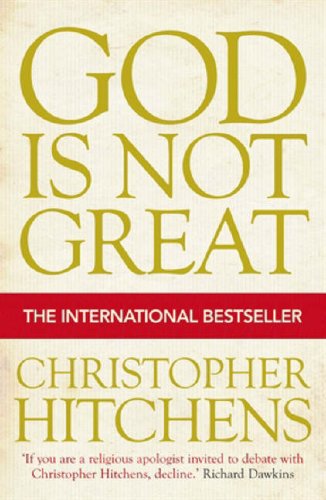
God is not Great

I don’t think I would have read God is not Great by Christopher Hitchens if it hadn’t been in the 99p kindle sale at Christmas. Maybe that was someone’s idea of irony.

The premise is that not only is there no god, or any other creative consciousness, but also that organized religion is mad, bad and dangerous to know. Using personal anecdotes, documented history and analysis of texts, Hitchens takes us through more than a dozen reasons why religion is bad for your health and probably makes you a less moral person.

I thoroughly enjoyed it, but I can’t say I had my point of view changed. I came to the book already primed to agree with Hitchens’ points. Partly because his arguments are based on a Marxist critique of religion and partly because I’ve read the Bible and came to many of the same conclusions myself. The one thing I did learn is that the Buddhists aren’t all they’re cracked up to be. Not as peaceable as you might think.

If you believe there is a God, especially one of the Abrahamic persuasion, you are unlikely to have your faith shaken. Hitchens goes in for grandstanding much more than persuasion, and I would think his tone would inspire defensiveness and rebuttal. I’m sure it would get my back up. Unfortunately, the same is true if you’re undecided. This is not a book that will commend a god-free enlightenment to you (for that, I’d recommend Towards the Light by A.C. Grayling). If you are an atheist (and I am, for all my flirting with animism/paganism), then this is a rallying cry for the cause and really good fun. Recommended or not recommended depending on your starting position.

The Quest

The Quest by Wilbur Smith is apparently the fourth book in a series (that once again I haven’t read the rest of), but I didn’t know that until I read the jacket blurb to write this post.

According to the blurb, Egypt is beset by plagues and the Pharaoh has summoned a warlock to save the country.
I didn’t get very far at all  with this. On the train I found I’d rather stare out the window than read this. I couldn’t connect at all with the characters. I think it is trying to take a mythic tone, but doesn’t quite pull it off which gives it a very insubstantial feel.
I remember reading a couple of Wilbur Smith’s novels when I was younger and quite enjoying them. This wasn’t the same at all and I’d give it a miss, unless you’re already a fan.

War and Peace

Reading War and Peace by Leo Tolstoy was my main reading goal for this year. I spend a couple of hours a day on a train and I like to use that time constructively. Some books need a bit of time and effort, and commuting makes it easy to do that. War and Peace has been pretty high on my ‘should read’ list for a long time but I’ve been put off by reports of its difficulty.

Commuting presents the best opportunity I’m going to get to tackle the hard stuff. In this case, I didn’t make it. It’s 550,000 words, which is not that daunting for fantasy readers, I think. (As an aside, wikipedia has a list of the longest novels. In Search of Lost Time, I’m coming for you).

To start with I was really enjoying it. It’s in three volumes and volume 1 is wonderful; easy to read, full of beautifully drawn characters and believable dialogue. Most of this part is set in aristocratic society in Moscow and St Petersburg and it is lovingly brought to life. Most of volume 2 was pretty good as well. The pace was good, and aside from the length, I was struggling to identify what was supposed to be so intimidating about it.

The Peace bits were better than the War bits. The parts where the action was about relationships and society were very natural and had quite a modern feel about them, in that there was little exposition and a lot of showing things on the page. The War bits were harder to read. I wondered if this was a deliberate attempt to create a feeling of discomfort in the reader or evidence of lack of familiarity with the situation. Or perhaps it’s just that a modern reader is used to more cinematic descriptions of battle. There was more exposition and less flow. I liked that Tolstoy focussed on the confusion and general wandering about of armies, rather than presenting a heroic battle.

As the book goes on there is more War and less Peace. By the time I got to volume 3 there was another problem. Tolstoy stops telling a story and starts ruminating about historical determinism, fate and the ‘great man’ theory of history. All interesting stuff, but heavy going, and all the time you want to get back to the story. I got about 85% of the way through and my reading rate had dropped to about thirty pages a day (from a high point of about 80 pages a day). I stopped to read the book for my book club and found I really didn’t want to pick War and Peace up again.

If you’ve ever wanted to read this book, I’d say give it a go. Much of it is brilliant. I never really understood what was meant when people talk about Russian fatalism, but now I do. Volumes 1 and 2 are engaging and enjoyable and it’s worth it just for that.

The Functions of Role-Playing Games: How Participants Create Community, Solve Problems and Explore Identity

I’m interested in identity and exploring aspects of personality and how we play parts in the various areas of our lives. All of us have different ways of being depending on the situation we find ourselves in. Who I am at work is not exactly the same as who I am with family, or with various groups of friends. For some people the differences are subtle and more about emphasising certain qualities than about being a completely different person. For others, it’s more a matter of playing a part. In my roleplaying group, I’m interested in how much the characters we create are related to who we really are. So, The Functions of Role-Playing Games: How Participants Create Community, Solve Problems and Explore Identity by Sarah Lynne Bowman really appealed to me.

The book covers the evolution and development of roleplaying, both as a leisure activity and as a training tool in military and corporate environments. It looks at the skills that can be developed and how scenarios can be used as learning tools, and refers to studies that show that learning through simulations or role-playing is more effective than book study and classroom teaching. Bowman also considers the link between play and learning in childhood and the social pressure to move on from these activities in adulthood, and what we may lose from doing so.

Bowman considers live-action roleplaying, tabletop roleplaying and computer games with roleplaying elements. She looks at the two dominant systems, Dungeons & Dragons and World of Darkness and uses personal examples to demonstrate her points. Bowman has conducted in-depth interviews with a small number of long-term roleplayers, examining their experiences and the benefits they get from roleplaying.

In the last chapter, Bowman discusses types of identity alteration as categories of character that players are likely to create. The nine types are:
The Doppelganger Self, a character very close to the player’s personality.
The Devoid Self, the player but lacking an essential quality that the player possesses in real life.
The Augmented Self, the player, but better, with some quality that the player doesn’t possess.
The Fragmented Self, a subdued aspect of the player’s personality forming the central concept of the character.
The Repressed Self, an outlet for the player’s Inner Child, a naive, innocent version of themselves.
The Idealized Self, a character with qualities the player wishes to have.
The Oppositional Self, a character completely opposite to the player’s personality.
The Experimental Self, when a player is experimenting with outlandish or bizarre concepts to see how that would work.
The Taboo Self, incorporating themes the player cannot address in real life and often directed at exploring morality.

The book as a whole was very interesting and I found it more readable than I expected to. The part I was especially drawn to was the discussion of the types at the end and the different ways in which ways of being can be explored. My observation is that some people engage with this more consciously than others and that I can see that in future I might use these ideas to explore certain themes and concepts. I would have liked more quantitative data, but I appreciate that the studies haven’t necessarily been done. I would also have liked more in-depth consideration of the nine types of character, as I found them disappointingly brief. These things aside, I really enjoyed this and would recommend it for anyone interested in psychology and identity.

How I Live Now

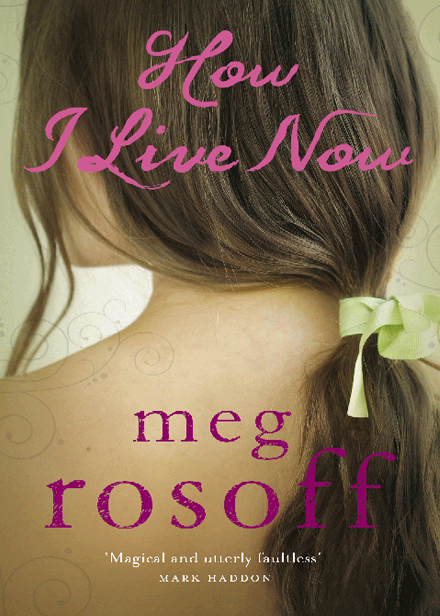
I don’t often read YA fiction because of all the adult fiction I haven’t read yet. Last year I accidentally read some and wasn’t sure how to judge it. I couldn’t decide whether it was rubbish because it wasn’t well written or it was rubbish because my expectations were inappropriate for YA fiction. I didn’t have that problem with How I Live Now by Meg Rosoff.

Daisy moves from New York to rural England to stay with her aunt as she’s having issues with her wicked step-mother. She finds an idyllic pastoral life with her three cousins and settles in quickly. Her Aunt Penn is some sort of international diplomat and never around. She falls in love with her cousin Edmond and begins to remember how to be happy.

Then a war breaks out and the kids don’t really know what’s going on, except that Penn is in Norway and can’t get back. They’re used to managing for themselves and for a while life goes on until their farm is requisitioned by the army. The boys are sent to one family and the girls to another. Daisy decides she’s going to take Piper, her youngest cousin, and make her way back to where Edmond and Osbert are staying.

The walk takes days and they’re hungry and dehydrated. They find the farm where the boys were staying and they’re gone, so the girls make their way home where they stay until Daisy’s father finds her and brings her back to New York.

Six years later, Daisy returns to the farmhouse and is reunited with her cousins. They are all dealing with the after effects of what they went through.

How I Live Now was June’s book club read and came to us via World Book Night. I didn’t expect to enjoy it but I found Daisy’s voice utterly engaging. There are some hard issues dealt with them in this book and the way they are handled is very clever. Younger readers might not pick up on them but older teenagers will. The world is convincingly bought to life, although the parts about New York don’t always ring true.

I found the ending a little weak, almost as if it was tagged on as an afterthought. The part where Daisy covers her years in New York after the events of the book seemed rushed and not as dense as the rest of the story. But ignoring that, the rest is excellent. I may not read more YA fiction because of it, but if I do I now have a benchmark. (For the record, what I had read previously was not nearly as good as this). I’ll be giving this book to a friend in the target demographic and I hope she enjoys it.


Weird Things Customers Say in Bookshops

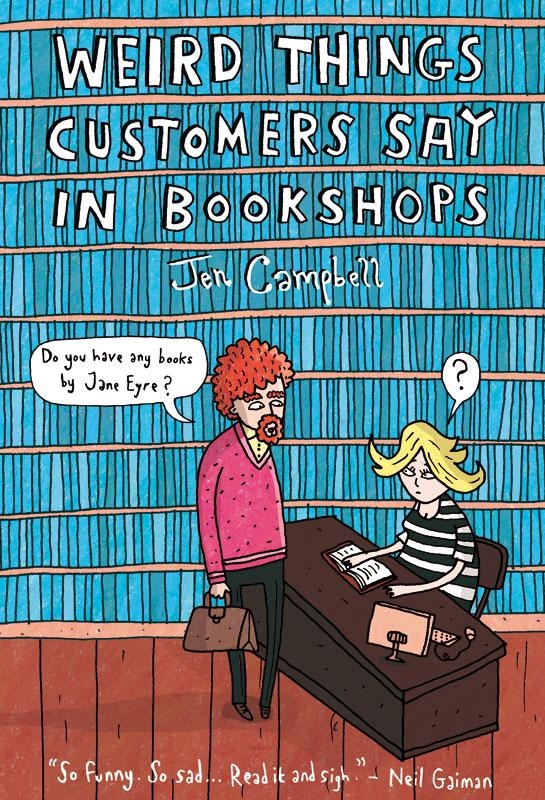
This charming little book was a gift and is not something I would have picked up for myself. Weird Things Customers Say in Bookshops by Jen Campbell is a collection of funny things customers have said to salespeople in Ripping Yarns, the Edinburgh Bookshop and others.

Some of the quotes are hilarious and some are a little tragic. But it’s very amusing and made me think that working in a bookshop might not be as relaxing as it seems! It makes a lovely gift 🙂

The Four Agreements

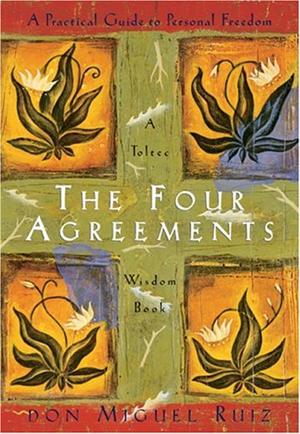
The Four Agreements by Don Miguel Ruiz is another re-read for me. I first read it several years ago and decided to read it again when I stumbled across a motivational poster with the Agreements on it.

Those agreements are:

1. Be impeccable with your word.
Don’t use your words against yourself or others. Don’t gossip. Speak with integrity. Use your words in the direction of truth and love.

2. Don’t take anything personally.
Nothing others do is because of you, it’s a result of their perception of reality. When you are immune to the opinions and actions of others, you won’t be the victim of needless suffering.

3. Don’t make assumptions.
Ask for clarification and speak up for your needs. Communicate clearly to avoid misunderstanding.

4. Always do your best.
Your best will vary day to day depending on your health, mood, levels of stress and other factors. Doing your best, whatever that may be, will free you from self-judgement, self-abuse and regret.

This is a gorgeous, uplifting little book. It is a bit goddy for my taste, but as it’s a short book that’s not too much of a problem. Making the four agreements has had a noticeable effect on my experience of life – especially the second one. I would highly recommend this book.

61 Hours

Oh hai Jack Reacher. 61 Hours by Lee Child sees Reacher stuck in South Dakota during a snow blizzard of the kind that lasts for days and shuts whole towns down. Coincidentally, it’s a town with a problem that needs the kind of solution Reacher can provide.

There’s an elderly woman who is a key witness in a trial against a particularly vicious Mexican criminal. Previous witnesses have been scared off or killed and the local police are giving her round-the-clock protection because they know an assassin is on the way. Obviously, at first they think it’s Reacher.

He’s on a bus full of tourists and it slides of the road in the blizzard so Reacher gets stuck in Bolton for a few days. He can’t help sticking his nose in and finds out about the witness. And about the new prison in the town that has a call-out policy that demands every police officer in town responds when there’s an escape.

Reacher uses a secret army telephone number and meets the woman currently doing his old job, to whom he forms a connection even though they only speak on the phone. He establishes that the killer must already be in town because no one is getting in or out. The Sheriff thinks it’s someone from the biker gang who live on an abandoned air force base outside the town. They are known to make and sell amphetamines but the police are finding it difficult to prove it.

Can Reacher keep the witness alive? Can he identify the killer? In the meantime, the Mexican drug lord is coming out to clear the airbase of his secret stash.

The big reveal is a surprise and it’s a good one. I hadn’t worked out who the killer was, but as soon as I knew I saw that all the clues had been there. As usual, Lee Child delivers a competently written, pacy thriller that is fun and easy to read. There’s a little bit of social commentary as the characters talk about the effect of the new prison on the town, and when they discover what’s at the airbase, which is handled very effectively. For me, it made the book the best of his that I’ve read.

As an aside, I heard that Tom Cruise is going to play Jack Reacher. While I’m not someone who thinks that an actor must look exactly like the character in the book, this seems an odd choice. This might be a mental adjustment too far.

The Golden Notebook

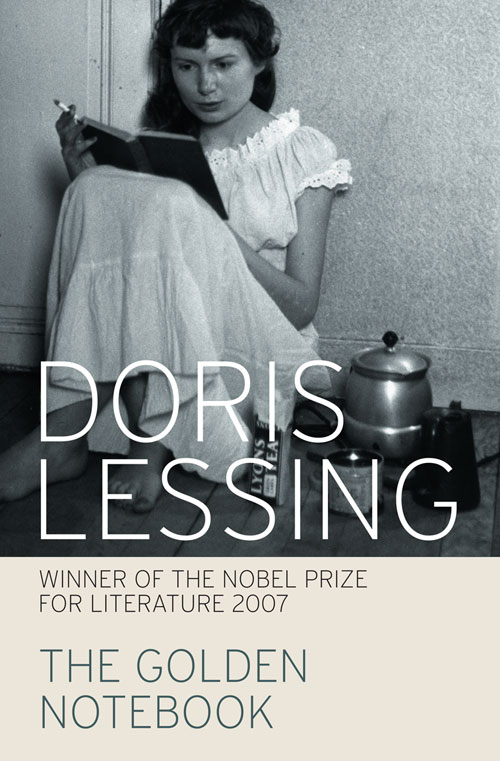
Another in my list of feminist classics I should have read but haven’t: The Golden Notebook by Doris Lessing. It is the story of Anna Wulf, who has written a novel that was a huge success but she finds herself mentally and emotionally stuck afterwards. There is something about what she has written that disgusts her and she struggles to bring that into her conscious understanding. This is the subject of Free Women, the shell story, and it is told through Anna’s interaction with her friend Molly, their children and the men in their lives.

Within this, Anna writes in four notebooks. A black notebook records her writing life; a red one her political views and experiences; a yellow for her emotional life; and everyday events go in a blue one.

The black notebook explores the experiences in her life that her novel was based on, how she feels about those events now, and how she responds to other people’s responses to her work. Anna gradually uncovers what makes her feel so ambiguous about her work.

Anna is a communist and a sometime member of the British communist party. The novel is set in the fifties and refers to formative experiences in the forties, so Anna’s communist beliefs were arrived at in a time before Stalin’s abuses were widely known. In this notebook she explores her disillusionment and disappointment politically.

In the yellow notebook Anna talks about her experience with her psychotherapist, her relationships with men, how she feels about being a single mother, her friendship with Molly, how she feels about what is happening to her mentally and emotionally.

The last notebook, blue, records every day events, sometimes by Anna writing and sometimes she pastes in newspaper clippings.

Finally, after several years, all the threads of Anna’s life come together in a gold-covered notebook and she finds a way to move forward with her life.

I thought I would find this hard-going, but it’s not at all. It was deeply engaging and beautifully written. I found it enjoyable and I really connected with a lot of elements. Structurally, it was interesting. The use of the notebooks to split out the threads of Anna’s life meant that there was a fair amount of jumping back and forth in time and the same events appear in more than one notebook. This creates a disjointed feeling that mirrors Anna’s mental state.

One thing that was interesting was the feminism. The book is called a feminist classic, but Lessing has gone public with a denial that she is a feminist. In the edition I read there is an introduction in which Lessing addresses this discussion around the novel. What I found astonishing, and kind of charming, is that Lessing says that she’s not a feminist because she believed the equality of women (and various other equality issues) was so obvious that it would be resolved by the end of the 20th century. Clearly, it’s a far more intractable problem than she thought.

I would argue that The Golden Notebook really isn’t that feminist. It is in the sense that it’s a book about a woman who has a fully rounded life and is a single woman – a free woman in the book’s terms. However, aside from Molly, Anna has no close female relationships. In fact, she’s aggressive and competitive with other women. It’s feminist in the sense that the vile attitudes of the men in her life are sharply delineated, but not in the sense that Anna constantly defines herself, and allows herself to be defined, in terms of her relationships with men.

It is more than that though. It is also about mental illness, political ideology, and the writing process. Lessing’s introduction says that throughout the time the book has been in print it has been interpreted through all these lens, but never as a whole. It’s a greatly thought-provoking book and I feel intellectually enriched for having read it.