Respecting the art of writing

Over the years I’ve been involved in writing groups I’ve found myself in conversations about how much technique matters. It appears there are two schools of thought.

On one side are those who think it doesn’t matter much. They argue that worrying about correct spelling and formatting kills the creative flow and it’s much more important to get the story out. Punctuation and other such tedious matters can be sorted out by the editor/agent you will definitely get once you’ve finished your novel.

The other school believes technique does matter. If you don’t master the basics of technique and present your work in a professional manner, it won’t even get looked at. No-one will be able to enjoy the genius of your story if they have to read every sentence three times to work out what you mean.

I’m on the side of technique. I care very much about the correct use of commas. I think understanding sentence structure helps you make your point clearly. There are twenty eight books on my shelf on the subject of writing and there were some I read that I chose not to keep. I read blogs on writing. I critique other people’s work so that I can improve my own. I read as many novels as I can and try to analyse the technique, although sometimes I forget if I’m enjoying the story. Some of the most fun I can have is talking about books and writing.

For me, technique supports storytelling. The two are intertwined. The most beautiful, perfectly executed writing can’t make me enjoy a story I don’t like, but I can appreciate the craft. The most interesting story can, however, be lost under poor writing. I’m not really talking about the odd spelling mistake or confusing you’re and your; these are small things that don’t interfere with understanding what the writer meant. More confusing is random placement of commas, running dialogue in with narrative, malapropisms, and poor paragraphing. Short sentences that start with the same words nearly all the time get boring, no matter how much I liked the idea of the story.

When you’re writing your first draft, it doesn’t matter. Just get the words down. Worrying about presentation at that stage isn’t productive. But when you rewrite technique is what will make your story come alive. Knowing how to finesse your words will get your great story noticed.

I think, in life generally, how you do what you do matters as much as what you do. Attention to detail makes a difference to the result. That’s what makes something great as opposed to good. I do agree that perfectionism can be used as procrastination and my working life has taught me that a perfect product not delivered on time (or at all) is not perfect. Getting the task done is more important in some circumstances. So, I’m a recovering perfectionist learning to love good enough. Caring about technique doesn’t necessarily mean you’re a perfectionist; it means you want to do the best job on your story that you can. Good enough doesn’t mean ‘oh whatever, that’ll do’; it means the best you can achieve in the time you have.

And I think I’ve always found it hard to express what I feel about how technique supports and enables storytelling. So when I read Editors on Editing: Respect Your Art on Women’s Memoirs, I thought that is exactly what I mean. Sloppy technique shows a lack of respect for your art. Writing technique is the equivalent of stretching your canvass and choosing the right thread and needles.

100 Books in 2011 review: Free Fall

I bought Free Fall by Robert Crais in a book buying addiction frenzy in Asda. They were selling a ton of books for a pound each. How am I supposed to not buy books if they do that??

Anyway, I was in the mood for easy-going fluff, and I have a book target to meet, so this seemed like a quick win.

This is an Elvis Cole and Joe Pike novel. A young woman thinks her policeman fiance is in trouble. It turns out to be much more trouble than anyone bargained for involving blackmail and murder.

It’s fun, easy reading. Cole and Pike are more likeable than some of their ilk (yeah, Jack Reacher, I mean you). They are not complex characters but neither are they flat and stereotypical. Some of the supporting characters get well fleshed out as well. Others don’t, notably the villains. The plot cracks along at a good pace and there are one or two nice thoughtful moments. It’s entertaining and if you’re looking for a light read, you could do worse than this.

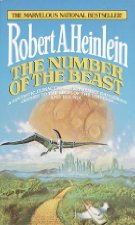
100 Books in 2011 review: The Number of the Beast

The Number of the Beast by Robert A. Heinlein is one of his later novels (published in 1980) and is not just a story.

The basic plotline is two couples in a time machine travelling through a series of universes, more or less similar to our own, alternately running from and chasing the villains that tried to kill them at the start of the story.

But what it really is, is a homage to 1930s pulp science fiction. The style is dated and the characters are Heinlein usual combination of intellectual brilliance, excessive heteronormative sexuality and stereotypical gender norms. Interestingly, Heinlein spends some time exploring the unconscious ways in which men undermine women’s assertion of equal rights and self-determination while believing that they are being supportive. It is surprisingly insightful, given Heinlein’s justified reputation for reactionary thinking.

The book is full of in-jokes, most of which I didn’t get, not being steeped in the fiction which the book is paying homage to. I liked the concept of fictons – that somewhere in the multiverse any fictional world thought of pops into existence. That would be cool. Of course, Lilliput, Barsoom, Oz and Wonderland wouldn’t be the worlds I’d choose to visit but there you go.

I hated the ending where Heinlein brings all his characters together for a big, self-congratulatory conference. This is strictly one for the fans.

So, if you could visit any fictional world/universe where would you choose to go? I’d go to Sunnydale, Westeros and the Culture.

100 Books in 2011 review: Forbidden Magic

I love the idea of paranormal romances. Erotic romance combined with fantasy sounds like something I could really enjoy. What could go wrong?

Forbidden Magic by Cheyenne McGray is the first of a series. A witch who works with law enforcement to solve mystical crimes discovers that a coven of black warlocks is planning to summon people-eating demons to earth. Failing to convince her coven to summon the Tuatha D’anann, she does it on her own, but only one of them comes. Her coven is attacked by the demons and then she and her warrior ally convince the rest of the Tuatha D’anann to come to fight the demons.

You know, it sounds promising and I’m always up for a bit of silliness in plot terms, so long as it’s well-written silliness. And that’s what could go wrong. The characters are pretty stereotypical. Aside from the witch Silver, and her Tuatha D’anann lover Hawk, the characters are flat and boring. The members of the Tuatha D’anann party, the law enforcement team, and the coven, are just names with the odd bit of description attached. There is no personalisation and no individualisation.

Romance writing is different in that the focus is on the development of the central relationship and on the sex scenes. But for me, the relationship in this case didn’t feel convincing. The sex scenes did the job they’re supposed to do. They were ok but not great. And I was rather disappointed by the kinky sex only being allocated to the evil characters – the kind of sex you have doesn’t say anything about character and it’s not good writing to rely on such obvious tropes.

Unfortunately, there’s not a lot to recommend about this one. Anyone got any recommendations for really good paranormal romances?  

7 random facts about me

Via KLo, whose stories were lovely.

1. I’m a Raqs Sharqi dancer.
I’ve always thought belly dance was beautiful and wanted to try it. Five or six years ago I went to a raqs sharqi class because it was the nearest thing to belly dance in my area. And I fell in love with it. I haven’t been dancing much for the last couple of years as I’ve been ill and not physically up to it but I do still dance around the house occasionally. Last Saturday night I went to concert of tribal fusion belly dance and raqs sharqi concert and had so much fun. There was an hour of free dancing afterwards and a bazaar of pretty, shiny things.

2. I like sprouts.
They’re an acquired taste, but I love the brassica family of vegetables in general and sprouts are yummy. However, I don’t like the whole roast dinner thing as it has too many other things I don’t like such as stuffing, yorkshire puddings and roast potatoes. I’m not keen on beef or pork either.

3. My first crush was on Basil Brush.
I was four and I’ve had appalling taste in men ever since!
4. I want to live in a castle.

I want stone floors (with underfloor heating, obvs), tapestries, ramparts and vast oak tables. I want red velvet curtains from floor to ceiling and iron chanderliers and a four poster bed to sleep in. It would be even better if it were one of those with wooden panels between the posts, so I could essentially sleep in a box.

5. I’m currently addicted to reality TV.
It started with Strictly Come Dancing and The Apprentice. It’s getting out of control and I’m not sure what it is that’s so compelling (although partly I think it’s because there’s little else to watch). So, while I’m writing this I’m watching Tool Academy. I can’t get enough of America’s Next Top Model. And Dancing on Ice, or Got to Dance. I have ordered a book from Amazon that will explain to me what is going on.

6. I have a teddy bear that is 35 years old.
I was given a bear when I was six months old that went with me everywhere. It has been through the washing machine loads and is still in good condition. It’s called Smokey and I still take it to bed when I’m feeling sorry for myself.

7. This is my idea of male physical beauty.

🙂 Which of course says nothing about personality or connection. It’s just what I like to look at. 🙂

You know the drill…

100 Books in 2011 review: Philaster

OK, this was a bit of cheat. I wanted to read something short to help meet the 100 books goal. So I found a little book called Philaster by Francis Beaumont and John Fletcher. I’ve had this for about fifteen years (it was my grandparents’ originally) and never read it. The edition I have was published in 1898 and is really cute.

It is a play. It is about love, mistaken identity and inheritance. Philaster is the diposessed heir to the throne, in love with the daughter of the usurper who is supposed to marry someone else. The young boy they use as a go between is really the daughter of another lord who is in love with Philaster.

This was fairly light. It’s all about dialogue and there’s almost no worldbuilding. I don’t read a lot of plays and when you watch them you have all the visual elements to fill in a lot. So it feels like there’s not a lot to talk about. I did like it, the dialogue fairly cracked along despite the fact that it’s early 17th century English.

What I particularly noted was that the dialogue conveys a lot of passion. This is an emotional drama and it was useful and instructive to look at how that was achieved. The words put in the characters mouths, the choice of metaphor and the use of repetition all built up intense conversations. 

Blogging Q&A

Via From Sand to Glass.

1. If you blog anonymously, are you happy doing this? If you aren’t anonymous, do you wish you started out anonymously so that you could be anonymous now?
I started off blogging anonymously and I had two reasons. Firstly, I was a little nervous of what reaction I might get. I wanted to get settled into my blogging voice before I went public about it. The second reason was that I have a presence on the web related to my paid employment and I wanted to keep the two separate. I still use BoudicaM as a pen name for some things but it is less anonymous than it was.
 
2. Describe an incident that shows your inner stubborn side.

Inner stubborn side? My stubborn side is quite outer, thank you. And it most often shows itself when people tell me what or who I’ll like. As in “you must see this film, you’ll love it”. Oh rly? I think not. I think you love it and want me to validate your opinion.
 
3. What do you really see when you look at yourself in the mirror?

Umm, I see me. Which is too much to explain in a couple of sentences. And I’m over the self-hate that makes you see a monster in the mirror (and it took a lot of work).
 
4. What is your favorite summer cold drink?

Diet coke. With ice and lemon. All year round.
 
5. When you take time for yourself, what do you do?

I write. I play computer games, watch movies, read, meditate. Look at LOLcats on the interweb. I take a lot of time for myself. And I want MOAR.
 
6. Is there something you still want to accomplish in your life?

Oh gods yes. I want to publish a novel. And then another one. And then some more. I want to read all of the books in the world. I want to perform Raqs Sharqi. I want to learn how to use a broadsword. I want… to do so much. And I’m sure there’s stuff I don’t even know about that I will want to do when I find out about it.  
 
7. When you attended school, were you the class clown, the class overachiever, the shy person, or always ditching?

School. Loved the learning, hated the socialising. I was the unpopular academic overachiever who never quite did as well as everyone thought she would and was rubbish at sport. I’ve never wanted children, but in the alternate universe where I did have them I am homeschooling.
 
8. If you close your eyes and want to visualize a very poignant moment in your life, what would you see?


Poignant: a keen sense of sadness or regret. Yeah, there are few things. I don’t want to share them here.
 
9. Is it easy for you to share your true self in your blog, or are you more comfortable writing posts about other people or events?

It’s not easy. This is a writing blog, not a personal blog, and while I like to do the occasional personal piece because, well, writing is pretty personal, that’s not what this space is for. Having said that, I think I have become more personal in my writing style (I guess that’s what voice is) over the time I’ve been blogging.
 
10. If you had the choice to sit down and read a book or talk on the phone, which would you do and why?

Read a book! Because it’s more better than most things. And I have phone fear. But actually, it depends who the phone call is with, and when I last spoke to them, and what mood I’m in.
 
Your turn! Leave me the link in the comments if you do your own.

100 Books in 2011 review: Edge

I was looking forward to reading Edge by Thomas Blackthorne. I liked the blurb (which you can see in the picture). It sounded like it was going to be an ultra-violent Running Man fun type of silliness. Predators in book form. But that’s not what it was. Bad Angry Robot. That’s the second time I’ve read a book from this imprint that did not contain what was on the label.

Edge is actually a thriller set in a near-future dystopia. The son of a wealthy and influential tycoon runs away from home so he hires an ex-SAS soldier with mad software skills to find the boy. Doing so reveals illegal activity on the behalf of the tycoon’s biggest rival in cahoots with a corrupt government. It’s set in a near-future UK where everything is tracked and recorded electronically all the time and getting off the grid is tough. Knife duels are legal and as a result crime is down but loads of people die in duels. And sports/reality TV is dominated by a duelling league where combatants die every week for your viewing pleasure. But the book doesn’t focus on that part of it. That’s the backdrop for the real story.

It was a good thriller. It was easy reading and fast paced. The protagonist, Josh Cumberland, is a fairly typical modern thriller hero; big, buff, beautiful, with special forces training (which in this world includes cyber warfare) and an anger management problem. What lifts Edge up from the mass is the cast of strong female characters that support the protagonist. Cumberland’s team of ex-SAS buddies are not all male – and the ones that are, have three-dimensional personalities. His insider on the force is a policewoman who gives free self-defence classes in her spare time. The ‘love interest’ is a psychologist whose skills are pivotal to resolving the central mystery. And it’s nice that her role as psychologist way overshadows her role as love interest. I thought the characterisation was real and sensitive, and I think this might actually pass the Bechdel test.

The near-future setting was rich and cleverly put together. It was distinctive, memorable and thoroughly thought through, and yet at no time did the setting overshadow the story. I was disappointed that the knife duelling reality show didn’t have more airtime, but that’s only because that’s what I thought the book would be about. But Edge is excellent, and it was a better story than that. I hope Blackthorne writes more stories set in this world.

Writing-wise, it was clean and competent. Blackthorne has a very understated style. The writing focusses on plot with description and characterisation subtly woven in-between dialogue and action. Ignore the blurb and give it a go.   

100 Books in 2011 review: Alone in Berlin

Book club is off with a bang this year. January’s choice was Alone in Berlin by Hans Fallada (trans: Micheal Hofmann) and I loved it from the from start to finish.

Otto, an ordinary German living in a shabby apartment block, tries to stay out of trouble under Nazi rule. But when he discovers his only son has been killed fighting at the front he’s shocked into an extraordinary act of resistance, and starts to drop anonymous postcards attacking Hitler across the city. If caught, he will be executed.

Soon this silent campaign comes to the attention of ambitious Gestapo inspector Escherich, and a murderous game of cat-and-mouse begins. Whoever loses, pays with their life.

The opening chapter is one of the most powerful I’ve ever read. I read on the train and I was bawling my eyes out. Michael Hofmann’s translation is perfectly pitched and Alone in Berlin is an easy, fast read. Which may be surprising given the subject matter.

Fallada’s characterisation is exquisite. All of the characters are individuals and they come alive on the page. There are no stereotypes or stock characters here. And each character, regardless of how nice they are, is treated with empathy. Through these people Fallada shows how easy it is for civilization to crumble. The state can encourage the basest behaviour through making difference illegitimate, dissension dangerous and rewarding obedience. Systematic terror makes it hard to be a good person and easy to take advantage of the less fortunate. And it happens slowly, insidiously, until before you know it the world you thought you lived in is gone.

I love moral ambiguity and Alone in Berlin is replete with it. The Quangels made daily acts of resistance that achieved nothing except giving them back their self-worth. And you might say that knowing in your heart that you didn’t completely give in is important, yet Anna and Otto’s actions eventually damage the lives of several of the people around them. Their resistance had a tangible cost and an intangible outcome. Was it really the right thing to do? Should they have done something more? And this isn’t the only time the question of right and wrong is raised with complex, unclear examples. It’s not easy and all the pain of living with your choices is laid bare in this novel.

Alone in Berlin is an excellent example of an author that shows and rarely tells. We know who these people are because of what they say and do, not because the author tells us who they are. And this is a book originally written in 1947 so the omniscient POV is used and on occasions Fallada gives himself permission to use the authorial voice. Another member of the book club (who read the book in German) says that Fallada uses the Dickensian tradition of giving characters names that describe them.

If you like fiction that strips away the vanity of civilization and shows us what we are, what we can be, with brutal, uncompromising truth, then you will love this. For me, this is one of the best books I’ve ever read.

100 Books in 2011 review: Grass

Book number 1 in the 100 books in 2011 challenge is Grass by Sherri Tepper. It’s number 48 on the SF Masterworks list. The blurb says:

Generations ago, humans fled to the cosmic anomaly known as Grass. But before humanity arrived, another species had already claimed Grass for its own. It too had developed a culture… Now a deadly plague is spreading across the stars, leaving no planet untouched, save for Grass. But the secret of the planet’s immunity hides a truth so shattering it could mean the end of life itself.

Grass follows Marjorie Yrarier and her family as they go as ambassadors to Grass with the secret mission of finding a cure for the plague. There are two societies on Grass; the aristocrats, an ossified relic of old European aristocracy that spends its time hunting; and the Commons which is a vibrant, trading nation. Then there are the Hippae, who act as mounts in the aristocrats’ hunts, but who are far more than semi-intelligent animals.

I loved this. The central mystery is well-handled and the reveal is done slowly over the last third of the book. Grass as a world is vividly realised and it’s inhabitants and their relationships are well-drawn. The ideas about social organization are subtly woven in and the plot is always at the foreground. I actually couldn’t put it down. It’s nice to read something with a middle aged woman as the protagonist – especially science fiction, especially an adventure mystery. Marjorie is a wife and a mother, and yet she is portrayed as an individual, as active and as as driving the story. Marjorie is purposeful woman, driven to solve the mystery at the heart of the disturbing planet she finds herself on and, although she has love interests (three if you count her husband) they are secondary to the main plot. It’s worth mentioning because it strikes me that female protagonists, in this type of story, are pretty rare. Tepper avoids the traps of either making her female protag solely defined by her family and romantic relationships or making her a man in a lady costume. It’s so refreshing.

I only have two minor niggles, and seriously, they are tiny. First. the planet Grass is sharply drawn and the word picture is rich and vivid. The group of colonies that it is part of is quite fuzzy; I don’t even know whether to call it a galaxy, system or universe. Perhaps it doesn’t matter as most of the action is on Grass but it does feel slightly incomplete. The other niggle is the omniscient third person POV. Tepper handles it well so it doesn’t feel like head-hopping, but I did find it a little old-fashioned and in one or two places it is confusing.

So, Grass was excellent, overall. It was complex, deep and thought-provoking. It was beautifully written. It made me want to read everything else she’s written. Highly recommended.