The Leopard

leopardThe Leopard by Jo Nesbo is the sixth in the Oslo sequence featuring detective Harry Hole.

It starts with Harry on a massive bender in Hong Kong. He was going to Thailand but didn’t make it that far. He’s a mess, having rung up large gambling debts and indulging a heroin habit. Because that’s less of a problem for him than alcohol.

Back in Oslo, two women have been found dead with mysterious wounds to the face. The police are fighting a political battle for jurisdiction over murders with Kripos, who are responsible for tackling organized crime. Harry’s boss wants him back to solve the crime and to stick it to Kripos. He sends detective Kaja Solness to bring Harry back.

In turns out that there are more than two murders and the connection between them is not simple. Nesbo serves up several red herrings and twists and keeps the reader guessing right to the end. I loved this. The plot was gripping and expertly handled. There is treachery and intrigue amongst the police and the perpetrator was deliciously complicated. There are lots of threads and none of them are left loose at the end.

It’s in this book that it’s made most clear that Harry’s flawed character is the reason he’s an exceptional detective. Writers are urged to give their characters a flaw to make them human and enable the readers to identify with them. I think it’s true to say that most fictional detectives are flawed and that alcoholism is very popular as said flaw. In the previous books in the series, Harry’s alcoholism is treated in a fairly standard way. He’s an arse and he’s difficult to work with, he’s unreliable and unstable. But he’s a great detective by virtue of persistence and making connections others don’t, so his bad behaviour is excused in favour of his results.

In The Leopard, Nesbo shows how Harry’s flaw is the very thing that makes him great. His addiction is integral to his excellence. At the beginning of the book Harry is on a bender because of the impact his previous case had on him. He doesn’t want to chase serial killers again. He wants oblivion. Harry resigned from Oslo police but they bring him back. At first he resists but he finds he can’t help himself. He has to follow the threads, he has to work out what has happened and who did it. Harry is addicted to solving crimes.

For me, this is the best Harry Hole so far. I really enjoyed it.
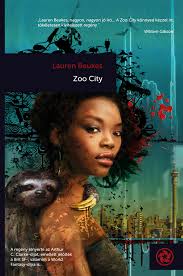
Zoo City

zoocityZoo City by Lauren Beukes is set in a world where those who commit crimes gain animal companions and psychic powers. It’s not considered a good thing and those with animals sink to the bottom of the pile, making a living however they can.

Former music journalist, murderer and junkie, Zinzi December finds things that are lost, for a fee. After a job goes south, she’s offered an opportunity to make a lot of money finding a missing girl. It’s not what she normally does, but the money’s too good to pass up. Naturally, nothing is as simple as it seems, and when she finds the girl she uncovers a much bigger, nastier crime.

This is brilliant. It’s written in the first person present tense and Zinzi’s voice is compelling and funny. The plot is deep and tightly woven. It all makes sense at the end, and everything you need to know was always right there, masquerading as worldbuilding. I loved the concept of the animals and the powers and I loved the dystopian alternate world. I would highly recommend it.

Focus: The Hidden Driver of Excellence

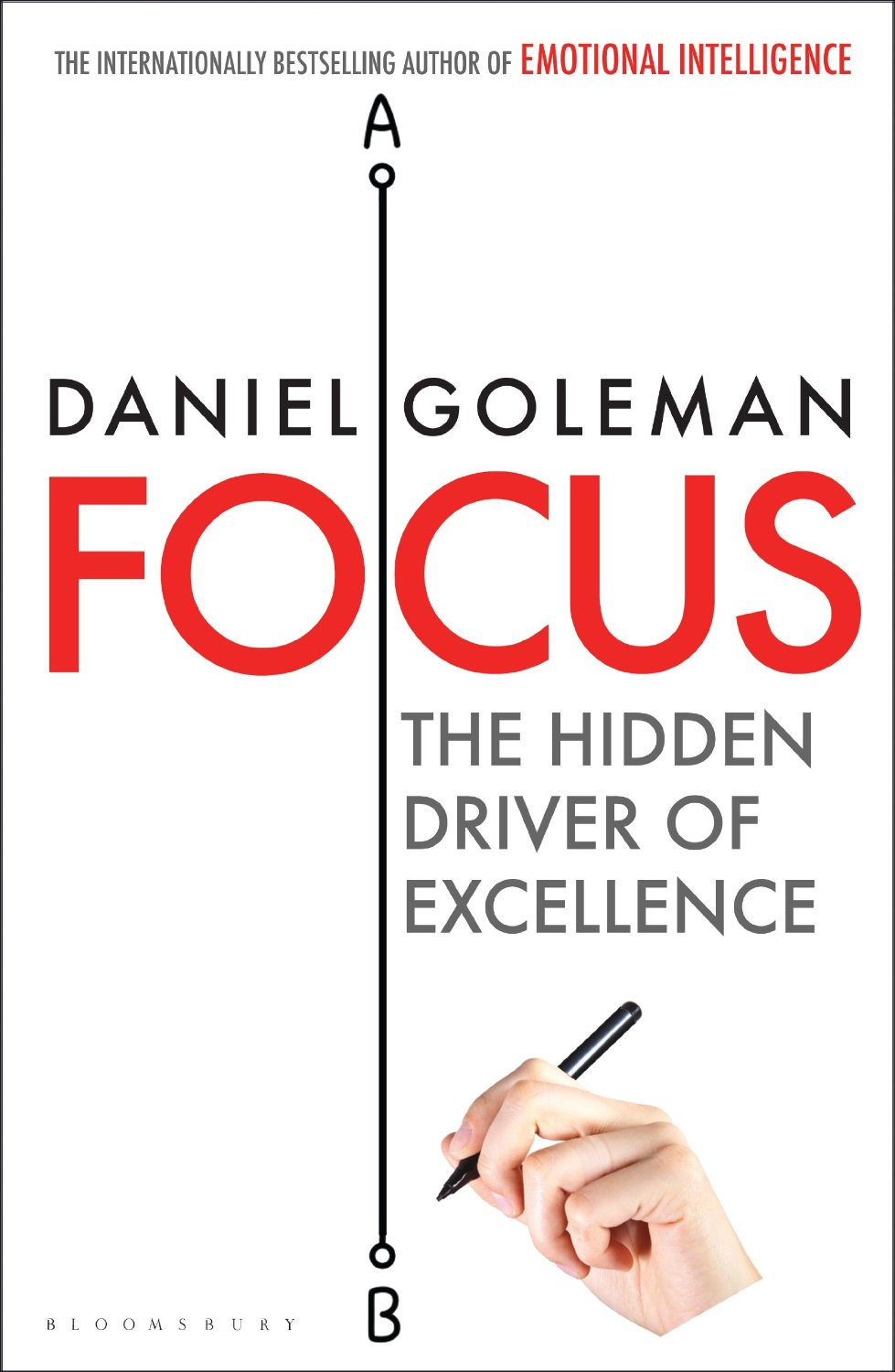
FocusFocus by Daniel Goleman is about awareness. There are three levels of awareness and if you can master each and master switching between them appropriately then excellence will be yours. Assuming that’s what you want.

The three levels are: awareness of your inner state; awareness of what’s going on between you and other people; and awareness of the wider world. Lots of this happens in your subconscious because your brain isn’t under your control. You are the narrator for the adventure your body is having. But if you can manage to stop distracting yourself with sensation and pesky emotions and actually pay attention to what you’re doing/experiencing in the moment, you’ll be happier, more productive and achieve all your goals.

There’s a lot of good stuff in here, although not much that’s new. Goleman spends quite a bit of time talking about emotional resilience and the importance of learning to distract and soothe yourself. He also talks about the need to scan and take information in so that your subconscious can do the heavy lifting of making connections between unrelated things that is key to creativity. There’s a difference between focussing narrowly on a task at hand to get it done, and a more wide-ranging focus on gathering data, and how both are necessary. Goleman also talks about when it’s helpful to be unfocussed, because that too is important in creativity. Mindful daydreaming, if you will.

I wasn’t keen on the tone. According to Goleman, the world is going to hell in a handbasket due to the pernicious effect of modern technology. And climate change, and obesity, and lack of wholesome outdoor pursuits. Everything was all better in the past when people had real conversations without texting someone else. There’s a lot of assumptions masquerading as evidence and a lot of nostalgia for a never-was golden era. Which rather spoilt it for me.

Snow Falling on Cedars

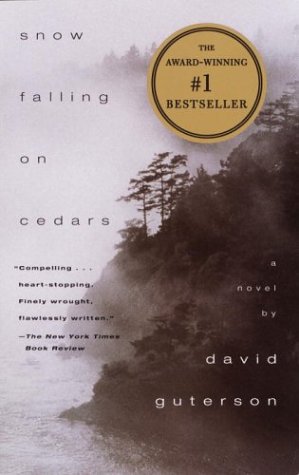
SnowFallingOnCedarsSnow Falling on Cedars by David Guterson is the story of a murder trial and all the social and cultural factors that lead to a false accusation. It is set on an island off the coast of Washington State in the US where the main industries are timber, soft fruits and fish. The island has a small population with a minority of Japanese inhabitants who were all interned during the war.

Guterson switches between the murder trial in the present of the book, which is the early fifties, and the past of the events that link the deceased and the accused together. These events span thirty or forty years and include land deals gone sour, racism, unrequited teen love, war trauma, lazy detective work and some really bad luck. The switches are handled effortlessly and sometimes happen within a paragraph. Much of the book is spent in the past and on the love story between the Japanese wife of the accused and her childhood friend, the son of the white newspaper owner.

This is a dense and long book. Guterson creates a lushly detailed picture of the island and what life on it was like. I saw the film a few years ago and enjoyed it. I had a suspicion that there might be more to the book and there is. The author touches on some big themes and handles them delicately. The final reveal of what really happened to the deceased shows how all those other things led the Sheriff, the coroner and the Judge to jump to conclusions and stop looking for evidence.

It was slow going but for the most part absorbing, beautifully written and thoughtful.

The Inner Game of Work

inner gameI’m getting the opportunity to get lots of training at work at the moment, and that usually comes with book recommendations. The Inner Game of Work is about coaching, and written by W. Timothy Gallway who revolutionised tennis coaching by focussing on inner resistance rather than technique. The idea is that performance is as much about what’s going on in your head as it is about skill and ability. Negative self-talk can drag down the best players.

The Inner Game of Work talks about learning, focus, finding your joy, and awareness. Which is great, but it’s long on theory and short on practice. It asserts the importance of being present and being in the moment but offers little guidance as to how you do that. You’ll have to turn to other books for that. It was pretty hard work reading it but there’s some useful ideas.

I did like the section on thinking like a CEO. It challenges you to question whether you are actually in charge of the corporation that is you or whether you’ve given decision-making responsibility to others. These are ‘stakeholders’ such as family, employers, friends, and anyone else who has an opinion about how you live your life. I like to think of it as being master of your own ship because I was a pirate in a past life, but the CEO metaphor works as well.

I am on the lookout for a writing coach in the London area though, so if you can recommend someone, let me know in the comments.

Ritual

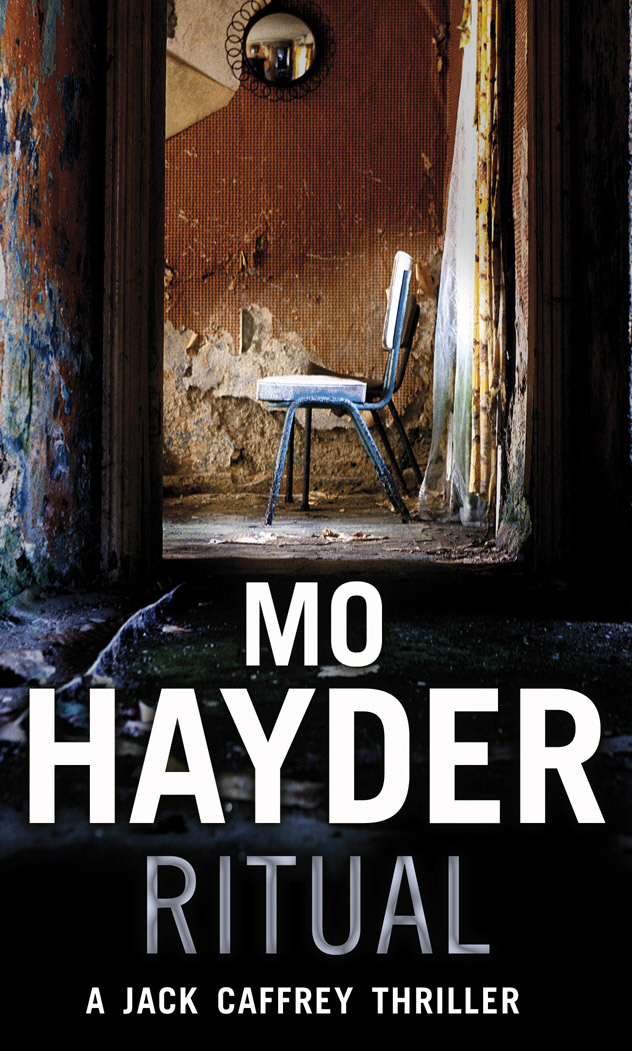
ritual-pbkHaving enjoyed Poppet so much I thought I would read all Mo Hayder’s Jack Caffrey thrillers. I like to do things in order.

I feel a bit mixed about Ritual. It was a good thriller. I enjoyed the plot and thought it was well handled, keeping the identity of the killer hidden until the very end. Caffrey has transferred from London to Bristol and his first case is a hand recovered from the harbor. The coroner confirms that the owner of the hand was alive when it was cut off and may still be alive. All the pieces are skillfully woven together so that you only see the whole, gruesome picture at the end.

Caffrey is working with Flea, the police diver, and the events that are between them in Poppet begin here. So, it was nice to start to piece that story together as well and I like the connecting thread between the books. There is also a little bit of follow up to the actions Caffrey took at the end of Birdman and the impact on him that has had. Rather than being a series of individual thrillers connected only by the central character, like the Reacher series, it has the feel of episodes in a series building up to something bigger.

There was one thing that bothered me though. The Jack Caffrey in this book didn’t seem like the same character as in Poppet, Birdman or The Treatment. Some of that was physical characterization. After reading those three books I had an image in my head of Caffrey as tall and blond. In Ritual, Hayder describes him as dark-haired. That might be inconsistent, or it might be me misremembering. The tall thing is more clear-cut though. In this book, Hayder repeatedly describes Caffrey as tall. Then she describes him through Flea’s eyes as being medium height. It really bothers me and I’m not sure why.

Overall, it was alright. I did enjoy it, but perhaps not as much as some of the others.

Santa Evita

santa evitaThis is an odd book. It was buried on book mountain and I can’t remember what prompted me to buy it. Perhaps it was one of those sent to me by a book club that I never bothered to send back. Santa Evita by Tomás Eloy Martínez (trans. Helen Lane) is a story about what happened to the body of Eva Peron after she died.

It’s based on some fact, the papers of various people involved, some parts are fiction, and some parts are the ruminations of the author on the process of writing the book. Which parts are which are isn’t always clear, fact and fiction are smoothly blended. Apparently the germination of the story was over many years and it was a difficult book to write.

After Eva Peron died of cancer her body was embalmed. The Argentine Secret Service had been spying on her for years and after the Peron government fell, they took charge of the body. Three copies were made. The government didn’t want Eva’s burial place to become a shrine and the cult of Evita to have a focal point for the opposition. Care of the body was entrusted to a colonel in the Secret Service. Mysterious events seem to happen around Evita and she has a strange impact on those to whom her care is entrusted.

Santa Evita is a strange book. The story itself is a weird one, encompassing the need of people to have heroes, and how fame and grief interact. However, it’s not really about Evita. Most of it focuses on the Colonel who spied on her while she was alive and took care of her embalmed body when she was dead. It’s an exploration of secrecy and madness. It’s a beautifully written (and translated) book, mystical and surreal, and proving reality makes much less sense than fiction. I found the parts about Martínez’ writing process fascinating. It made me really think about the structure of the novel and how that might be more flexible than commercial fiction often allows. This is a strange and wonderful book.

Headhunter

headhunterIn Headhunters by Jo Nesbo, Roger Brown is a top recruiter who finances his lifestyle by art theft. He arranges interviews for executives who own expensive art and steals it while they’re occupied. He’s a successful recruiter with a reputation for never failing to place his candidate, but it doesn’t make enough money to pay for the house and his wife’s art gallery.

Unfortunately for him, a psychotic ex-CEO of a defence company wants a job with another defence company and is willing to go to any lengths to get it. Through a series of misunderstandings and bad decisions, Brown ends up being hunted through Oslo.

I saw the film of this book a few years ago and it’s what prompted me to read Jo Nesbo’s books. I actually read quite a few of his Harry Hole series before I got onto Headhunters, and I enjoyed them a lot. This is even better. I think this is the best of his that I’ve read. It’s written in first person from the point of view of Roger Brown and the voice is engaging and compelling. The plot tension is handled well and a couple of key twists are held back to the very end. Pacing is fast but not breathless. At least half the book is spent on the set up and you’re completely caught up in Roger’s world. He’s not the nicest guy but he’s smart and ingenious and not above doing whatever he has to. I liked it a lot.

The Treatment

200px-ThetreatmentThe Treatment is the second in Mo Hayder’s Jack Caffrey series. Caffrey is still obsessed with the paedophile next door and the mystery of what happened to his brother all those years ago.

Caffrey gets a case that seems a little too close for comfort. A family is held prisoner in their own home for a weekend. No one notices because they were supposed to be going on holiday. Instead, the mother is restrained and locked in a cupboard, the father is restrained on the landing while the son is abused. Then the perpetrator takes the child out of the house and is seen by a passerby. The police sweep the area but can’t find anything.

Whilst investigating this case, Caffrey is also trying to work out what happened to his brother. The cases are linked and Caffrey gets information that takes him out to a remote farm in Suffolk. Some of his actions are ill-advised and Caffrey is risking his job to pursue his obsession.

An extra complication is that Caffrey is dating one of the women that was a victim in the last book, Birdman, and she’s dealing with her experiences in a very public way. His secrecy and obsession with his brother isn’t making things between them better.

The plot twists and turns and the killer is hidden in plain sight. There are a few plausible candidates and Hayder shows how easy it can be to miss what is really going on. I wasn’t keen on the heavy-handed use of dialect for the character of Caffrey’s boss but that was the only thing that spoilt my enjoyment of the book. The resolution of all the plot lines was brutal and I found it very affecting.

Death of Kings

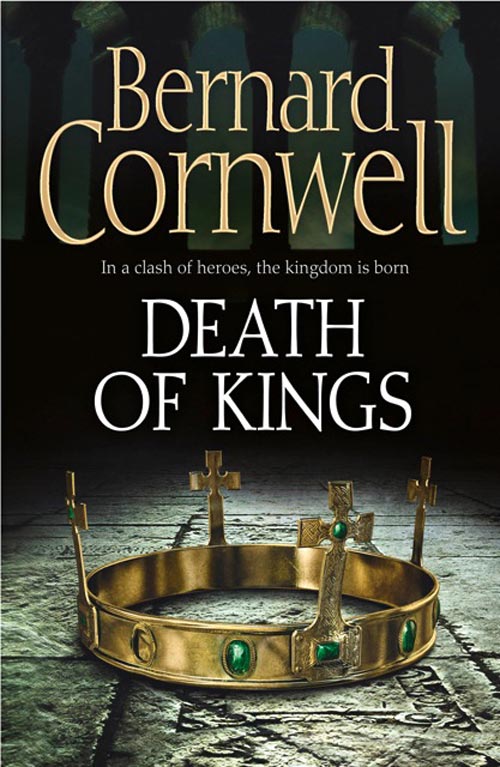
death-of-kingsDeath of Kings by Bernard Cornwell is the sixth book in the Making of England series. Or The Warrior Chronicles, or the Saxon Stories, as it’s also known.  There are at least two more to go.

Uhtred of Bebbanburg is forty-five and broke. All the money he’s ever made has been spent on keeping is oath to Alfred. There have been times when he’s been rich but this isn’t one of them. He still harbours dreams of returning to Northumbria to reclaim Bebbanburg but he doesn’t have the resources and he’s running out of time. Forty-five is old for a warrior. And then there’s the pesky problem of the promises he’s made to Alfred and Aethelflead.

This installment of the series does feel very much like a mid-series book. It’s a bit slow and not much seems to happen. Alfred dies, his nephew tries to steal Wessex from his son, and the Danes combine forces to attack. There’s the threat of betrayal from an ally and lots of riding around the countryside looking for people to fight.

As always, the writing is excellent, and Cornwell provides a masterclass in simple yet effective prose. The characters are vivid and Aethelflead had a particularly good part in this book.